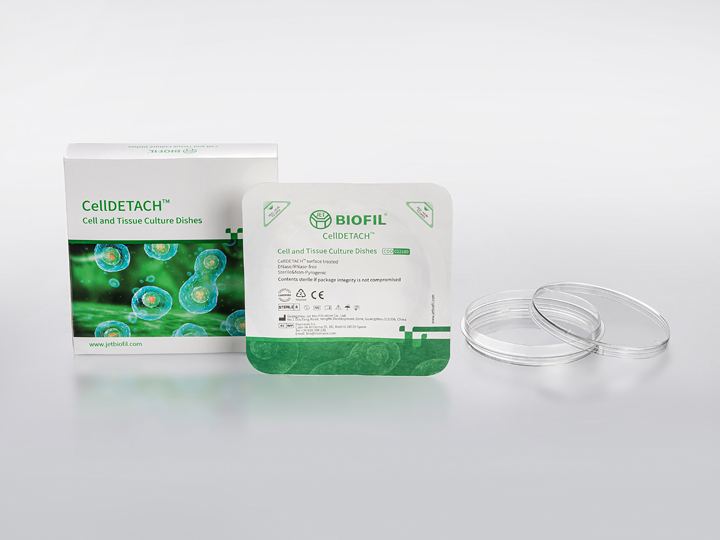
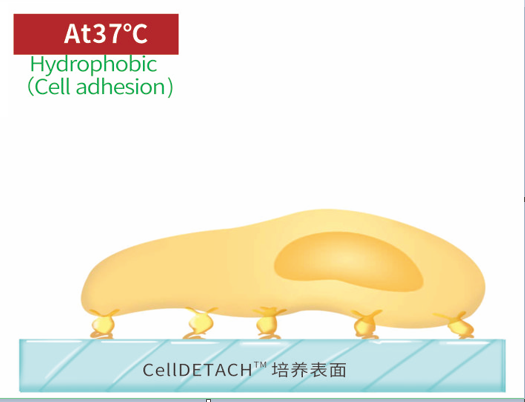
Using trypsin digestion or cell scrapers to separate adherent cells can affect the expression of cell surface proteins, damage cells and reduce cell viability. The CellDETACH ™ products have a thermosensitive surface, which is coated with a unique nanopolymer. When the temperature decreases from 37°C to 4°C, the thermosensitive surface gradually changes from slightly hydrophobic to hydrophilic, allowing for the harvest of adherent cells without trypsin. By using this gentle collection method, the cells are safe from injuries caused by trypsin or scrapers, thus preserving high viability and the integrity of surface receptors and cell antigens. This operation enables cells to be harvested without damage for subculturing.
Features
The CellDETACH^™ thermosensitive cell culture surface is specially designed by our R&D team for cell passage and cell transplantation,
and has been granted a national invention patent (Patent Number: ZL201510780506.3). The goal is to help researchers harvest cell
sheets, set up 3D tissue models formed by normal cell binding and extracellular matrix linkage, simplify cell culture and tissue
engineering techniques, and minimize experimental manipulation time.
China Invention Patent Award (Patent Number: ZL201510780506.3)
Induces cell shedding simply by lowering the temperature - straightforward, fast, and easy to operate
No trypsin: preserves cell surface proteins and markers integrity
No cell scraping: avoids mechanical damage to cells and ensures high cell viability
Optimized cell culture and tissue engineering techniques
Scope of Application
The thermosensitive cell culture surface is suitable for the in vitro culture of most adherent cells, including stem cells, neural cells, macrophages, and cancer cells. It is ideal for harmless cell harvesting, and can be widely used in expanded cell culture, cell therapy, 3D tissue modeling, extracellular matrix research and other fields.
Instructions for Use
In Vitro Cell Culture
When the temperature is above 32℃, the thermosensitive polymer coating on the surface of the CellDETACH™ products is in a curled polymer state, showing slight hydrophobicity. Therefore, preheating the culture medium and product to 37℃ facilitates cell adherence and growth.
When the temperature goes below 32°C, the thermosensitive polymer coating on the surface is in a stretched polymer state, which will bind water molecules and expand, showing hydrophilicity. This facilitates the shedding of adherent cells. The shedding efficiency will be at its best when the temperature drops below 4°C.
When the temperature of the thermosensitive cell culture surface drops below 32°C, excessive disturbance may cause cell shedding, so please do not spend too much time taking pictures and observing during the cell culture.
Cell Harvest
The best harvest is achieved when the confluence of cells is higher than 80%.
When harvesting cells, reducing the environmental temperature to 4℃ facilitates the cooling process and cell shedding (e.g., placing the CellDETACH™ products in a sterile incubator at 4℃, or replacing the culture medium with a 4°C medium).
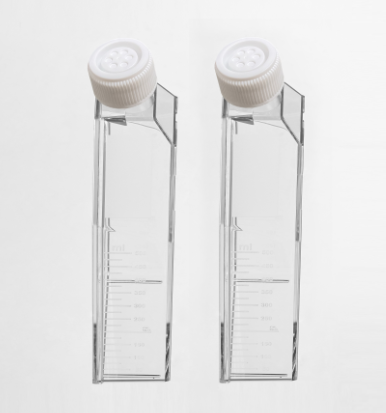
When the temperature of the thermosensitive cell culture surface drops to 4℃, keep it for 20 ~ 30 minutes, then aspirate the culture medium above the thermosensitive cell culture surface with a straw (cell culture dish), pipette or pipet controller (cell culture flask of 250 mL or above), and blow over the adherent cells to shed them. During the blowing process, the cell sheet can be observed shedding from the thermosensitive cell culture surface.
The thermosensitive shedding abilities of cells depend on their types, and some cells with strong adherence ability may require multiple blowing attempts. (Generally, those digested at 37℃ for more than 3 minutes with 0.25% fresh trypsin are considered to be cells with strong adherence ability).
Storage and Transportation
This product should not be exposed to direct sunlight or excessive heat for a long time, but can be stored and transported at room temperature.