Recombinant Human ESAM (C-6His)(Cat. No.:C341) novoprotein
$70.00
In stock
SKU
C341
10μg: $70
50μg: $210
500μg: $1540
1mg: $2200
Description
Recombinant Human Endothelial Cell Adhesion Molecule is produced by our Mammalian expression system and the target gene encoding Gln30-Ala247 is expressed with a 6His tag at the C-terminus.
Product Details
| Item | Details |
| Known As | Endothelial Cell-Selective Adhesion Molecule; ESAM |
| Mol Mass | 24.79 KDa |
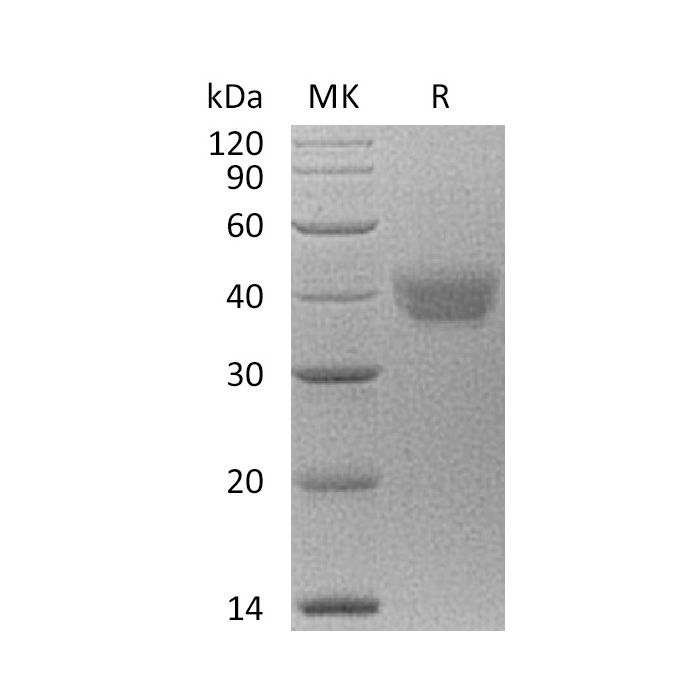
| APMol Mass | 38 KDa, reducing conditions |
| Formulation Description | Lyophilized from a 0.2 μm filtered solution of 20mM PB, 150mM NaCl, pH 7.2. |
| Endotoxin | < 1 EU/µg as determined by LAL test. |
| Reconstitution | Always centrifuge tubes before opening.Do not mix by vortex or pipetting. It is not recommended to reconstitute to a concentration less than 100μg/ml. Dissolve the lyophilized protein in distilled water. Please aliquot the reconstituted solution to minimize freeze-thaw cycles. |
| Storage | Lyophilized protein should be stored at ≤ -20°C, stable for one year after receipt. Reconstituted protein solution can be stored at 2-8°C for 2-7 days. Aliquots of reconstituted samples are stable at ≤ -20°C for 3 months. |
| Shipping | The product is shipped at ambient temperature. Upon receipt, store it immediately at the temperature listed below. |
Background
Endothelial Cell Adhesion Molecule (ESAM) is a 55 kDa type I transmembrane glycoprotein member of the JAM family of immunoglobulin superfamily molecules. The 390 amino acid Human ESAM contains a 216 amino acid extracellular domain (ECD) with a V-type and a C2-type immunoglobulin (Ig) domain. ESAM is specifically expressed at endothelial tight junctions and on activated platelets and performs homophilic adhesion activity. The adaptor protein membrane-associated guanylate kinase MAGI-1 has been identified as an intracellular binding partner of ESAM. In addition, ESAM at endothelial tight junctions participates in the migration of neutrophils through the vessel wall, possibly by influencing endothelial cell contacts. ESAM-deficient mice were described with lowered angiogenic potential, and accordingly, overexpression of ESAM is closely associated with certain tumor growth and metastasis. ESAM is expressed on endothelial cells, activated platelets and megakaryocytes. The ECD of human and mouse ESAM share 69% amino acid identity.
MDSD