
Phospho-ACC1 (Ser79) Polyclonal antibody 29119-1-AP proteintech

$149.00
In stock
SKU
29119-1-AP
Catalog No.SizePrice (USD)
29119-1-AP-20UL20 μL$149.00
29119-1-AP-100UL100 μL$449.00
Catalog Number29119-1-AP
SynonymsACC1 (Ser79), ACC1 Ser79, Acetyl Coenzyme A Carboxylase (phospho S79), p ACC1 (Ser79), p-ACC1
HostRabbit
Reactivityhuman, mouse, rat and More (1)
Reactivityhuman, mouse, rat, chicken
FormLiquid
FormulationPBS, Azide, Glycerol
ApplicationsWB, IHC, IF-P, FC (Intra), ELISA
ApplicationsWB, IF-P, FC (Intra), ELISA
Host / IsotypeRabbit / IgG
Tested Applications — Positive WB detected inSH-SY5Y cells, NIH/3T3 cells
Tested Applications — Positive IF-P detected inmouse brain tissue
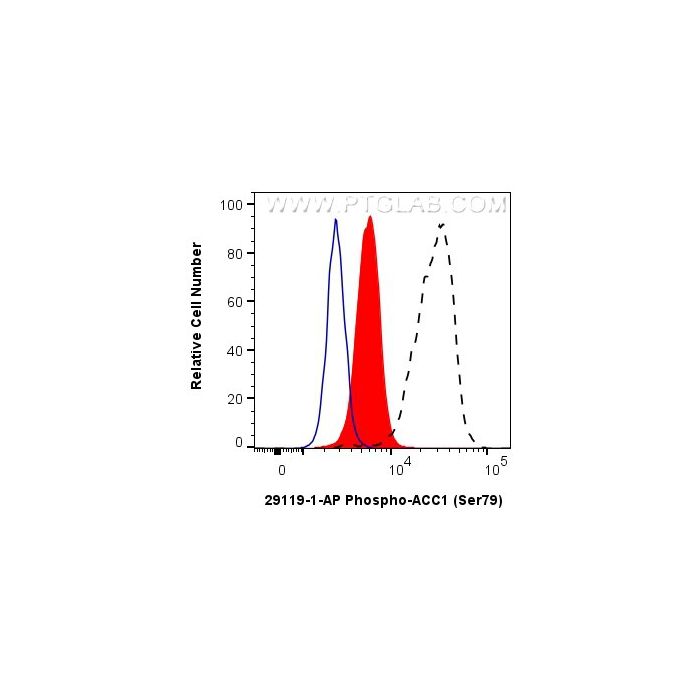
Tested Applications — Positive FC (Intra) detected inNIH/3T3 cells
Recommended Dilutions — Western Blot (WB)WB : 1:500-1:2000
Recommended Dilutions — Immunofluorescence (IF)-PIF-P : 1:200-1:800
Recommended Dilutions — Flow Cytometry (FC) (INTRA)FC (INTRA) : 0.13 ug per 10^6 cells in a 100 µl suspension
Positive WB detected inSH-SY5Y cells, NIH/3T3 cells
Positive IF-P detected inmouse brain tissue
Positive FC (Intra) detected inNIH/3T3 cells
Western Blot (WB)WB : 1:500-1:2000
Immunofluorescence (IF)-PIF-P : 1:200-1:800
Flow Cytometry (FC) (INTRA)FC (INTRA) : 0.13 ug per 10^6 cells in a 100 µl suspension
Tested Reactivityhuman, mouse, rat
Cited Reactivityhuman, mouse, rat, chicken
ClassPolyclonal
TypeAntibody
ImmunogenPeptide Predict reactive species
Full Nameacetyl-Coenzyme A carboxylase alpha
Calculated Molecular Weight2383 aa, 275 kDa
Observed Molecular Weight250 kDa
GenBank Accession NumberBC137287
Gene SymbolAcetyl-CoA Carboxylase 1
Gene ID (NCBI)31
RRIDAB_2918238
ConjugateUnconjugated
Purification MethodAntigen affinity purification
UNIPROT IDQ13085
Storage BufferPBS with 0.02% sodium azide and 50% glycerol, pH 7.3.
Storage ConditionsStore at -20°C. Stable for one year after shipment. Aliquoting is unnecessary for -20 o C storage. 20ul sizes contain 0.1% BSA.
FC protocol for Phospho-ACC1 (Ser79) antibody 29119-1-APDownload protocol
IF protocol for Phospho-ACC1 (Ser79) antibody 29119-1-APDownload protocol
WB protocol for Phospho-ACC1 (Ser79) antibody 29119-1-APDownload protocol
humanWB J Adv Res Sodium citrate targeting Ca2+/CAMKK2 pathway exhibits anti-tumor activity through inducing apoptosis and ferroptosis in ovarian cancer Authors - Yulun Wu View Article
mouse,humanWB Acta Pharm Sin B Schisanhenol ameliorates non-alcoholic fatty liver disease via inhibiting miR-802 activation of AMPK-mediated modulation of hepatic lipid metabolism Authors - Bin Li View Article
mouseWB Sci Adv Liver endothelial zonation orchestrates hepatic steatosis onset through retinoic acid-regulated FGF1. Authors - Zhiqiang Fang View Article
Citations56
DilutionsWB : 1:500-1:2000 IF-P : 1:200-1:800 FC (INTRA) : 0.13 ug per 10^6 cells in a 100 µl suspension
IsotypeIgG
ClonalityPolyclonal
Clone Number-
ConjugationUnconjugated

ACC1 represents a key enzyme, as it is highly regulated by phosphorylation and allosteric regulation, providing a rapid adaptation to new micro-environmental conditions. AMPK phosphorylates acetyl CoA carboxylase (ACC), a rate-controlling step in the conversion of acetyl-CoA to malonyl CoA. This phosphorylation inhibits the activity of ACC, which results in decreased malonyl CoA levels. Additionally, two isoforms of ACC encoded by two different genes in mammalian cells have been described, ACC1 and ACC2. ACC1 is highly enriched in lipogenic tissues (liver and adipose), while ACC2 is mainly expressed in oxidative tissues (heart, skeletal muscle and liver). (PMID: 29056512, PMID: 16054041, PMID: 30816537) Protocols Product Specific Protocols FC protocol for Phospho-ACC1 (Ser79) antibody 29119-1-AP Download protocol IF protocol for Phospho-ACC1 (Ser79) antibody 29119-1-AP Download protocol WB protocol for Phospho-ACC1 (Ser79) antibody 29119-1-AP Download protocol Standard Protocols Click here to view our Standard Protocols

Publications
  1. The AKAP12-PKA axis regulates lipid homeostasis during alcohol-associated liver disease
    Journal: Signal Transduct Target Ther | Authors: Chandana Thimme Gowda | Species: human | Application: WB
  2. PRKAB2 as a tumor suppressor in renal cell carcinoma: inhibiting mitophagy via the LRPPRC-PRKN/parkin interaction and cardiolipin biosynthesis.
    Journal: Autophagy | Authors: Kailei Chen | Species: human | Application: WB
  3. Periplocin suppresses the growth of colorectal cancer cells by triggering LGALS3 (galectin 3)-mediated lysophagy
    Journal: Autophagy | Authors: Kui Wang | Species: human | Application: WB
  4. Sodium citrate targeting Ca2+/CAMKK2 pathway exhibits anti-tumor activity through inducing apoptosis and ferroptosis in ovarian cancer
    Journal: J Adv Res | Authors: Yulun Wu | Species: human | Application: WB
  5. Schisanhenol ameliorates non-alcoholic fatty liver disease via inhibiting miR-802 activation of AMPK-mediated modulation of hepatic lipid metabolism
    Journal: Acta Pharm Sin B | Authors: Bin Li | Species: mouse,human | Application: WB
  6. Liver endothelial zonation orchestrates hepatic steatosis onset through retinoic acid-regulated FGF1.
    Journal: Sci Adv | Authors: Zhiqiang Fang | Species: mouse | Application: WB
  7. Liver endothelial zonation orchestrates hepatic steatosis onset through retinoic acid-regulated FGF1.
    Journal: Sci Adv | Authors: Zhiqiang Fang | Species: mouse | Application: WB
  8. The tumor suppressor NDRG2 promotes ACC1 proteasomal degradation and inhibits de novo lipogenesis in hepatocellular carcinoma.
    Journal: Mol Biomed | Authors: Qianqian Shi | Species: mouse,human | Application: WB
  9. Podophyllotoxin induced renal toxicity by triggering fatty acid oxidation dysfunction and ferroptosis in rats on the basis of the toxicological evidence chain (TEC) concept.
    Journal: Phytomedicine | Authors: Xuejiao Li
  10. Unveiling plumbagin as a novel metabolic modulator to suppress ACC1-mediated de novo lipogenesis in non-small cell lung cancer.
    Journal: Phytomedicine | Authors: Zhi-Hua Deng | Species: human | Application: WB,IHC,IF
  11. Steam explosion modified pea peptides alleviates hepatosteatosis by regulating lipid metabolism pathways and promoting autophagy
    Journal: Food Res Int | Authors: Jingjing Zhang
  12. Celastrol improves endothelial function in diet-induced obesity mice via attenuating endoplasmic reticulum stress through the activation of AMPK pathway
    Journal: Mol Med | Authors: Cheng Yu
  13. 17β-Estradiol (E2) Upregulates the ERα/SIRT1/PGC-1α Signaling Pathway and Protects Mitochondrial Function to Prevent Bilateral Oophorectomy (OVX)-Induced Nonalcoholic Fatty Liver Disease (NAFLD)
    Journal: Antioxidants (Basel) | Authors: Ying Tian | Species: rat | Application: WB
  14. Ganoderma lucidum Spore Powder Alleviates Metabolic-Associated Fatty Liver Disease by Improving Lipid Accumulation and Oxidative Stress via Autophagy
    Journal: Antioxidants (Basel) | Authors: Yuxuan Zhang | Species: human | Application: WB
  15. Costunolide Ameliorates Hepatic Steatosis and Insulin Resistance in a Diet-Induced Mouse Model of Metabolic Dysfunction-Associated Steatotic Liver Disease by Activating the AMPK/ACC1 Signalling Pathway.
    Journal: Phytother Res | Authors: Wen Jiang | Species: mouse | Application: WB
  16. The opposite role of lactate dehydrogenase a (LDHA) in cervical cancer under energy stress conditions
    Journal: Free Radic Biol Med | Authors: Chaoran Jia | Species: human | Application: WB
  17. CYB5R3 overexpression exhibits sexual dimorphism: Mitochondrial and metabolic adaptations in transgenic female mice during calorie restriction
    Journal: Free Radic Biol Med | Authors: Luz Marina Sánchez-Mendoza | Species: mouse | Application: WB
  18. Gasdermin C reprograms metabolism through the CAMKK2-AMPK axis to promote lung adenocarcinoma progression and radioresistance.
    Journal: Cell Rep | Authors: Delong Ren
  19. LKB1 inactivation elicits an NNMT-mediated methyl sink and confers dependence on PRMT5 in lung cancer
    Journal: Cell Rep | Authors: Wen Mi | Species: human | Application: WB
  20. Steatotic hepatocyte-derived exosomes increase free fatty acids uptake by transporting miR-122-5p to target ATP6V1H-mediated CD36 translocation in hepatocytes.
    Journal: Clin Sci (Lond) | Authors: Junbin Chen
  21. Ferulic acid from Angelica sinensis (Oliv.) Diels ameliorates lipid metabolism in alcoholic liver disease via AMPK/ACC and PI3K/AKT pathways
    Journal: J Ethnopharmacol | Authors: Jun Lu | Species: mouse,human | Application: WB
  22. Huaganjian decoction ameliorates metabolic dysfunction-associated steatotic liver disease through liver-gut crosstalk
    Journal: J Ethnopharmacol | Authors: Qin Dong | Species: rat | Application: WB
  23. Integrating multi-omics approaches to elucidate the mechanism of XiaoPi Decoction in treating hyperplasia of mammary glands via AMPK signaling pathway activation.
    Journal: J Ethnopharmacol | Authors: Ling Chen | Species: rat | Application: WB
  24. Ursolic Acid Ameliorates Alcoholic Liver Injury through Attenuating Oxidative Stress-Mediated Ferroptosis and Modulating Gut Microbiota
    Journal: J Agric Food Chem | Authors: Liangfu Zhou | Species: mouse,human | Application: WB
  25. Modulation of the Microbiome-Fat-Liver Axis by Lactic Acid Bacteria: A Potential Alleviated Role in High-Fat-Diet-Induced Obese Mice
    Journal: J Agric Food Chem | Authors: Benliang Wei | Species: mouse | Application: WB
  26. Targeting the AMPK/ACC pathway with luteolin suppresses de novo lipogenesis and limits tumor burden in a MASH-HCC mouse model.
    Journal: Life Sci | Authors: Gaoxuan Shao | Species: mouse, human | Application: WB
  27. Hawk tea prevents high-fat diet-induced obesity in mice by activating the AMPK/ACC/SREBP1c signaling pathways and regulating the gut microbiota.
    Journal: Food Funct | Authors: Wei Tao | Species: mouse | Application: WB,IHC
  28. Regulatory effect of β-glucan secreted by Rhizobium pusense on triglyceride metabolism and their relationships with the modulation of intestinal microbiota in mice fed a high-fat diet
    Journal: Food Funct | Authors: Bin Zhang | Species: mouse | Application: WB
  29. Probiotic-fermented tomato with hepatic lipid metabolism modulation effects: analysis of physicochemical properties, bioactivities, and potential bioactive compounds.
    Journal: Food Funct | Authors: Benliang Wei | Species: mouse | Application: WB
  30. Adaptations of mitochondrial, autophagy and nutrient sensing pathways in the liver from long-lived mice overexpressing CYB5R3 are sex-dependent and involve inter-organ responses.
    Journal: Geroscience | Authors: Luz Marina Sánchez-Mendoza | Species: mouse | Application: WB
  31. A Small Molecule Inhibitor of Leucine Carboxyl Methyltransferase-1 Inhibits Cancer Cell Survival.
    Journal: Front Drug Discov (Lausanne) | Authors: O.A. Arosarena | Species: human | Application: WB
  32. Diosgenin Ameliorated Type II Diabetes-Associated Nonalcoholic Fatty Liver Disease through Inhibiting De Novo Lipogenesis and Improving Fatty Acid Oxidation and Mitochondrial Function in Rats
    Journal: Nutrients | Authors: Yujie Zhong | Species: rat | Application: WB
  33. Radix Rehmanniae Praeparata Extract Enhances Liver Regeneration Through AMPK-Driven Metabolic Reprogramming.
    Journal: Nutrients | Authors: Changmeng Li | Species: mouse | Application: WB
  34. Sex-dependent adaptations in heart mitochondria from transgenic mice overexpressing cytochrome b5 reductase-3
    Journal: Mitochondrion | Authors: Luz Marina Sánchez-Mendoza | Species: mouse | Application: WB
  35. Network pharmacology and transcriptomics reveal Complanatoside A regulates lipid metabolism in hyperlipidemia and non-alcoholic fatty liver disease via the AMPK pathway
    Journal: J Nutr Biochem | Authors: Sijia Jiang | Species: mouse | Application: WB
  36. Time-of-day-dependent effects of exercise on the hepatic clock and proteome in high-fat diet-fed mice.
    Journal: J Physiol Biochem | Authors: Chunxiu Huang | Species: mouse | Application: WB
  37. Melatonin Prevents the Progression of MASLD via Inhibiting FFAs-Induced Ferroptosis through KEAP1/NRF2/HO-1 Pathway
    Journal: Biomol Ther (Seoul) | Authors: Shuojiao Li
  38. Effects of dietary tributyrin on quality of breast meat in heat-stressed Taihe silky fowls.
    Journal: Poult Sci | Authors: Chuanbin Chen | Species: chicken | Application: WB
  39. α-Lactalbumin Peptide Asp-Gln-Trp Ameliorates Hepatic Steatosis and Oxidative Stress in Free Fatty Acids-Treated HepG2 Cells and High-Fat Diet-Induced NAFLD Mice by Activating the PPARα Pathway
    Journal: Mol Nutr Food Res | Authors: Haoran Chen | Application: WB
  40. Monascus pilosus SWM-008-Fermented Red Mold Rice and Its Monascinol Ameliorate Non-Alcoholic Fatty Liver Disease via Activation of the AMPK-ATGL Pathway and Enrichment of Butyrate-Producing Bacteria.
    Journal: Mol Nutr Food Res | Authors: Chia-Pei Hsieh | Species: mouse | Application: WB,ELISA
  41. Regulatory mechanism of Angelica sinensis via the AMPK pathway in laying hens: against fatty liver hemorrhagic syndrome.
    Journal: Poult Sci | Authors: Fanlin Wu | Species: chicken | Application: WB
  42. Chronic Waterborne Exposure to Polystyrene Microplastics Induces Kupffer Cell Polarization Imbalance and Hepatic Lipid Accumulation.
    Journal: FASEB J | Authors: Ting Li | Species: mouse | Application: WB
  43. Mitochondrial uncoupler BAM15 ameliorates liver lipid metabolism disorders by activating the AMPK pathway.
    Journal: FEBS J | Authors: Zunhai Liu | Species: mouse | Application: WB
  44. Hawthorn total flavonoids ameliorate hyperlipidemia through AMPK/SREBP1-c and PPARα/PGC-1α/CPT-1A pathway activation and gut microbiota modulation
    Journal: J Sci Food Agric | Authors: Liping Zheng | Species: mouse | Application: WB
  45. Hernandezine Regulates Proliferation and Autophagy-Induced Apoptosis in Melanoma Cells.
    Journal: J Nat Prod | Authors: Xiaoting Wang | Species: human | Application: WB
  46. Choline reduces inflammatory response and lipid accumulation in calf hepatocytes induced by NEFA via inhibiting ROS/ NF-κB/NLRP3 inflammasome axis
    Journal: Mol Immunol | Authors: Rui Zhang
  47. Hepatic activating transcription factor 3 protects against systemic inflammation by attenuating lipotoxicity.
    Journal: Metabol Open | Authors: Chencheng Hu | Species: mouse | Application: WB
  48. Toosendanin induces hepatotoxicity via disrupting LXRα/Lipin1/SREBP1 mediated lipid metabolism
    Journal: Food Chem Toxicol | Authors: Sixin Chen | Species: mouse,human | Application: WB,IHC
  49. Toosendanin induces hepatotoxicity via disrupting LXRα/Lipin1/SREBP1 mediated lipid metabolism
    Journal: Food Chem Toxicol | Authors: Sixin Chen | Species: mouse,human | Application: WB,IHC
  50. Miquelianin in Folium Nelumbinis extract promotes white-to-beige fat conversion via blocking AMPK/DRP1/mitophagy and modulating gut microbiota in HFD-fed mice
    Journal: Food Chem Toxicol | Authors: Zhenyu Wang | Species: mouse | Application: WB
  51. Codonopsis pilosula polysaccharides attenuate lipid accumulation and inflammatory response in the NAFLD mouse by regulating AMPK/ACC/SREBP1 signaling pathway
    Journal: Tissue Cell | Authors: Qiu Chen | Species: mouse | Application: WB
  52. MCC950, a Selective NLRP3 Inhibitor, Attenuates Adverse Cardiac Remodeling Following Heart Failure Through Improving the Cardiometabolic Dysfunction in Obese Mice.
    Journal: Front Cardiovasc Med | Authors: Menglong Wang | Species: mouse | Application: WB
  53. miR-1268a Regulates Fatty Acid Metabolism by Targeting CD36 in Angiotensin II-induced Heart Failure
    Journal: Cell Biochem Biophys | Authors: Gang Xu | Species: human | Application: WB
  54. Multi-Omics Analysis Identifies Tryptophan Metabolism and Glycolysis as Potential Pathways Involved in the Protective Effects of Tormentic Acid Against Metabolic Associated Fatty Liver Disease.
    Journal: Pharmacol Res Perspect | Authors: Yuanyuan Wei | Species: mouse | Application: WB
  55. Multi-Omics Analysis Identifies Tryptophan Metabolism and Glycolysis as Potential Pathways Involved in the Protective Effects of Tormentic Acid Against Metabolic Associated Fatty Liver Disease.
    Journal: Pharmacol Res Perspect | Authors: Yuanyuan Wei | Species: mouse | Application: WB
  56. Food-Medicine Homologous Qiongyu Gao Attenuates Skin Photoaging by Remodeling Gut Microbiota and Restoring Mitochondrial Energy Metabolism.
    Journal: Foods | Authors: Ziyi Yang
  57. AMPK/Autophagy-Dependent Pro-Adipogenic Effect Coupled With Enhanced Lipid Mobilization and Thermogenesis Underlies the Dual Action of Canagliflozin Against Obesity.
    Journal: FASEB J | Authors: Jingsa Zhang | Species: mouse | Application: WB

Product Documents

Datasheet

Datasheet

Reviews

Write Your Own Review
You're reviewing:Phospho-ACC1 (Ser79) Polyclonal antibody 29119-1-AP proteintech
Your Rating
Copyright © 2025 Biogege, Inc. All rights reserved.