TMEM27 Polyclonal antibody 19207-1-AP proteintech
$149.00
In stock
SKU
19207-1-AP
| Catalog Number | 19207-1-AP |
| Synonyms | ACE2, CLTRN, Collectrin, NX 17, NX17, TMEM27, transmembrane protein 27 |
| Host | Rabbit |
| Reactivity | human, mouse |
| Form | Liquid |
| Formulation | PBS, Azide, Glycerol |
| Applications | WB, IHC, IF/ICC, ELISA |
| Host / Isotype | Rabbit / IgG |
| Tested Applications — Positive WB detected in | mouse pancreas tissue, mouse kidney tissue |
| Tested Applications — Positive IHC detected in | human kidney tissue, human liver cancer tissue Note: suggested antigen retrieval with TE buffer pH 9.0; (*) Alternatively, antigen retrieval may be performed with citrate buffer pH 6.0 |
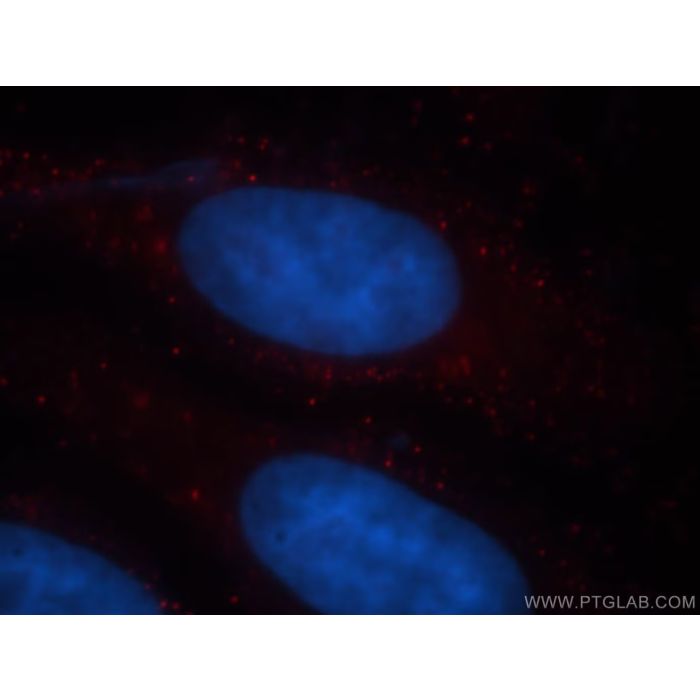
| Tested Applications — Positive IF/ICC detected in | HepG2 cells |
| Recommended Dilutions — Western Blot (WB) | WB : 1:500-1:2000 |
| Recommended Dilutions — Immunohistochemistry (IHC) | IHC : 1:100-1:400 |
| Recommended Dilutions — Immunofluorescence (IF)/ICC | IF/ICC : 1:10-1:100 |
| Positive WB detected in | mouse pancreas tissue, mouse kidney tissue |
| Positive IHC detected in | human kidney tissue, human liver cancer tissue Note: suggested antigen retrieval with TE buffer pH 9.0; (*) Alternatively, antigen retrieval may be performed with citrate buffer pH 6.0 |
| Positive IF/ICC detected in | HepG2 cells |
| Western Blot (WB) | WB : 1:500-1:2000 |
| Immunohistochemistry (IHC) | IHC : 1:100-1:400 |
| Immunofluorescence (IF)/ICC | IF/ICC : 1:10-1:100 |
| Tested Reactivity | human, mouse |
| Class | Polyclonal |
| Type | Antibody |
| Immunogen | CatNo: Ag7668 Product name: Recombinant human TMEM27 protein Source: e coli. -derived, PGEX-4T Tag: GST Domain: 27-143 aa of BC050606 Sequence: VRLSIRTALGDKAYAWDTNEEYLFKAMVAFSMRKVPNREATEISHVLLCNVTQRVSFWFVVTDPSKNHTLPAVEVQSAIRMNKNRINNAFFLNDQTLEFLKIPSTLAPPMDPSVPIW Predict reactive species |
| Full Name | transmembrane protein 27 |
| Calculated Molecular Weight | 25 kDa |
| Observed Molecular Weight | 32 kDa |
| GenBank Accession Number | BC050606 |
| Gene Symbol | TMEM27 |
| Gene ID (NCBI) | 57393 |
| RRID | AB_10860104 |
| Conjugate | Unconjugated |
| Purification Method | Antigen affinity purification |
| UNIPROT ID | Q9HBJ8 |
| Storage Buffer | PBS with 0.02% sodium azide and 50% glycerol, pH 7.3. |
| Storage Conditions | Store at -20°C. Stable for one year after shipment. Aliquoting is unnecessary for -20 o C storage. 20ul sizes contain 0.1% BSA. |
| IF protocol for TMEM27 antibody 19207-1-AP | Download protocol |
| IHC protocol for TMEM27 antibody 19207-1-AP | Download protocol |
| WB protocol for TMEM27 antibody 19207-1-AP | Download protocol |
| Citations | - |
| Dilutions | WB : 1:500-1:2000 IHC : 1:100-1:400 IF/ICC : 1:10-1:100 |
| Isotype | IgG |
| Clonality | Polyclonal |
| Clone Number | - |
| Conjugation | Unconjugated |
TMEM27 (also termed collectrin), a 46 kDa type I transmembrane protein, is a homolog of the noncatalytic domain of angiotensin-converting enzyme-related carboxypeptidase (Ace2). Its expression has only been reported in the brush border membrane of the proximal tubules and collecting ducts of the kidney and in the pancreatic b cell (PMID: 11278314, 16330324). Overexpression of TMEM27 in b cells leads to increased proliferation in vitro and increased pancreatic b cell mass in vivo, and also has been reported to augment glucosestimulated ins secretion (GSIS) (PMID: 16330324, 16330323). The abundance of TMEM27 protein in b cells is furthermore regulated by ectodomain cleavage, which leads to two cleavage products, a 25 kDa N-terminal part that is released into the extracellular space (the shed fragment), and a 22 kDa C-terminal fragment (CTF) remaining in the membrane that is rapidly degraded (PMID: 16330324). TMEM27 is an N-glycosylated protein and can form dimers with MW of 64-75 kDa(patent US 20100119489 A1). TMEM27 can be used as a beta cell mass biomarker (PMID: 20386877, 21907142). Protocols Product Specific Protocols IF protocol for TMEM27 antibody 19207-1-AP Download protocol IHC protocol for TMEM27 antibody 19207-1-AP Download protocol WB protocol for TMEM27 antibody 19207-1-AP Download protocol Standard Protocols Click here to view our Standard Protocols