A synthetic peptide corresponding to the center region of the Mouse CD97/ADGRE5
Preparation
Produced in rabbits immunized with a synthetic peptide corresponding to the center region of the Mouse CD97/ADGRE5, and purified by antigen affinity chromatography.
Source
Polyclonal Rabbit IgG
Purification
Protein A & Antigen Affinity
Formulation
0.2 μm filtered solution in PBS
Conjugate
Unconjugated
Form
Liquid
Shipping
This antibody is shipped as liquid solution at ambient temperature. Upon receipt, store it immediately at the temperature recommended below.
Storage
This antibody can be stored at 2℃-8℃ for one month without detectable loss of activity. Antibody products are stable for twelve months from date of receipt when stored at -20℃ to -80℃. Preservative-Free. Avoid repeated freeze-thaw cycles.
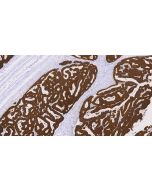
Anti-Cd97 rabbit polyclonal antibody at 1:500 dilution Lane A: NIH/3T3 Whole Cell Lysate Lane B: HepG2 Whole Cell Lysate Lane C: Raw264.7 Whole Cell Lysate Lane D: Mouse spleen tissue lysate Lysates/proteins at 30 μg per lane. Secondary Goat Anti-Rabbit IgG (H+L)/HRP at 1/10000 dilution. Developed using the ECL technique. Performed under reducing conditions. Predicted band size:92 kDa
Anti-Cd97 rabbit polyclonal antibody at 1:500 dilution Lane A: NIH/3T3 Whole Cell Lysate Lane B: HepG2 Whole Cell Lysate Lane C: Raw264.7 Whole Cell Lysate Lane D: Mouse spleen tissue lysate Lysates/proteins at 30 μg per lane. Secondary Goat Anti-Rabbit IgG (H+L)/HRP at 1/10000 dilution. Developed using the ECL technique. Performed under reducing conditions. Predicted band size:92 kDa
The cluster of differentiation (CD) system is commonly used as cell markers in immunophenotyping. Different kinds of cells in the immune system can be identified through the surface CD molecules which associating with the immune function of the cell. There are more than 32 CD unique clusters and subclusters have been identified. Some of the CD molecules serve as receptors or ligands important to the cell through initiating a signal cascade which then alter the behavior of the cell. Some CD proteins do not take part in cell signal process but have other functions such as cell adhesion. The CD97 is a receptor predominantly expressed in leukocytes and belongs to a new group of seven-span transmembrane molecules, which is also designed EGF-TM7 family. The family members are characterized by an extended extracellular region with several N-terminal epidermal growth factor-like domains two of which contain a calcium-binding site. Mature CD 97 has two noncovalently associated subunits and is composed of a large extracellular protein (CD97 alpha) and a seven-membrane spanning protein (CD97 beta). CD97 is considered as a defining feature of G protein-coupled receptors. The effects that lymphocytes and erythrocytes adhere to CD97-transfected COS cells suggest that CD97 has the ability to bind cellular ligands. CD97 alpha has three alternatively spliced isoforms that are related to the calcium-binding EGF-like repeats in the microfibril protein fibrillin. Leukocytes strongly positive for CD97 are concentrated at sites of inflammation relative to CD97 expression in normal lymphoid tissues.
References
Ho IC, et al. (2009) GATA3 and the T-cell lineage: essential functions before and after T-helper-2-cell differentiation. Nat Rev Immunol. 9 (2): 125-35.
Matesanz-Isabel J, et al. (2011) New B-cell CD molecules. Immunology Letters.134 (2): 104-12.
Gray JX, et al. (1996) CD97 is a processed, seven-transmembrane, heterodimeric receptor associated with inflammation. The journal of Immunology. 157 (12): 5438-47.
Hamann J, et al. (1998) Characterization of the CD55 (DAF)-binding site on the seven-span transmembrane receptor CD97.European Journal of Immunology. 28 (5): 1701-7.


-HD12MY1689-WB.png)
