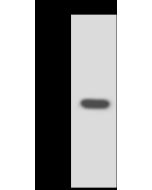
Supplied as sterile 50 mM Tris-HCl, pH 7.5, 50-300mM NaCl, 10mM glutathione, 0.1mM EDTA, 0.25-1.0mM DTT, 0-0.1mM PMSF, 10-25% glycerol Please contact us for any concerns or special requirements. Please refer to the specific buffer information in the hardcopy of datasheet or the lot-specific COA.
Shipping
Enzymes are highly recommended to be shipped at frozen temperature with dry ice. Shipment made at ambient temperature may seriously affect the activity of the ordered products.
Stability & Storage
Store product at –70°C. For optimal storage, aliquot target into smaller quantities after centrifugation and store at recommended temperature. For most favorable performance, avoid repeated handling and multiple freeze/thaw cycles.
Purity
For specific information on a given lot, see related technical data sheet.
Activity
For specific information on a given lot, see related technical data sheet.
Protein Construction
Recombinant human MUSK (519-end) was expressed by baculovirus in Sf9 insect cells using an N-terminal GST tag.
Expressed Host
Baculovirus-Insect Cells
Species
Human
Molecule Mass
~63 kDa
Technical Data Sheet by Lot #
T4265-8
Synonyms: CMS9 Protein, Human; FADS Protein, Human; FADS1 Protein, Human
Background Information
Full Name
muscle, skeletal, receptor tyrosine kinase
Description
Muscle, skeletal receptor tyrosine-protein kinase, also known as Muscle-specific tyrosine-protein kinase receptor, Muscle-specific kinase receptor, and MUSK, is a single-pass type I membrane protein that belongs to the protein kinase superfamily and tyr protein kinase family. MUSK contains one FZ (frizzled) domain, three Ig-like C2-type (immunoglobulin-like) domains, and one protein kinase domain. This protein is a muscle-specific tyrosine kinase receptor and it may play a role in clustering of the acetylcholine receptor in the postsynaptic neuromuscular junction. MUSK expression is increased in muscle cells stimulated with Wnt or at conditions when the Wnt signaling was activated. MUSK is a muscle-specific receptor tyrosine kinase that is activated by agrin. It has a critical role in neuromuscular synapse formation. MUSK is a receptor tyrosine kinase that is a key mediator of agrin's action and is involved in neuromuscular junction (NMJ) organization. Defects in the MUSK encoding gene are a cause of autosomal recessive congenital myasthenic syndrome (CMS). Congenital myasthenic syndromes are inherited disorders of neuromuscular transmission that stem from mutations in presynaptic, synaptic, or postsynaptic proteins. MUSK mutations lead to decreased agrin-dependent AChR aggregation, a critical step in the formation of the neuromuscular junction. Mutations in this receptor encoding gene also have been associated with the congenital myasthenic syndrome.
Research Areas
Receptor Tyrosine Kinases (RTKs)
References
Glass D, et al. (1996) Agrin acts via a MuSK receptor complex. Cell. 85 (4): 513-23.
DeChiara T, et al. (1996) The receptor tyrosine kinase MuSK is required for neuromuscular junction formation in vivo. Cell. 85 (4): 501-12.
Hoch W, et al. (2001) Auto-antibodies to the receptor tyrosine kinase MuSK in patients with myasthenia gravis without acetylcholine receptor antibodies. Nat Med. 7 (3): 365-8.