Lyophilized from sterile PBS, pH 7.4. Please contact us for any concerns or special requirements. Normally 5 % - 8 % trehalose, mannitol and 0.01% Tween80 are added as protectants before lyophilization. Please refer to the specific buffer information in the hardcopy of datasheet or the lot-specific COA.
Endotoxin
< 1.0 EU per μg protein as determined by the LAL method.
Shipping
In general, recombinant proteins are provided as lyophilized powder which are shipped at ambient temperature. Bulk packages of recombinant proteins are provided as frozen liquid. They are shipped out with blue ice unless customers require otherwise.
Stability & Storage
Samples are stable for up to twelve months from date of receipt at -20℃ to -80℃. Store it under sterile conditions at -20℃ to -80℃. It is recommended that the protein be aliquoted for optimal storage. Avoid repeated freeze-thaw cycles.
Reconstitution
To find reconstitution info, click on 'COA' at the top of the page, enter the lot number and product size for the lot-specific COA.
Purity
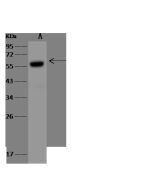
≥ 90 % as determined by SDS-PAGE. ≥ 90 % as determined by SEC-HPLC.
Activity
Immobilized Recombinant Human OX40 / CD134 Protein (Fc Tag) (Cat:10481-H02H) at 2 μg/mL, add increasing concentrations of CTLA-4 x OX40 Bispecific Antibody in 50% Human serum and then add Recombinant Human CTLA-4 Protein (ECD, Fc & AVI Tag), Biotinylated (Cat:11159-H41H-B) at 0.2 μg/mL. Detection was performed using HRP-conjugated streptavidin with sensitivity of 1.28 ng/mL (Routinely tested).
Protein Construction
A DNA sequence encoding the human TNFRSF4 (NP_003318.1) (Met1-Ala216) was expressed with the Fc region of human IgG1 at the C-terminus.
Accession#
NP_003318.1
Expressed Host
HEK293 Cells
Species
Human
Predicted N Terminal
Leu 29
Molecule Mass
The recombinant human TNFRSF4 consists of 426 amino acids and predicts a molecular mass of 46.9 kDa.
tumor necrosis factor receptor superfamily, member 4
Description
OX40 (CD134) and its binding partner, OX40L (CD252), are members of the tumor necrosis factor receptor/tumor necrosis factor superfamily, is known to break an existing state of tolerance in malignancies, leading to a reactivation of antitumor immunity. The interaction between OX40 and OX40L plays an important role in antigen-specific T-cell expansion and survival. OX40 and OX40L also regulate cytokine production from T cells, antigen-presenting cells, natural killer cells, and natural killer T cells, and modulate cytokine receptor signaling. In line with these important modulatory functions, OX40-OX40L interactions have been found to play a central role in the development of multiple inflammatory and autoimmune diseases, making them attractive candidates for intervention in the clinic. Conversely, stimulating OX40 has shown it to be a candidate for therapeutic immunization strategies for cancer and infectious disease.
Research Areas
Cancer Drug Targets
Tags
Cancer Immunotherapy
Co-stimulatory Immune Checkpoint Targets
Immune Checkpoint
Immune Checkpoint Detection: Antibodies
Immune Checkpoint Detection: ELISA Antibodies
Immune Checkpoint Detection: WB Antibodies
Immune Checkpoint Proteins
Immune Checkpoint Targets
Immunotherapy
Targeted Therapy
References
Compaan D.M., et al. (2006) .The crystal structure of the costimulatory OX40-OX40L complex. Structure 14:1321-1330.
Kawamata S., et al. (1998) .Activation of OX40 signal transduction pathways leads to tumor necrosis factor receptor-associated factor (TRAF) 2- and TRAF5-mediated NF-kappaB activation. J. Biol. Chem. 273:5808-5814.
Byun M., (2013) Inherited human OX40 deficiency underlying classic Kaposi sarcoma of childhood. J. Exp. Med. 210:1743-1759.