Produced in rabbits immunized with E. coli-derived Human ACSL5 fragment, and purified by antigen affinity chromatography.
Source
Polyclonal Rabbit IgG
Purification
Protein A & Antigen Affinity
Formulation
PBS, pH7.0 with 0.03% Proclin300
Conjugate
Unconjugated
Form
Liquid
Shipping
This antibody is shipped as liquid solution at ambient temperature. Upon receipt, store it immediately at the temperature recommended below.
Storage
This antibody can be stored at 2℃-8℃ for one month without detectable loss of activity. Antibody products are stable for twelve months from date of receipt when stored at -20℃ to -80℃. Avoid repeated freeze-thaw cycles.
Long-chain acyl-CoA synthetases (ACSLs) activate fatty acids (FAs: C12-C20), by thioesterification with Coenzyme A (CoA), generating FA-CoAs. Acyl-CoA synthetase 5 (ACSL5), a mitochondrially localized enzyme, catalyzes the synthesis of long-chain fatty acid thioesters and is physiologically involved in pro-apoptotic sensing of enterocytes. ACSL5 is implicated in several types of cancers and has a potential prognostic value. Unlike other ACSLs, ACSL5 is downregulated in colorectal carcinomas, breast, bladder, and pancreas. However, ACSL5 is overexpressed in glioma and considered a potential therapeutic target. Besides, the fibroblast growth factor receptor 2 (FGFR2) ACSL5 chimera RNA rendered clinical gastric cancer cells resistant to treatment with FGFR inhibitors.
References
Klaus C, et al. (2014) Tp53 status regulates acsl5-induced expression of mitochondrial mortalin in enterocytes and colorectal adenocarcinomas. Cell Tissue Res 357 (1): 267-278.

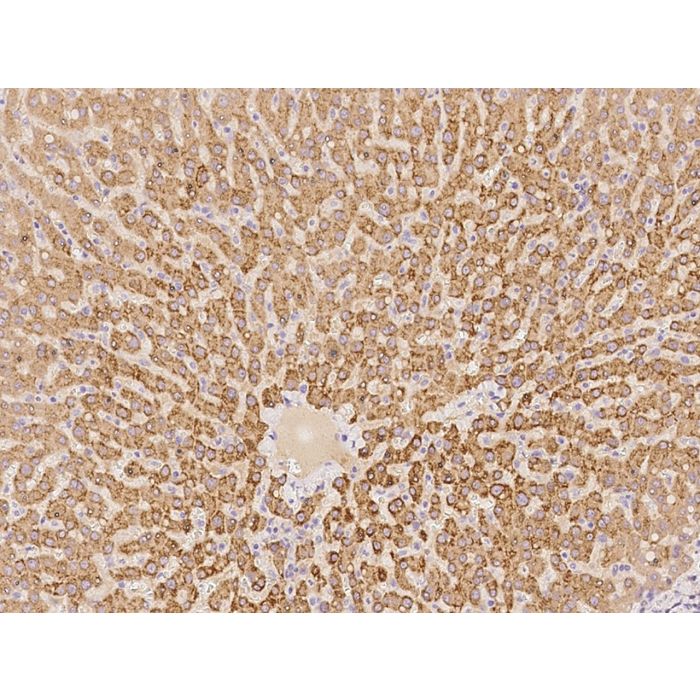
-HD12JL1744-100-human-liver-IHC-P.png)