IHC, FCM, IF, IP et al. applications haven't been validated. (Antibody's applications haven't been validated with corresponding virus positive samples. Optimal concentrations/dilutions should be determined by the end user.)
Specificity
SARS-CoV-2 Nucleocapsid Has cross-reactivity in ELISA and WB with SARS-CoV-2 Nucleocapsid Protein (Cat# 40588-V07E) Has cross-reactivity in ELISA with SARS-CoV-2 Omicron (B.1.1.529) Nucleocapsid Protein (Cat #40588-V07E34) SARS-CoV-2 Omicron (BA.2) Nucleocapsid Protein (Cat# 40588-V07E35) SARS-CoV-2 Omicron XE(BA.1 x BA.2) Nucleocapsid Protein (Cat# 40588-V07E36) SARS-CoV-2 Omicron (BA.4) Nucleocapsid Protein (Cat# 40588-V07E37) SARS-CoV-2 Delta (B.1.617.2) Nucleocapsid Protein (Cat# 40588-V07E29) SARS-CoV-2 Nucleocapsid (R203K, G204R) Protein (Cat# 40588-V07E1) SARS-CoV-2 Nucleocapsid (P13L) Protein (Cat# 40588-V07E2) SARS-CoV-2 Nucleocapsid (D3L, R203K, G204R, S235F) Protein (Cat# 40588-V07E7) SARS-CoV-2 Nucleocapsid (D3L, S235F) Protein (Cat# 40588-V07E8) SARS-CoV-2 Nucleocapsid (T205I) Protein (Cat# 40588-V07E9) SARS-CoV-2 Nucleocapsid (P80R) Protein (Cat# 40588-V07E11) SARS-CoV-2 Nucleocapsid (A220V) Protein (Cat# 40588-V07E13) SARS-CoV-2 Nucleocapsid (P199L, M234I) Protein (Cat# 40588-V07E18) SARS-CoV-2 Nucleocapsid (R203M, D377Y) Protein (Cat# 40588-V07E20) SARS-CoV-2 Nucleocapsid (A119S, R203K, G204R, M234I) Protein (Cat# 40588-V07E21) SARS-CoV-2 Nucleocapsid (P67S, P199L) Protein (Cat# 40588-V07E22) SARS-CoV-2 Nucleocapsid (P13L, T205I, A220V) Protein (Cat# 40588-V07E24) SARS-CoV-2 Nucleocapsid (P80R, A119S, R203K, G204R, M234I) Protein (Cat# 40588-V07E25) SARS-CoV-2 Nucleocapsid (P67S, P199L, M234I) Protein (Cat# 40588-V07E27) No cross-reactivity in ELISA and WB with SARS-CoV-2 Nucleocapsid CTD Protein (Cat# 40588-V07E5) SARS-CoV-2 Nucleocapsid (aa 248-407) Protein (Cat# 40588-V07E6) SARS-CoV-2 Nucleocapsid NTD Protein (Cat# 40588-V07E10)
Immunogen
Recombinant SARS-CoV-2 Nucleocapsid Protein (Catalog#40588-V08B)
Preparation
This antibody was produced from a hybridoma resulting from the fusion of a mouse myeloma with B cells obtained from a mouse immunized with purified, recombinant SARS-CoV-2 Nucleocapsid Protein (Catalog#40588-V08B; YP_009724397.2; Met1-Ala419(335Gly/Ala)). The IgG fraction of the cell culture supernatant was purified by Protein A affinity chromatography.
Source
Monoclonal Mouse IgG1 Clone #163
Purification
Protein A
Formulation
0.2 μm filtered solution in PBS
Conjugate
Unconjugated
Form
Liquid
Shipping
This antibody is shipped as liquid solution at ambient temperature. Upon receipt, store it immediately at the temperature recommended below.
Storage
This antibody can be stored at 2℃-8℃ for one month without detectable loss of activity. Antibody products are stable for twelve months from date of receipt when stored at -20℃ to -80℃. Preservative-Free. Avoid repeated freeze-thaw cycles.
Image / Experimental Information
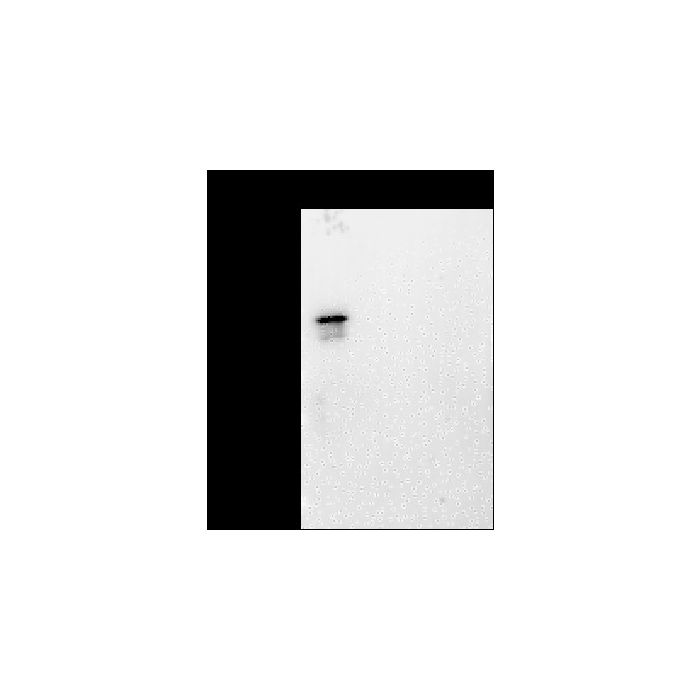
Image 1 Description
Anti-SARS-CoV-2 Nucleocapsid mouse monoclonal antibody at 1:1000 dilution. Lane A: SARS-CoV-2 Nucleocapsid-His Recombinant Protein(Cat: 40588-V07E) (10ng) Lane B: SARS-CoV-2 Nucleocapsid CTD Protein(Cat: 40588-V07E5) (10ng) Lane C: SARS-CoV-2 Nucleocapsid (aa 248-407) Protein(Cat: 40588-V07E6) (10ng) Lane D: SARS-CoV-2 Nucleocapsid NTD Protein(Cat: 40588-V07E10) (10ng) Secondary Goat Anti-Mouse IgG (H+L)/HRP at 1/10000 dilution Developed using the ECL technique. Performed under reducing conditions.
Image 1 Alt Text
SARS-CoV-2 Coronavirus Nucleocapsid Western blot (WB) 32919
Coronaviruses are enveloped viruses with a positive-sense RNA genome and with a nucleocapsid of helical symmetry. Coronavirus nucleoproteins localize to the cytoplasm and the nucleolus, a subnuclear structure, in both virus-infected primary cells and in cells transfected with plasmids that express N protein. The coronavirus N protein is required for coronavirus RNA synthesis and has RNA chaperone activity that may be involved in template switch. Nucleocapsid protein is the most abundant protein of coronavirus. During virion assembly, N protein binds to viral RNA and leads to the formation of the helical nucleocapsid. Nucleocapsid protein is a highly immunogenic phosphoprotein also implicated in viral genome replication and in modulating cell signaling pathways. Because of the conservation of the N protein sequence and its strong immunogenicity, the N protein of coronavirus is chosen as a diagnostic tool.
References
1.Van Boheemen S, et al. (2012), MBio. 3(6):e00473-12.
Bisht H. et al., 2004, Proc Natl Acad Sci. 101 (17): 6641-6.