A synthetic peptide corresponding to the center region of the Human DPP6
Preparation
Produced in rabbits immunized with a synthetic peptide corresponding to the center region of the Human DPP6, and purified by antigen affinity chromatography.
Source
Polyclonal Rabbit IgG
Purification
Protein A & Antigen Affinity
Formulation
0.2 μm filtered solution in PBS
Conjugate
Unconjugated
Form
Liquid
Shipping
This antibody is shipped as liquid solution at ambient temperature. Upon receipt, store it immediately at the temperature recommended below.
Storage
This antibody can be stored at 2℃-8℃ for one month without detectable loss of activity. Antibody products are stable for twelve months from date of receipt when stored at -20℃ to -80℃. Preservative-Free. Avoid repeated freeze-thaw cycles.
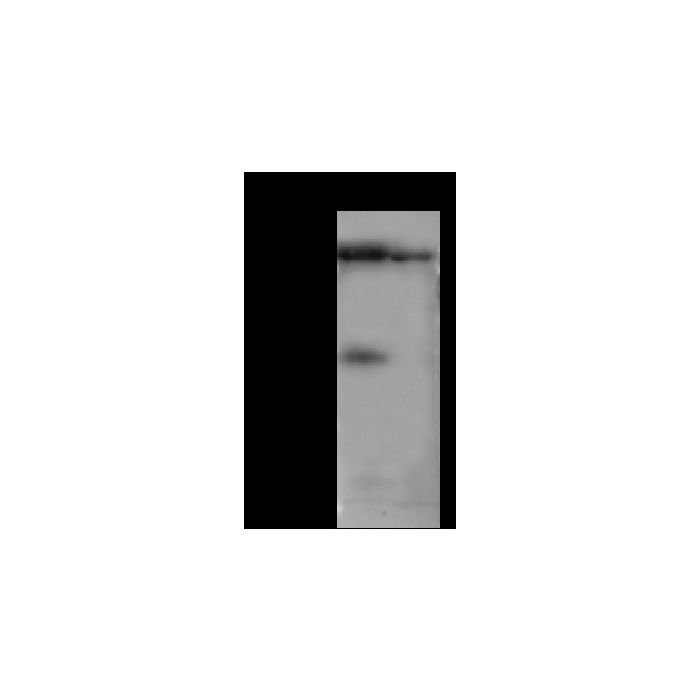
Anti-DPP6 rabbit monoclonal antibody at 1:500 dilution Lane A: Rat brain tissue lysate Lane B: Mouse brain tissue lysate Lysates/proteins at 30 μg per lane. Secondary Goat Anti-Rabbit IgG (H+L)/HRP at 1/10000 dilution. Developed using the ECL technique. Performed under reducing conditions. Predicted band size:98 kDa Observed band size:115 kDa
Anti-DPP6 rabbit monoclonal antibody at 1:500 dilution Lane A: Rat brain tissue lysate Lane B: Mouse brain tissue lysate Lysates/proteins at 30 μg per lane. Secondary Goat Anti-Rabbit IgG (H+L)/HRP at 1/10000 dilution. Developed using the ECL technique. Performed under reducing conditions. Predicted band size:98 kDa Observed band size:115 kDa
Dipeptidyl peptidase-like protein 6 (DPP6), a member of the dipeptidyl aminopeptidase family, plays distinct roles in brain development. Dipeptidyl peptidase-like protein 6 (DPP6) is an auxiliary subunit of the Kv4 family of voltage-gated K(+) channels known to enhance channel surface expression and potently accelerate their kinetics. DPP6 is a single transmembrane protein, which is structurally remarkable for its large extracellular domain. DPP6 is well known as an auxiliary subunit of Kv4-containing, A-type K(+) channels which regulate dendritic excitability in hippocampal CA1 pyramidal neurons. We have recently reported, however, a novel role for DPP6 in regulating dendritic filopodia formation and stability, affecting synaptic development and function.