Produced in rabbits immunized with E. coli-derived Human ECHS1 fragment, and purified by antigen affinity chromatography.
Source
Polyclonal Rabbit IgG
Purification
Protein A & Antigen Affinity
Formulation
PBS, pH7.0 with 0.03% Proclin300
Conjugate
Unconjugated
Form
Liquid
Shipping
This antibody is shipped as liquid solution at ambient temperature. Upon receipt, store it immediately at the temperature recommended below.
Storage
This antibody can be stored at 2℃-8℃ for one month without detectable loss of activity. Antibody products are stable for twelve months from date of receipt when stored at -20℃ to -80℃. Avoid repeated freeze-thaw cycles.
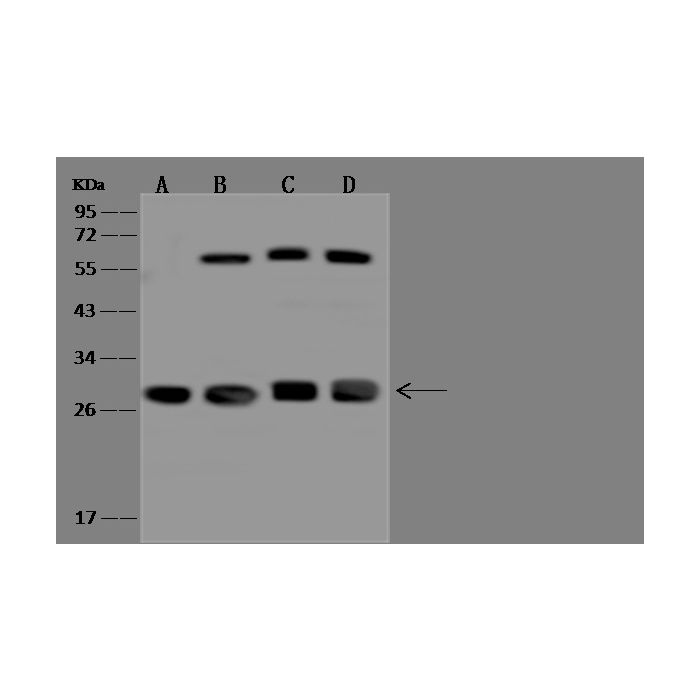
Anti-ECHS1 rabbit polyclonal antibody at 1:500 dilution Lane A: MCF7 Whole Cell Lysate Lane B: HeLa Whole Cell Lysate Lane C: 293T Whole Cell Lysate Lane D: HepG Whole Cell Lysate Lysates/proteins at 30 μg per lane. Secondary Goat Anti-Rabbit IgG (H+L)/HRP at 1/10000 dilution. Developed using the ECL technique. Performed under reducing conditions. Predicted band size:31 kDa Observed band size:31 kDa
Anti-ECHS1 rabbit polyclonal antibody at 1:500 dilution Lane A: MCF7 Whole Cell Lysate Lane B: HeLa Whole Cell Lysate Lane C: 293T Whole Cell Lysate Lane D: HepG Whole Cell Lysate Lysates/proteins at 30 μg per lane. Secondary Goat Anti-Rabbit IgG (H+L)/HRP at 1/10000 dilution. Developed using the ECL technique. Performed under reducing conditions. Predicted band size:31 kDa Observed band size:31 kDa
Anti-ECHS1 rabbit polyclonal antibody at 1:500 dilution Lane A: MCF7 Whole Cell Lysate Lane B: HeLa Whole Cell Lysate Lane C: 293T Whole Cell Lysate Lane D: HepG Whole Cell Lysate Lysates/proteins at 30 μg per lane. Secondary Goat Anti-Rabbit IgG (H+L)/HRP at 1/10000 dilution. Developed using the ECL technique. Performed under reducing conditions. Predicted band size:31 kDa Observed band size:31 kDa
Anti-ECHS1 rabbit polyclonal antibody at 1:500 dilution Lane A: MCF7 Whole Cell Lysate Lane B: HeLa Whole Cell Lysate Lane C: 293T Whole Cell Lysate Lane D: HepG Whole Cell Lysate Lysates/proteins at 30 μg per lane. Secondary Goat Anti-Rabbit IgG (H+L)/HRP at 1/10000 dilution. Developed using the ECL technique. Performed under reducing conditions. Predicted band size:31 kDa Observed band size:31 kDa
Anti-ECHS1 rabbit polyclonal antibody at 1:500 dilution Lane A: MCF7 Whole Cell Lysate Lane B: HeLa Whole Cell Lysate Lane C: 293T Whole Cell Lysate Lane D: HepG Whole Cell Lysate Lysates/proteins at 30 μg per lane. Secondary Goat Anti-Rabbit IgG (H+L)/HRP at 1/10000 dilution. Developed using the ECL technique. Performed under reducing conditions. Predicted band size:31 kDa Observed band size:31 kDa
enoyl CoA hydratase, short chain, 1, mitochondrial
Description
Overexpression of ECHS1 occurs in different cancers, including hepatocellular carcinoma (HCC). The coexistence of HBs and ECHS1 enhances HepG2 cell apoptosis, affects ECHS1 localization in the mitochondria and induces apoptosis by decreasing the mitochondrial membrane potential (MMP). These findings suggest that ECHS1 may be applied as a potential therapeutic target during the treatment of HBV-related hepatitis or HCC. The human ECHS1 gene encodes the short-chain enoyl coenzyme A hydratase, the enzyme that catalyzes the second step of beta-oxidation of fatty acids in the mitochondrial matrix. ECHS1 protein expression was severely depleted in the patient's skeletal muscle and patient-derived myoblasts. Short-chain enoyl-CoA hydratase (ECHS1) is a multifunctional mitochondrial matrix enzyme that is involved in the oxidation of fatty acids and essential amino acids such as valine. Silencing ECHS1 to attenuate proliferation and induce autophagy may make it a novel cancer therapy target.

-HD12SE2627-WB.png)


