A synthetic peptide corresponding to the C-terminus of the Human EIF5
Preparation
Produced in rabbits immunized with a synthetic peptide corresponding to the C-terminus of the Human EIF5, and purified by antigen affinity chromatography.
Source
Polyclonal Rabbit IgG
Purification
Protein A & Antigen Affinity
Formulation
PBS, pH7.0 with 0.03% Proclin300
Conjugate
Unconjugated
Form
Liquid
Shipping
This antibody is shipped as liquid solution at ambient temperature. Upon receipt, store it immediately at the temperature recommended below.
Storage
This antibody can be stored at 2℃-8℃ for one month without detectable loss of activity. Antibody products are stable for twelve months from date of receipt when stored at -20℃ to -80℃. Avoid repeated freeze-thaw cycles.
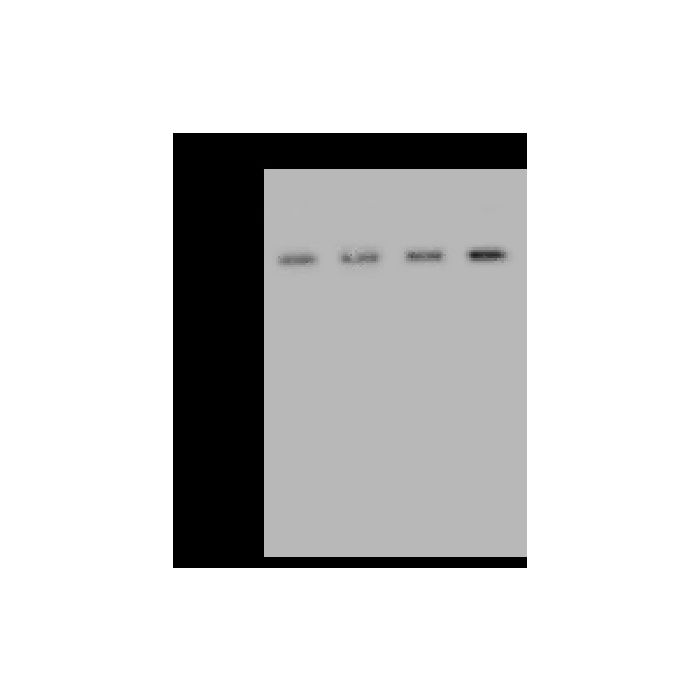
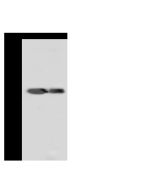
Anti-EIF5 rabbit polyclonal antibody at 1:500 dilution Lane A: Hela Whole Cell Lysate Lane B: 293T Whole Cell Lysate Lane C: Jurkat Whole Cell Lysate Lane D: K562 Whole Cell Lysate Lysates/proteins at 30 μg per lane. Secondary Goat Anti-Rabbit IgG (H+L)/HRP at 1/10000 dilution. Developed using the ECL technique. Performed under reducing conditions. Predicted band size:49 kDa
EIF-5A, also known as EIF5, functions in start site selection as a GTPase accelerating protein (GAP) for the eukaryotic translation initiation factor (eIF) 2•GTP•tRNA ternary complex within the ribosome-bound pre-initiation complex. In protein synthesis initiation, eIF2 functions in its GTP-bound state to deliver initiator methionyl-tRNA to the small ribosomal subunit and is necessary for protein synthesis in all cells. EIF-5A stabilizes the binding of GDP to eIF2 and is therefore a bi-functional protein that acts as a GDP dissociation inhibitor (GDI). EIF-5A also interacts with eIF1 and eIF3 and binds the eIF2-GTP/Met-tRNA ternary complex along with the 40S ribosome subunit.
Related Pathways
Actin Dynamics Signaling Pathway
MAPK-Erk Pathway
Autophagy Pathway
References
Si K, et al . (1996) Charactatierizon of multiple mRNAs that encode mammalian translation initiation factor 5 (eIF-5). J Biol Chem. 71(28):16934.
Das S, et al . (1998) Specific interaction of eukaryotic translation initiation factor 5 (eIF5) with the beta-subunit of eIF2. J Biol Chem. 272(50):31712-8.
Conte MR, et al . (2006) Structure of the eukaryotic initiation factor (eIF) 5 reveals a fold common to several translation factors. Biochemistry. 45(14):4550-8.

-HD15JL3022-WB.png)