Produced in rabbits immunized with E. coli-derived Human Factor D fragment, and purified by antigen affinity chromatography.
Source
Polyclonal Rabbit IgG
Purification
Protein A & Antigen Affinity
Formulation
PBS, pH7.0 with 0.03% Proclin300
Conjugate
Unconjugated
Form
Liquid
Shipping
This antibody is shipped as liquid solution at ambient temperature. Upon receipt, store it immediately at the temperature recommended below.
Storage
This antibody can be stored at 2℃-8℃ for one month without detectable loss of activity. Antibody products are stable for twelve months from date of receipt when stored at -20℃ to -80℃. Avoid repeated freeze-thaw cycles.
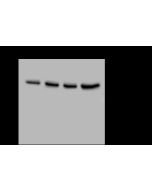
Immunochemical staining of human Factor D in human lung cancer with rabbit polyclonal antibody at 1:200 dilution, formalin-fixed paraffin embedded sections.
Complement factor D, also known as Adipsin, C3 convertase activator, Properdin factor D and CFD is a secreted protein which belongs to thepeptidase S1 family. CFD / Adipsin contains onepeptidase S1 domain. Complement factor D ( CFD / Adipsin ) is a component of the alternative complement pathway best known for its role in humoral suppression of infectious agents. Complement factor D ( CFD / Adipsin ) has a high level of expression in fat, suggesting a role for adipose tissue in immune system biology. This protein is also a serine protease that is secreted by adipocytes into the bloodstream. Complement factor D ( CFD / Adipsin ) cleaves factor B when the latter is complexed with factor C3b, activating the C3bbb complex, which then becomes the C3 convertase of the alternate pathway. Its function is homologous to that of C1s in the classical pathway. Complement factor D ( CFD / Adipsin ) is a serine protease that stimulates glucose transport for triglyceride accumulation in fats cells and inhibits lipolysis. Defects in CFD / Adipsin are the cause of complement factor D deficiency (CFD deficiency) which predisposes to invasive meningococcal disease.
Related Pathways
Complement Activation Pathways
References
Volanakis JE, et al.,1996, Protein Sci. 5 (4): 553-64.
Searfoss,G.H et al., 2003, J Biol Chem. 278 (46):46107-16.
Ukkola,O. et al., 2003, Eur J Clin Nutr. 57 (9):1073-8.


-HD13NO2614-200-human-lung-cancer-IHC-P.png)