A synthetic peptide corresponding to the center region of the Human HP1 gamma/CBX3
Preparation
Produced in rabbits immunized with a synthetic peptide corresponding to the center region of the Human HP1 gamma/CBX3, and purified by antigen affinity chromatography.
Source
Polyclonal Rabbit IgG
Purification
Protein A & Antigen Affinity
Formulation
PBS, pH7.0 with 0.03% Proclin300
Conjugate
Unconjugated
Form
Liquid
Shipping
This antibody is shipped as liquid solution at ambient temperature. Upon receipt, store it immediately at the temperature recommended below.
Storage
This antibody can be stored at 2℃-8℃ for one month without detectable loss of activity. Antibody products are stable for twelve months from date of receipt when stored at -20℃ to -80℃. Avoid repeated freeze-thaw cycles.
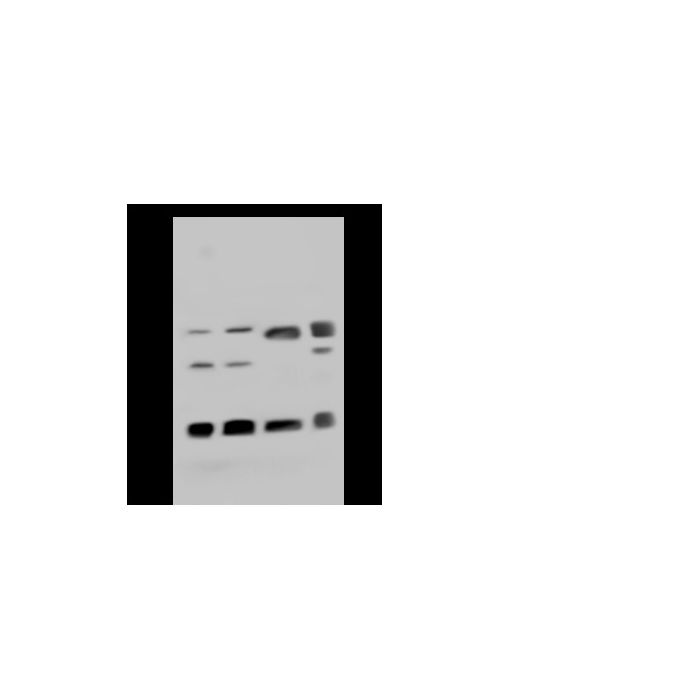
Anti-CBX3 rabbit polyclonal antibody at 1:500 dilution Lane A: HeLa Whole Cell Lysate Lane B: Jurkat Whole Cell Lysate Lane C: A431 Whole Cell Lysate Lane D: HepG2 Whole Cell Lysate Lysates/proteins at 30 μg per lane. Secondary Goat Anti-Rabbit IgG (H+L)/HRP at 1/10000 dilution. Developed using the ECL technique. Performed under reducing conditions. Predicted band size:21 kDa Observed band size:21 kDa
Anti-CBX3 rabbit polyclonal antibody at 1:500 dilution Lane A: HeLa Whole Cell Lysate Lane B: Jurkat Whole Cell Lysate Lane C: A431 Whole Cell Lysate Lane D: HepG2 Whole Cell Lysate Lysates/proteins at 30 μg per lane. Secondary Goat Anti-Rabbit IgG (H+L)/HRP at 1/10000 dilution. Developed using the ECL technique. Performed under reducing conditions. Predicted band size:21 kDa Observed band size:21 kDa
CBX3 was overexpressed in human PAAD tissues, which was associated with poor prognosis of overall and disease-free survival of the patients. Overexpression of CBX3 induced the in vitro proliferation, anchorage-free growth, migration and invasion of the PAAD cells, and led to in vivo growth of orthotoptic PAAD tumors in mice. GO and KEGG pathway analysis, as well as experimental observation showed that CBX3 may be associated with cell cycle transition of PAAD cells, and cyclin-dependent kinase 1 (CDK1) and proliferating cell nuclear antigen (PCNA) may mediate the tumor-promoting action of CBX3. CDK1 knockdown attenuated the cell cycle transition, proliferation and invasion of CBX3-overexpressing PAAD cells. CBX3 in PAAD to be targeted by novel therapeutic strategies. Chromobox protein homolog 3(CBX3) has an important role in carcinogenesis by regulating several mechanisms, such as heterochromatin formation, gene silencing, DNA replication and repair. Silencing CBX3 in pancreatic cancer cells inhibited aerobic glycolysis, the basis for providing cancer cells with building blocks for macromolecule synthesis and ATP that required. CBX3 serves as a positive regulator of aerobic glycolysis via suppressing of the FBP1 in pancreatic cancer cells. Disrupting the CBX3-FBP1 signaling axis would be effective to treat pancreatic cancer and prevent aerobic glycolysis.

-HD12AP0863-WB.png)
-HD12AP0863-1000-HeLa-IF.png)