
Anti-HSP60 Antibody, Rabbit Polyclonal sinobiological 50596-T60
$243.00
In stock
SKU
50596-T60
| Catalog No. | Size | Price (USD) |
| 50596-T60-100 | 100 µL | $251.64 |
| Catalog No. | Size | Price (USD) |
| 50596-T60-100 | 100 µL | $251.64 |
General Information
| Product name | Anti-HSP60 Antibody, Rabbit Polyclonal |
| Validated applications | WB (FAQ Protocol), ELISA (FAQ Protocol), IHC-P (FAQ Protocol), IP (FAQ Protocol) |
| Species reactivity | Reacts with: Mouse |
| Specificity | Mouse HSP60 |
| Immunogen | Recombinant Mouse HSP60 Protein (Catalog#50596-M07E) |
| Preparation | Produced in rabbits immunized with purified, recombinant Mouse HSP60 (rM HSP60; Catalog#50596-M07E; NP_034607.3; Leu2-Phe573). HSP60 specific IgG was purified by Mouse HSP60 affinity chromatography. |
| Source | Polyclonal Rabbit IgG |
| Purification | Protein A & Antigen Affinity |
| Formulation | 0.2 μm filtered solution in PBS |
| Conjugate | Unconjugated |
| Form | Liquid |
| Shipping | This antibody is shipped as liquid solution at ambient temperature. Upon receipt, store it immediately at the temperature recommended below. |
| Storage | This antibody can be stored at 2℃-8℃ for one month without detectable loss of activity. Antibody products are stable for twelve months from date of receipt when stored at -20℃ to -80℃. Preservative-Free. Avoid repeated freeze-thaw cycles. |
Synonyms: Anti-60kDa Antibody; Anti-CPN60 Antibody; Anti-HSP-60 Antibody; Anti-HSP-65 Antibody; Anti-Hsp60 Antibody; Anti-Hspd1 Antibody
Image / Experimental Information
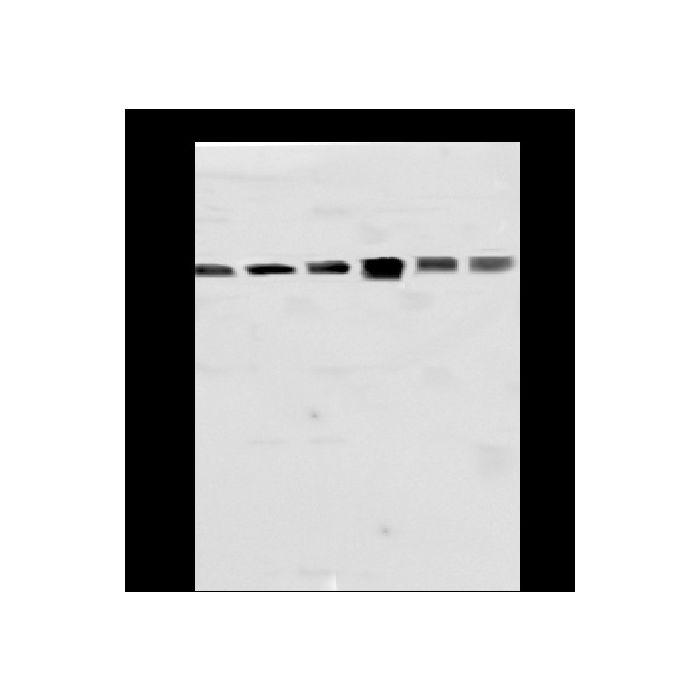
| Image 1 Description | Anti-HSP60 rabbit polyclonal antibody at 1:500 dilution Lane A: NIH-3T3 Whole Cell Lysate Lane B: K562 Whole Cell Lysate Lane C: HepG2 Whole Cell Lysate Lysates/proteins at 30 μg per lane. Secondary Goat Anti-Rabbit IgG (H+L)/HRP at 1/10000 dilution. Developed using the ECL technique. Performed under reducing conditions. Predicted band size:61 kDa Observed band size:61 kDa |
| Image 1 Alt Text | Mouse HSP60 Western blot (WB) 38430 |
| Image 1 URL | Source image |
| Image 2 Description | Anti-HSP60 rabbit polyclonal antibody at 1:500 dilution Lane A: NIH-3T3 Whole Cell Lysate Lane B: K562 Whole Cell Lysate Lane C: HepG2 Whole Cell Lysate Lysates/proteins at 30 μg per lane. Secondary Goat Anti-Rabbit IgG (H+L)/HRP at 1/10000 dilution. Developed using the ECL technique. Performed under reducing conditions. Predicted band size:61 kDa Observed band size:61 kDa |
| Image 2 Alt Text | Mouse HSP60 Immunohistochemistry(IHC) 38431 |
| Image 2 URL | Source image |
| Image 3 Description | Anti-HSP60 rabbit polyclonal antibody at 1:500 dilution Lane A: NIH-3T3 Whole Cell Lysate Lane B: K562 Whole Cell Lysate Lane C: HepG2 Whole Cell Lysate Lysates/proteins at 30 μg per lane. Secondary Goat Anti-Rabbit IgG (H+L)/HRP at 1/10000 dilution. Developed using the ECL technique. Performed under reducing conditions. Predicted band size:61 kDa Observed band size:61 kDa |
| Image 3 Alt Text | Mouse HSP60 Immunohistochemistry(IHC) 38432 |
| Image 3 URL | Source image |
| Image 4 Description | Anti-HSP60 rabbit polyclonal antibody at 1:500 dilution Lane A: NIH-3T3 Whole Cell Lysate Lane B: K562 Whole Cell Lysate Lane C: HepG2 Whole Cell Lysate Lysates/proteins at 30 μg per lane. Secondary Goat Anti-Rabbit IgG (H+L)/HRP at 1/10000 dilution. Developed using the ECL technique. Performed under reducing conditions. Predicted band size:61 kDa Observed band size:61 kDa |
| Image 4 Alt Text | Mouse HSP60 Immunoprecipitation(IP) 38433 |
| Image 4 URL | Source image |
Background Information
| Full Name | heat shock 60kDa protein 1 (chaperonin) |
| Description | HSPD1, also known as HSP60, is a member of the chaperonin family. HSPD1 may function as a signaling molecule in the innate immune system. This protein is essential for the folding and assembly of newly imported proteins in the mitochondria. It may also prevent misfolding and promote the refolding and proper assembly of unfolded polypeptides generated under stress conditions in the mitochondrial matrix. HSPD1 gene is adjacent to a related family member and the region between the 2 genes functions as a bidirectional promoter. Several pseudogenes have been associated with this gene. Mutations associated with this gene cause autosomal recessive spastic paraplegia 13. Defects in HSPD1 are a cause of spastic paraplegia autosomal dominant type 13 (SPG13). Spastic paraplegia is a degenerative spinal cord disorder characterized by a slow, gradual, progressive weakness and spasticity of the lower limbs. Defects in HSPD1 are the cause of leukodystrophy hypomyelinating type 4 (HLD4); also called mitochondrial HSP60 chaperonopathy or MitCHAP-60 disease. HLD4 is a severe autosomal recessive hypomyelinating leukodystrophy. HSPD1 is clinically characterized by infantile-onset rotary nystagmus, progressive spastic paraplegia, neurologic regression, motor impairment, profound mental retardation. Death usually occurs within the first two decades of life. |
| Tags |
|
| References |
|
-HD11JL1988-WB.png)
-HD11JL1988-1000-mouse-liver-IHC-P.png)
-HD11JL1988-1000-mouse-kidney-IHC-P.png)
