A synthetic peptide corresponding to the N-terminus of the Human Acp6
Preparation
Produced in rabbits immunized with a synthetic peptide corresponding to the N-terminus of the Human Acp6, and purified by antigen affinity chromatography.
Source
Polyclonal Rabbit IgG
Purification
Protein A & Antigen Affinity
Formulation
0.2 μm filtered solution in PBS
Conjugate
Unconjugated
Form
Liquid
Shipping
This antibody is shipped as liquid solution at ambient temperature. Upon receipt, store it immediately at the temperature recommended below.
Storage
This antibody can be stored at 2℃-8℃ for one month without detectable loss of activity. Antibody products are stable for twelve months from date of receipt when stored at -20℃ to -80℃. Preservative-Free. Avoid repeated freeze-thaw cycles.
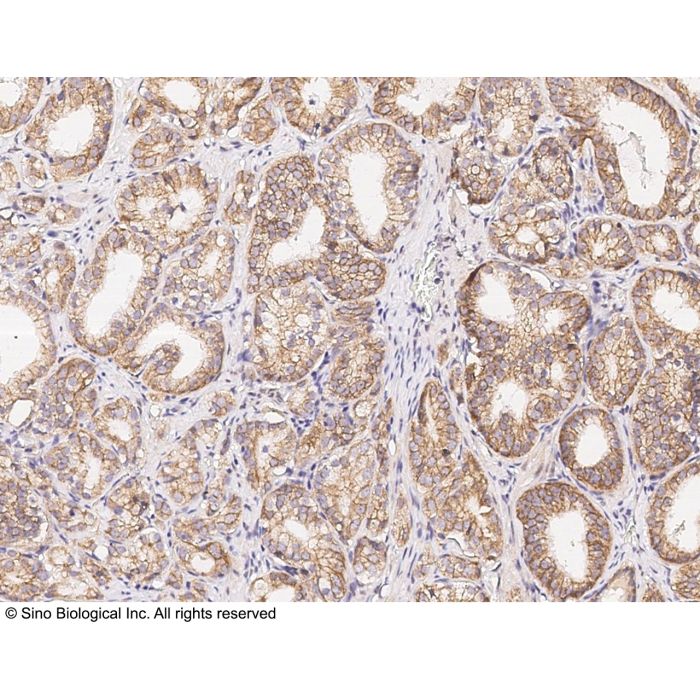
Immunochemical staining of human ACP6 in human prostatic carcinoma with rabbit polyclonal antibody (1:1000, formalin-fixed paraffin embedded sections).
Lysophosphatidic acid (LPA) is an important bioactive phospholipid involved in cell signaling through G protein-coupled receptor pathways. It is also involved in balancing the lipid composition inside the cell, and modulates the function of lipid rafts as an intermediate in phospholipid metabolism. Because of its involvement in these important processes, LPA degradation needs to be regulated as precisely as its production. Lysophosphatidic acid phosphatase type 6 (ACP6) is an LPA-specific acid phosphatase that hydrolyzes LPA to monoacylglycerol (MAG) and phosphate. ACP6 (acid phosphatase 6, lysophosphatidic) is a lysophosphatidic acid (LPA)-specific phosphatase that hydrolyzes LPA to monoacylglycerol and is involved in lipid metabolism in the mitochondria.

-HD10FE2208-1ug-prostatic-carcinoma-IHC-P.png)