WB (FAQ Protocol), ELISA (FAQ Protocol), IP (FAQ Protocol)
Species reactivity
Reacts with: Human
Specificity
Human BID
Immunogen
Recombinant Human BID protein (Catalog#10468-HNCE)
Preparation
Produced in rabbits immunized with purified, recombinant Human BID (rh BID; Catalog#10468-HNCE; P55957-1; Met 1-Asp 195). BID specific IgG was purified by Human BID affinity chromatography.
Source
Polyclonal Rabbit IgG
Purification
Protein A & Antigen Affinity
Formulation
0.2 μm filtered solution in PBS
Conjugate
Unconjugated
Form
Liquid
Shipping
This antibody is shipped as liquid solution at ambient temperature. Upon receipt, store it immediately at the temperature recommended below.
Storage
This antibody can be stored at 2℃-8℃ for one month without detectable loss of activity. Antibody products are stable for twelve months from date of receipt when stored at -20℃ to -80℃. Preservative-Free. Avoid repeated freeze-thaw cycles.
Synonyms: Anti-FP497 Antibody
Image / Experimental Information
Image 1 Description
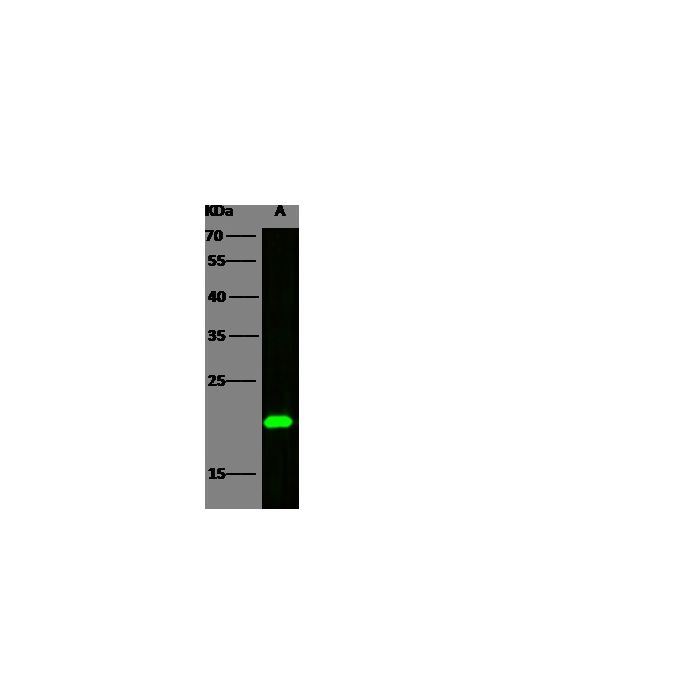
Anti-BID rabbit polyclonal antibody at 1:500 dilution Lane A: Jurkat Whole Cell Lysate Lysates/proteins at 30 μg per lane. Secondary Goat Anti-Rabbit IgG H&L (Dylight800) at 1/10000 dilution. Developed using the Odyssey technique. Performed under reducing conditions. Predicted band size:22 kDa Observed band size:21 kDa
Anti-BID rabbit polyclonal antibody at 1:500 dilution Lane A: Jurkat Whole Cell Lysate Lysates/proteins at 30 μg per lane. Secondary Goat Anti-Rabbit IgG H&L (Dylight800) at 1/10000 dilution. Developed using the Odyssey technique. Performed under reducing conditions. Predicted band size:22 kDa Observed band size:21 kDa
The BH3 interacting domain death agonist (BID) is a pro-apoptotic member of the Bcl-2 protein family, which contains only the BH3 domain, and is required for its interaction with the Bcl-2 family proteins and for its pro-death activity. BID is important to cell death mediated by these proteases and thus is the sentinel to protease-mediated death signals. Recent studies further indicate that Bid may be more than just a killer molecule, it could be also involved in the maintenance of genomic stability by engaging at mitosis checkpoint. BID is an integrating key regulator of the intrinsic death pathway that amplifies caspase-dependent and caspase-independent execution of neuronal apoptosis. Therefore pharmacological inhibition of BID provides a promising therapeutic strategy in neurological diseases where programmed cell death is prominent. BID is activated by Caspase 8 in response to Fas/TNF-R1 death receptor activation. Activated BID is translocated to mitochondria and induces cytochrome c release, which in turn activates downstream caspases. BID action has been proposed to involve the mitochondrial re-location of its truncated form, tBid, to facilitate the release of apoptogenic proteins like cytochrome c.
Related Pathways
Death Receptor Signaling
TNF Signaling
References
Gross A. (2006) BID as a double agent in cell life and death. Cell Cycle. 5(6): 582-4.
Yin XM. (2007) Bid, a BH3-only multi-functional molecule, is at the cross road of life and death. Gene. 369: 7-19.
Esposti MD. (2002) The roles of Bid. Apoptosis. 7(5): 433-40.
Yin XM. (2000) Signal transduction mediated by Bid, a pro-death Bcl-2 family proteins, connects the death receptor and mitochondria apoptosis pathways. Cell Res. 10(3): 161-7.
Yin XM. (2000) Bid, a critical mediator for apoptosis induced by the activation of Fas/TNF-R1 death receptors in hepatocytes. J Mol Med. 78(4): 203-11.