Recombinant Human ARMET/MANF Protein (Catalog#11324-H08H)
Preparation
Produced in rabbits immunized with purified, recombinant Human ARMET/MANF (rh ARMET/MANF; Catalog#11324-H08H; NP_006001.3; Met1-Leu182). ARMET/MANF specific IgG was purified by Human ARMET/MANF affinity chromatography.
Source
Polyclonal Rabbit IgG
Purification
Protein A & Antigen Affinity
Formulation
0.2 μm filtered solution in PBS
Conjugate
Unconjugated
Form
Liquid
Shipping
This antibody is shipped as liquid solution at ambient temperature. Upon receipt, store it immediately at the temperature recommended below.
Storage
This antibody can be stored at 2℃-8℃ for one month without detectable loss of activity. Antibody products are stable for twelve months from date of receipt when stored at -20℃ to -80℃. Preservative-Free. Avoid repeated freeze-thaw cycles.
Mesencephalic astrocyte-derived neurotrophic factor, also known as Protein ARMET, Arginine-rich protein, MANF, and ARMET, is a secreted protein that belongs to the ARMET family. ARMET selectively promotes the survival of dopaminergic neurons of the ventral midbrain. It modulates GABAergic transmission to the dopaminergic neurons of the substantia nigra. ARMET enhances spontaneous, as well as evoked, GABAergic inhibitory postsynaptic currents in dopaminergic neurons. ARMET inhibits cell proliferation and endoplasmic reticulum (ER) stress-induced cell death. The N-terminal region of ARMET may be responsible for neurotrophic activity while the C-terminal region may play a role in the ER stress response. MANF reduces endoplasmic reticulum (ER) stress and has neurotrophic effects on dopaminergic neurons. Intracortical delivery of recombinant MANF protein protects tissue from ischemic brain injury. MANF has been described as a survival factor for dopaminergic neurons. MANF expression was widespread in the nervous system and non-neuronal tissues. In the brain, relatively high MANF levels were detected in the cerebral cortex, hippocampus, and cerebellar Purkinje cells. The widespread expression of MANF together with its evolutionary conserved nature and regulation by brain insults suggests that it has important functions both under normal and pathological conditions in many tissue types.
References
Shridhar V., et al., 1996, Oncogene 12:1931-1939.
Gevaert K., et al., 2003, Nat. Biotechnol. 21:566-569.
Petrova P., et al., 2003, J. Mol. Neurosci. 20:173-188.
Lindholm, P. et al., 2008, Mol Cell Neurosci. 39 (3):356-71.
Airavaara, M. et al., 2010, Exp Neurol. 225 (1):104-13.

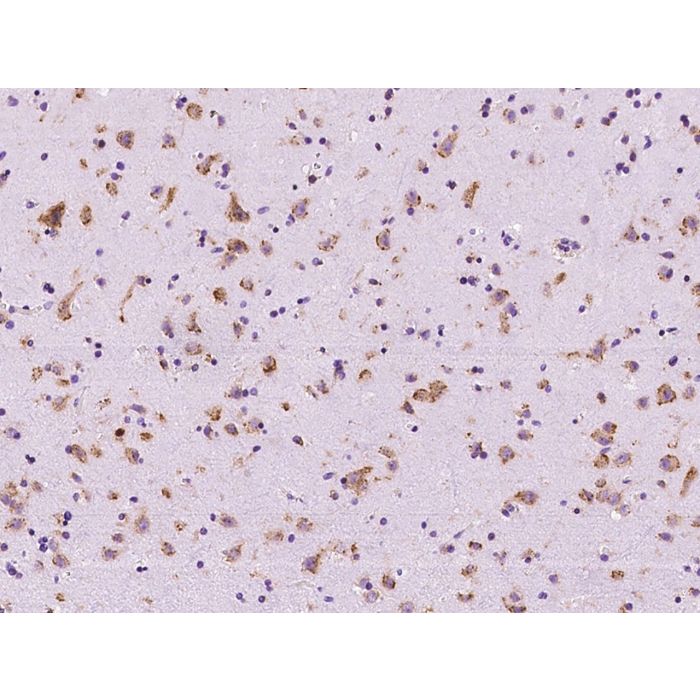
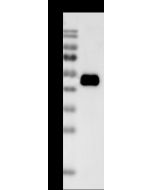
-HD12AP2566-1000-human-brain-IHC-P.png)
-HD12AP2566-1000-human-pancreas-IHC-P.png)
-HD12AP2566-500-U2OS-IF.png)