
Anti-CD166/ALCAM Antibody, Rabbit Polyclonal sinobiological 201409-T32
$243.00
In stock
SKU
201409-T32
| Catalog No. | Size | Price (USD) |
| 201409-T32-100 | 100 µL | $251.64 |
| Catalog No. | Size | Price (USD) |
| 201409-T32-100 | 100 µL | $251.64 |
General Information
| Product name | Anti-CD166/ALCAM Antibody, Rabbit Polyclonal |
| Validated applications | WB (FAQ Protocol) |
| Species reactivity | Reacts with: Human |
| Specificity | Human CD166/ALCAM |
| Immunogen | E. coli-derived Human CD166/ALCAM fragment |
| Preparation | Produced in rabbits immunized with E. coli-derived Human CD166/ALCAM fragment, and purified by antigen affinity chromatography. |
| Source | Polyclonal Rabbit IgG |
| Purification | Protein A & Antigen Affinity |
| Formulation | PBS, pH7.0 with 0.03% Proclin300 |
| Conjugate | Unconjugated |
| Form | Liquid |
| Shipping | This antibody is shipped as liquid solution at ambient temperature. Upon receipt, store it immediately at the temperature recommended below. |
| Storage | This antibody can be stored at 2℃-8℃ for one month without detectable loss of activity. Antibody products are stable for twelve months from date of receipt when stored at -20℃ to -80℃. Avoid repeated freeze-thaw cycles. |
Synonyms: Anti-CD166 Antibody; Anti-MEMD Antibody
Image / Experimental Information
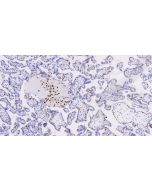
| Image 1 Description | Anti-ALCAM rabbit polyclonal antibody at 1:500 dilution Lane A: SH-SY5Y Whole Cell Lysate Lane B: Daudi Whole Cell Lysate Lysates/proteins at 30 μg per lane. Secondary Goat Anti-Rabbit IgG (H+L)/HRP at 1/10000 dilution. Developed using the ECL technique. Performed under reducing conditions. Predicted band size:65 kDa Observed band size:115 kDa |
| Image 1 Alt Text | Human CD166/ALCAM Western blot (WB) 43416 |
| Image 1 URL | Source image |
Background Information
| Full Name | activated leukocyte cell adhesion molecule |
| Description | Activated leukocyte cell adhesion molecule (ALCAM)/Cluster of differentiation (CD166) is a type I transmembrane cell adhesion molecule belonging to the Ig superfamily and a ligand for CD6 that is expressed on T lymphocytes. The extracellular domain of ALCAM contains five Ig-like domains (three Ig-like C2-type domains and two Ig-like V-type domains), of which the amino-terminal V1 domain is essential for ligand binding and ALCAM-mediated cell aggregation. ALCAM mediates both heterophilic (ALCAM-CD6) and homophilic (ALCAM-ALCAM) cell-cell interactions. ALCAM/CD6 interaction plays a role in T cell development and T cell regulation, as well as in the binding of T- and B-cells to activated leukocytes. Recently, homophilic (ALCAM-ALCAM) adhesion was shown to play important roles in tight cell-to-cell interaction and regulation of stem cell differentiation. While expressed in a wide variety of tissues, ALCAM is usually restricted to subsets of cells involved in dynamic growth and/or migration, including neural development, branching organ development, hematopoiesis, immune response and tumor progression. And CD166 is regarded as a potential novel breast cancer indicator and therapeutic target. |
| References |
|

-HD18SE2702-WB.png)