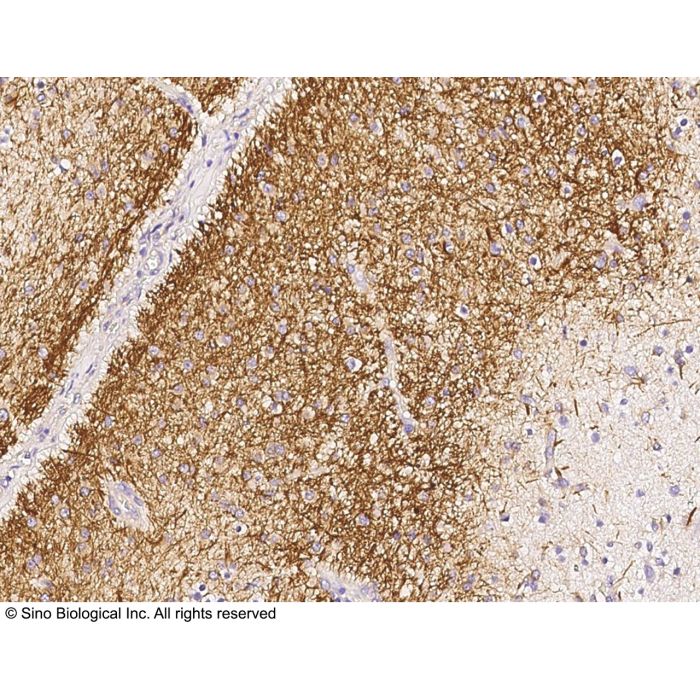
A synthetic peptide corresponding to the N-terminus of the Human CDC37
Preparation
Produced in rabbits immunized with a synthetic peptide corresponding to the N-terminus of the Human CDC37, and purified by antigen affinity chromatography.
Source
Polyclonal Rabbit IgG
Purification
Protein A & Antigen Affinity
Formulation
0.2 μm filtered solution in PBS
Conjugate
Unconjugated
Form
Liquid
Shipping
This antibody is shipped as liquid solution at ambient temperature. Upon receipt, store it immediately at the temperature recommended below.
Storage
This antibody can be stored at 2℃-8℃ for one month without detectable loss of activity. Antibody products are stable for twelve months from date of receipt when stored at -20℃ to -80℃. Preservative-Free. Avoid repeated freeze-thaw cycles.
CDC37 is a protein that is expressed in proliferative zones during embryonic development and in adult tissues, consistent with a positive role in proliferation and is required for cell division in budding yeast. CDC37 is thought to play an important role in the establishment of signaling pathways controlling cell proliferation through targeting intrinsically unstable oncoprotein kinases such as Cdk-4, Raf-1, and src to the molecular chaperone Hsp90. Decreased Hsp90 expression can reduce the levels of microtubule-associated protein tau, whose overexpression may induce many diseases. CDC37 is considered as a co-chaperone that is classified as Hsp90's accessory proteins. It has been reported that suppression of Cdc37 destabilized tau, leading to its clearance, whereas cdc37 overexpression preserved tau.Cdc37 was found to co-localize with tau in neuronal cells and to physically interact with tau from human brain. Moreover, Cdc37 levels significantly increased with age.
Related Pathways
AKT Signaling Pathway
References
Dai K, et al. (1996) P hysical Interaction of Mammalian CDC37 with CDK4. The journal of biological chemistry. 271: 22030-4.
Pearl LH, et al. (2005) Hsp90 and Cdc37-a chaperone cancer conspiracy. Current opinion in genetics development. 15 (1): 55-61.
Chen GQ, et al. (2002) TNF-Induced Recruitment and Activation of the IKK Complex Require Cdc37 and Hsp90. Molecular cell. 9 (2): 401-10.