
Anti-CDK4 Antibody, Rabbit Polyclonal sinobiological 10732-T38
$243.00
In stock
SKU
10732-T38
| Catalog No. | Size | Price (USD) |
| 10732-T38-100 | 100 µL | $251.64 |
| Catalog No. | Size | Price (USD) |
| 10732-T38-100 | 100 µL | $251.64 |
General Information
| Product name | Anti-CDK4 Antibody, Rabbit Polyclonal |
| Validated applications | WB (FAQ Protocol), ICC/IF (FAQ Protocol), IP (FAQ Protocol) |
| Species reactivity | Reacts with: Human |
| Specificity | Human CDK4 |
| Immunogen | Recombinant Human CDK4 Protein (Catalog#10732-H09B) |
| Preparation | Produced in rabbits immunized with purified, recombinant Human CDK4 (rh CDK4; Catalog#10732-H09B; NP_000066.1; Met1-Glu303). CDK4 specific IgG was purified by Human CDK4 affinity chromatography. |
| Source | Polyclonal Rabbit IgG |
| Purification | Protein A & Antigen Affinity |
| Formulation | 0.2 μm filtered solution in PBS |
| Conjugate | Unconjugated |
| Form | Liquid |
| Shipping | This antibody is shipped as liquid solution at ambient temperature. Upon receipt, store it immediately at the temperature recommended below. |
| Storage | This antibody can be stored at 2℃-8℃ for one month without detectable loss of activity. Antibody products are stable for twelve months from date of receipt when stored at -20℃ to -80℃. Preservative-Free. Avoid repeated freeze-thaw cycles. |
Synonyms: Anti-CMM3 Antibody; Anti-PSK-J3 Antibody
Image / Experimental Information
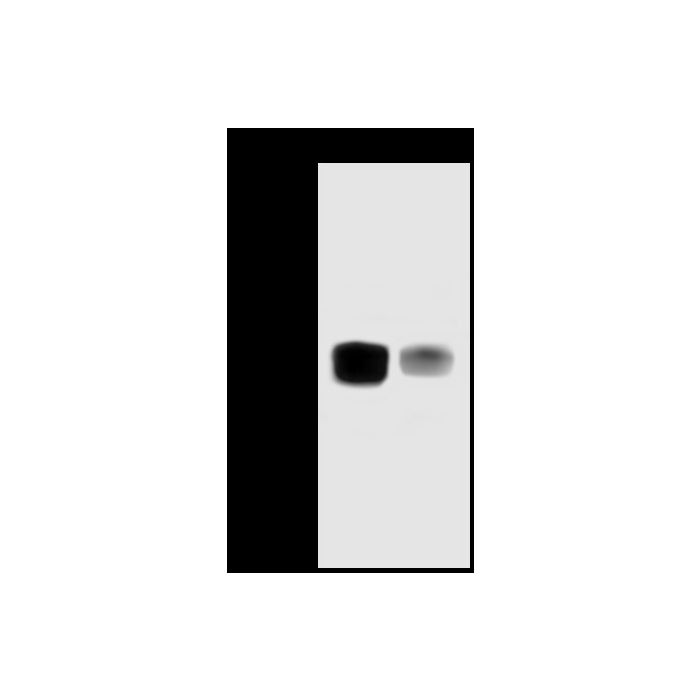
| Image 1 Description | Anti-CDK4 rabbit polyclonal antibody at 1:1000 dilution Lane A: HeLa Whole Cell Lysate Lane B: K562 Whole Cell Lysate Lysates/proteins at 30 μg per lane. Secondary Goat Anti-Rabbit IgG (H+L)/HRP at 1/10000 dilution. Developed using the ECL technique. Performed under reducing conditions. Predicted band size:34 kDa Observed band size:34 kDa |
| Image 1 Alt Text | Human CDK4 Western blot (WB) 43699 |
| Image 1 URL | Source image |
| Image 2 Description | Anti-CDK4 rabbit polyclonal antibody at 1:1000 dilution Lane A: HeLa Whole Cell Lysate Lane B: K562 Whole Cell Lysate Lysates/proteins at 30 μg per lane. Secondary Goat Anti-Rabbit IgG (H+L)/HRP at 1/10000 dilution. Developed using the ECL technique. Performed under reducing conditions. Predicted band size:34 kDa Observed band size:34 kDa |
| Image 2 Alt Text | Human CDK4 Immunofluorescence(IF) 43700 |
| Image 2 URL | Source image |
| Image 3 Description | Anti-CDK4 rabbit polyclonal antibody at 1:1000 dilution Lane A: HeLa Whole Cell Lysate Lane B: K562 Whole Cell Lysate Lysates/proteins at 30 μg per lane. Secondary Goat Anti-Rabbit IgG (H+L)/HRP at 1/10000 dilution. Developed using the ECL technique. Performed under reducing conditions. Predicted band size:34 kDa Observed band size:34 kDa |
| Image 3 Alt Text | Human CDK4 Immunoprecipitation(IP) 43701 |
| Image 3 URL | Source image |
Background Information
| Full Name | cyclin-dependent kinase 4 |
| Description | CDK4 is a member of the Ser/Thr protein kinase family. It is highly similar to the gene products of S. cerevisiae cdc28 and S. pombe cdc2. It is a catalytic subunit of the protein kinase complex that is important for cell cycle G1 phase progression. The activity of CDK4 is restricted to the G1-S phase, which is controlled by the regulatory subunits D-type cyclins and CDK inhibitor p16(INK4a). CDK4 was shown to be responsible for the phosphorylation of retinoblastoma gene product. CDK4 is the ser/Thr-kinase component of cyclin D-CDK4 (DC) complexes that phosphorylate and inhibit members of the retinoblastoma (RB) protein family including RB1 and regulate the cell-cycle during G(1)/S transition. Phosphorylation of RB1 allows dissociation of the transcription factor E2F from the RB/E2F complexes and the subsequent transcription of E2F target genes which are responsible for the progression through the G(1) phase. Hypophosphorylates RB1 in early G(1) phase. Cyclin D-CDK4 complexes are major integrators of various mitogenenic and antimitogenic signals. CDK4 has been shown to be mutated in some types of cancer, whilst a chromosomal rearrangement can lead to Cdk6 overexpression in lymphoma, leukemia and melanoma. |
| Research Areas |
|
| Related Pathways |
|
| Tags |
|
| References |
|
-HD18OC0703-WB.png)
-HD18OC0703-100-HeLa-IF.png)
