Recombinant Human CEACAM6 / CD66c protein (Catalog#10823-H08H)
Preparation
This antibody was produced from a hybridoma resulting from the fusion of a mouse myeloma with B cells obtained from a mouse immunized with purified, recombinant Human CEACAM6 / CD66c (rh CEACAM6 / CD66c; Catalog#10823-H08H; NP_002474.4; Met1-Gly320) and conjugated with PE under optimum conditions, the unreacted PE was removed.
Source
Monoclonal Mouse IgG1 Clone #12
Purification
Protein A
Formulation
PBS solution containing 0.5% BSA and 0.03%ProClin300
Concentration
5 μl/Test, 0.1 mg/ml
Conjugate
PE
Form
Liquid
Shipping
This antibody is shipped as liquid solution at ambient temperature. Upon receipt, store it immediately at the temperature recommended below.
Storage
This antibody can be stored at 2℃-8℃ for twelve months without detectable loss of activity. Protected from prolonged exposure to light. Do not freeze !
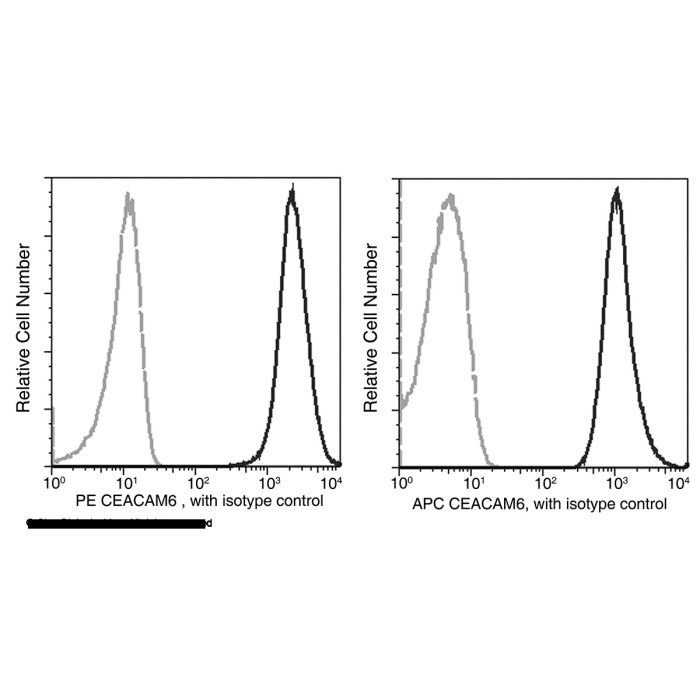
Flow cytometric analysis of human CEACAM6 expression on human whole blood granulocytes. Human whole blood granulocytes were stained with PE-conjugated anti-Human CEACAM6. The histogram were derived from gated events with the forward and side light-scatter characteristics of viable granulocytes.
Carcinoembryonic antigen-related cell adhesion molecule 6 (CEACAM6), also known as nonspecific crossreacting antigen (NCA) and CD66c, is one of seven human CEACAM family members within the immunoglobulin superfamily. It s a glycosylphosphatidylinositol-linked immunoglobulin superfamily member that is overexpressed in a variety of human cancers, including colon, breast and lung and is associated with tumourigenesis, tumour cell adhesion, invasion and metastasis. CEACAM6 is a unique mediator of migration and invasion of drug resistant oestrogen-deprived breast cancer cells, and this protein could be an important biomarker of metastasis. CEACAM6 is expressed by granulocytes and their progenitors. It is also expressed by epithelia of various organs and is upregulated in pancreatic and colon adenocarcinomas, as well as hyperplastic polyps. Resistance to adhesion-related apoptosis in tumor cells is conferred in the condition of CEACAM6 overexpression.
References
Duxbury MS, et al. (2004) Overexpression of CEACAM6 promotes insulin-like growth factor I-induced pancreatic adenocarcinoma cellular invasiveness. Oncogene. 23(34): 5834-42.
Lewis-Wambi JS, et al. (2008) Overexpression of CEACAM6 promotes migration and invasion of oestrogen-deprived breast cancer cells. Eur J Cancer. 44(12): 1770-9.