A synthetic peptide corresponding to the N-terminus of the human Chromogranin A.
Preparation
This antibody was produced from a hybridoma resulting from the fusion of a mouse myeloma with B cells obtained from a mouse immunized with a synthetic peptide corresponding to the N-terminus of the human Chromogranin A / CHGA. The IgG fraction of the cell culture supernatant was purified by Protein A affinity chromatography.
Source
Monoclonal Mouse IgG2a Clone #03
Purification
Protein A
Formulation
0.2 μm filtered solution in PBS
Conjugate
Unconjugated
Form
Liquid
Shipping
This antibody is shipped as liquid solution at ambient temperature. Upon receipt, store it immediately at the temperature recommended below.
Storage
This antibody can be stored at 2℃-8℃ for one month without detectable loss of activity. Antibody products are stable for twelve months from date of receipt when stored at -20℃ to -80℃. Preservative-Free. Avoid repeated freeze-thaw cycles.
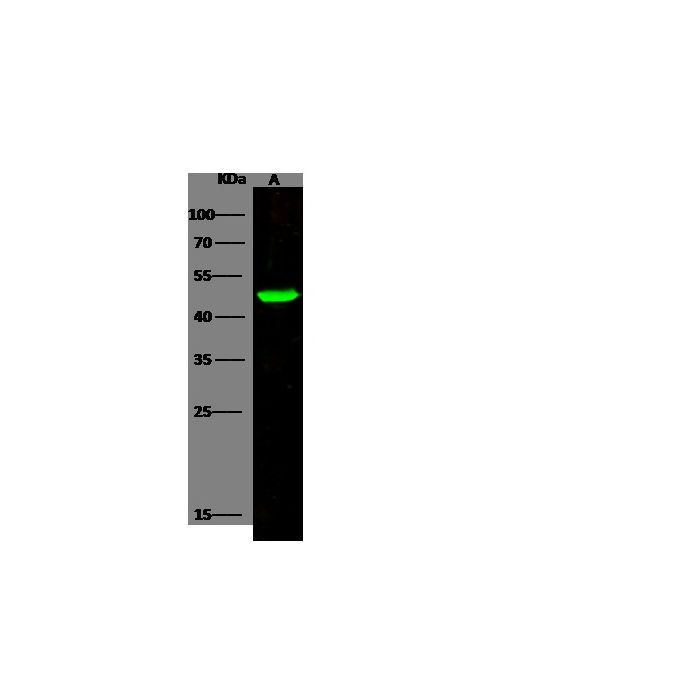
Anti-ChromograninA mouse monoclonal antibody at 1:500 dilution Lane A: HepG2 Whole Cell Lysate Lysates/proteins at 30 μg per lane. Secondary Goat Anti-Mouse IgG H&L (Dylight800) at 1/15000 dilution. Developed using the Odyssey technique. Performed under reducing conditions. Predicted band size:50 kDa Observed band size:50 kDa
The acidic glycoprotein chromogranin A (CHGA) is co-stored/co-secreted with catecholamines and crucial for secretory vesicle biogenesis in neuronal/neuroendocrine cells. CHGA is dysregulated in several cardiovascular diseases, but the underlying mechanisms are not well established. The CHGA promoter haplotype 2 (occurring in a large proportion of the world population) in enhancing CHGA expression in haplotype 2 carriers who may be at higher risk for cardiovascular/metabolic disorders. Chromogranin A (CHGA) plays a fundamental role in the biogenesis of catecholamine secretory granules. Changes in storage and release of CHGA in clinical and experimental hypertension prompted us to study whether genetic variation at the CHGA locus might contribute to alterations in autonomic function, and hence hypertension and its target organ consequences such as hypertensive renal disease (nephrosclerosis). Chromogranin A (CHGA) plays a catalytic role in formation of catecholamine storage vesicles and also serves as precursor to the peptide fragment catestatin, a catecholamine secretory inhibitor whose expression is diminished in the hypertensive individuals. The chromogranin/secretogranin proteins are costored and coreleased with catecholamines from secretory vesicles in chromaffin cells and noradrenergic neurons. Chromogranin A (CHGA) regulates catecholamine storage and release through intracellular (vesiculogenic) and extracellular (catecholamine release-inhibitory) mechanisms. CHGA is a candidate gene for autonomic dysfunction syndromes, including intermediate phenotypes that contribute to human hypertension.