A synthetic peptide corresponding to the center region of the Mouse BAX
Preparation
Produced in rabbits immunized with a synthetic peptide corresponding to the center region of the Mouse BAX, and purified by antigen affinity chromatography.
Source
Polyclonal Rabbit IgG
Purification
Protein A & Antigen Affinity
Formulation
0.2 μm filtered solution in PBS
Conjugate
Unconjugated
Form
Liquid
Shipping
This antibody is shipped as liquid solution at ambient temperature. Upon receipt, store it immediately at the temperature recommended below.
Storage
This antibody can be stored at 2℃-8℃ for one month without detectable loss of activity. Antibody products are stable for twelve months from date of receipt when stored at -20℃ to -80℃. Preservative-Free. Avoid repeated freeze-thaw cycles.
Synonyms: Anti-Bax Antibody
Image / Experimental Information
Image 1 Description
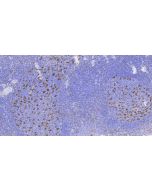
Anti-BAX rabbit polyclonal antibody at 1:500 dilution Lane A: Mouse heart tissue lysate Lysates/proteins at 30 μg per lane. Secondary Goat Anti-Rabbit IgG (H+L)/HRP at 1/10000 dilution. Developed using the ECL technique. Performed under reducing conditions. Predicted band size:21 kDa Observed band size:21 kDa
BCL2 associated X (BAX) is traditionally thought to be regulated by anti-apoptotic BCL-2 family members. BCL-2-associated X protein (BAX) is a critical apoptotic regulator that can be transformed from a cytosolic monomer into a lethal mitochondrial oligomer, The pro-apoptotic BCL-2 protein BAX commits human cells to apoptosis by permeabilizing the outer mitochondrial membrane. BAX activation has been suggested to require the separation of helix alpha5 from alpha6 - the 'latch' from the 'core' domain - among other conformational changes. BCL-2-associated X (BAX) protein acts as a gatekeeper in regulating mitochondria-dependent apoptosis. Under cellular stress, BAX becomes activated and transforms into a lethal oligomer that causes mitochondrial outer membrane permeabilization (MOMP).


-HD11DE0621-WB.png)