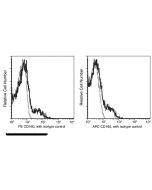
Recombinant Human EPHA4 protein (Catalog#11314-H08H)
Preparation
Produced in rabbits immunized with purified, recombinant Human EPHA4 (rh EPHA4; Catalog#11314-H08H; NP_004429.1; Met 1-Thr 547). Total IgG was purified by Protein A affinity chromatography.
Source
Polyclonal Rabbit IgG
Purification
Protein A
Formulation
0.2 μm filtered solution in PBS
Conjugate
Unconjugated
Form
Liquid
Shipping
This antibody is shipped as liquid solution at ambient temperature. Upon receipt, store it immediately at the temperature recommended below.
Storage
This antibody can be stored at 2℃-8℃ for one month without detectable loss of activity. Antibody products are stable for twelve months from date of receipt when stored at -20℃ to -80℃. Preservative-Free. Avoid repeated freeze-thaw cycles.
EPH receptor A4 (ephrin type-A receptor 4), also known as EphA4, belongs to the ephrin receptor subfamily of the protein-tyrosine kinase family which 16 known receptors (14 found in mammals) are involved: EPHA1, EPHA2, EPHA3, EPHA4, EPHA5, EPHA6, EPHA7, EPHA8, EPHA9, EPHA10, EPHB1, EPHB2, EPHB3, EPHB4, EPHB5, EPHB6. The Eph family of receptor tyrosine kinases (comprising EphA and EphB receptors) has been implicated in synapse formation and the regulation of synaptic function and plasticity6. EphA4 is enriched on dendritic spines of pyramidal neurons in the adult mouse hippocampus, and ephrin-A3 is localized on astrocytic processes that envelop spines. Eph receptor−mediated signaling, which is triggered by ephrins7, probably modifies the properties of synapses during synaptic activation and remodeling. Ephrin receptors are components of cell signalling pathways involved in animal growth and development, forming the largest sub-family of receptor tyrosine kinases (RTKs). The extracellular domain of an EphA4 interacts with ephrin ligands, which may be tethered to neighbouring cells. Ligand-mediated activation of Ephs induces various important downstream effects and Eph receptors have been studied for their potential roles in the development of cancer.
Related Pathways
Actin Dynamics Signaling Pathway
G Protein-coupled Receptors Signaling
MAPK-Erk Pathway
Autophagy Pathway
References
Murai KK, et al. (2003) Control of hippocampal dendritic spine morphology through ephrin-A3/EphA4 signaling. Nat Neurosci. 6(2): 153-60.
Kullander K, et al. (2003) Role of EphA4 and EphrinB3 in local neuronal circuits that control walking. Science. 299(5614): 1889-92.
Smith A, et al. (1997) The EphA4 and EphB1 receptor tyrosine kinases and ephrin-B2 ligand regulate targeted migration of branchial neural crest cells. Curr Biol. 7(8): 561-70.