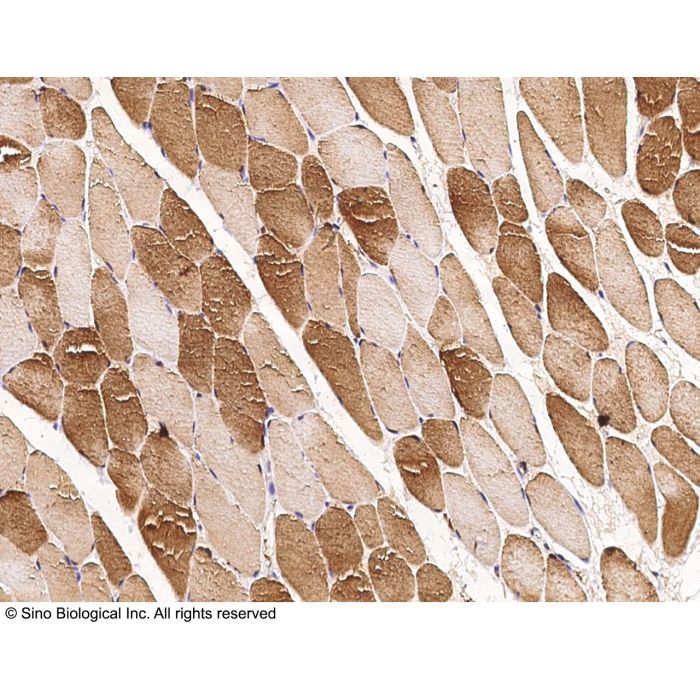
A synthetic peptide corresponding to the N-terminus of the human EPHB2.
Preparation
Produced in rabbits immunized with A synthetic peptide corresponding to the N-terminus of the human EPHB2., and purified by antigen affinity chromatography.
Source
Polyclonal Rabbit IgG
Purification
Protein A & Antigen Affinity
Formulation
0.2 μm filtered solution in PBS
Conjugate
Unconjugated
Form
Liquid
Shipping
This antibody is shipped as liquid solution at ambient temperature. Upon receipt, store it immediately at the temperature recommended below.
Storage
This antibody can be stored at 2℃-8℃ for one month without detectable loss of activity. Antibody products are stable for twelve months from date of receipt when stored at -20℃ to -80℃. Preservative-Free. Avoid repeated freeze-thaw cycles.
Ephrin type-B receptor 2, also known as EphB2, belongs to the ephrin receptor subfamily of the protein-tyrosine kinase family which 16 known receptors (14 found in mammals) are involved: EPHA1, EPHA2, EPHA3, EPHA4, EPHA5, EPHA6, EPHA7, EPHA8, EPHA9, EPHA10, EPHB1, EPHB2, EPHB3, EPHB4, EPHB5, EPHB6. EphB2 receptor tyrosine kinase phosphorylates syndecan-2 and that this phosphorylation event is crucial for syndecan-2 clustering and spine formation. The Eph family of receptor tyrosine kinases (comprising EphA and EphB receptors) has been implicated in synapse formation and the regulation of synaptic function and plasticity6. Ephrin receptors are components of cell signalling pathways involved in animal growth and development, forming the largest sub-family of receptor tyrosine kinases (RTKs). Ligand-mediated activation of Ephs induces various important downstream effects and Eph receptors have been studied for their potential roles in the development of cancer. EphB receptor tyrosine kinases are enriched at synapses, suggesting that these receptors play a role in synapse formation or function. We find that EphrinB binding to EphB induces a direct interaction of EphB with NMDA-type glutamate receptors. This interaction occurs at the cell surface and is mediated by the extracellular regions of the two receptors, but does not require the kinase activity of EphB.
Related Pathways
Actin Dynamics Signaling Pathway
G Protein-coupled Receptors Signaling
MAPK-Erk Pathway
Autophagy Pathway
References
Zisch AH, et al. (1998) Complex formation between EphB2 and Src requires phosphorylation of tyrosine 611 in the EphB2 juxtamembrane region. Oncogene. 16 (20): 2657-70.
Yu HH, et al. (2001) Multiple signaling interactions of Abl and Arg kinases with the EphB2 receptor. Oncogene. 20 (30): 3995-4006.
Zisch AH, et al. (2000) Replacing two conserved tyrosines of the EphB2 receptor with glutamic acid prevents binding of SH2 domains without abrogating kinase activity and biological responses. Oncogene. 19 (2): 177-87.
title: Identification of the potential roles of ring finger protein 8 in TP53-mutant breast cancer authors: Feng Zhao; Peibin Wang; ...; Chaoqian Liu journal: Oncology Letters date: 2021-01-01 pmid: 33262834 doi: 10.3892/ol.2020.12303 pmcid: 7693390 cited_by_count: 6 techniques: Bicinchoninic Acid Protein Assay; Expressing; Incubation; Isolation; Lysis; Small Interfering RNA; Western Blot bioz_score: 90