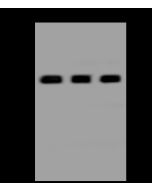
Human cell-derived rhEphB4 extracellular domain (Catalog#10235-H08H)
Preparation
Produced in rabbits immunized with purified, recombinant Human EphB4 extracellular domain (rhEphB4; Catalog#10235-H08H; NP_004435.3; Met 1-Ala 539). Total IgG was purified by Protein A affinity chromatography.
Source
Polyclonal Rabbit IgG
Purification
Protein A
Formulation
0.2 μm filtered solution in PBS
Conjugate
Unconjugated
Form
Liquid
Shipping
This antibody is shipped as liquid solution at ambient temperature. Upon receipt, store it immediately at the temperature recommended below.
Storage
This antibody can be stored at 2℃-8℃ for one month without detectable loss of activity. Antibody products are stable for twelve months from date of receipt when stored at -20℃ to -80℃. Preservative-Free. Avoid repeated freeze-thaw cycles.
Ephrin type-B receptor 4 is a protein that in humans is encoded by the EPHB4 gene. It is a single-pass type I membrane protein belonging to the ephrin receptor subfamily of protein kinase superfamily. Members of the ephrin and Eph family are local mediators of cell function through largely contact-dependent processes in development and in maturity. Furthermore, EphB4 protein and the corresponding ligand Ephrin-B2 contribute to tumor growth in various human tumors. EphB4 protein has tumor suppressor activities and that regulation of cell proliferation, extracellular matrix remodeling, and invasive potential are important mechanisms of tumor suppression. Therefore, Ephrin-B2/EphB4 may be recognized as a novel prognostic indicator for cancers.
Related Pathways
Actin Dynamics Signaling Pathway
G Protein-coupled Receptors Signaling
MAPK-Erk Pathway
Autophagy Pathway
References
Davalos V, et al. (2006) EPHB4 and survival of colorectal cancer patients. Cancer Res. 66(18): 8943-8.
Zhao C, et al. (2006) Bidirectional ephrinB2-EphB4 signaling controls bone homeostasis. Cell Metab. 4(2): 111-21.
Kertesz N, et al. (2006) The soluble extracellular domain of EphB4 (sEphB4) antagonizes EphB4-EphrinB2 interaction, modulates angiogenesis, and inhibits tumor growth. Blood. 107(6): 2330-8.
Noren NK, et al. (2007) Paradoxes of the EphB4 receptor in cancer. Cancer Res. 67(9): 3994-7.
Taylor AC, et al. (2007) EphB4 expression along adult rat microvascular networks: EphB4 is more than a venous specific marker. Microcirculation. 14(3): 253-67.