WB (FAQ Protocol), ELISA (FAQ Protocol), IP (FAQ Protocol)
Species reactivity
Reacts with: Human
Specificity
Human IL-36 alpha/IL-1F6
Immunogen
Recombinant Human IL-1F6 Protein (Catalog#10607-HNAE)
Preparation
Produced in rabbits immunized with purified, recombinant Human IL-1F6 (rh IL-1F6; Catalog#10607-HNAE; Q9UHA7; Met1-Phe158). IL-1F6 specific IgG was purified by Human IL-1F6 affinity chromatography.
Source
Polyclonal Rabbit IgG
Purification
Protein A & Antigen Affinity
Formulation
0.2 μm filtered solution in PBS
Conjugate
Unconjugated
Form
Liquid
Shipping
This antibody is shipped as liquid solution at ambient temperature. Upon receipt, store it immediately at the temperature recommended below.
Storage
This antibody can be stored at 2℃-8℃ for one month without detectable loss of activity. Antibody products are stable for twelve months from date of receipt when stored at -20℃ to -80℃. Preservative-Free. Avoid repeated freeze-thaw cycles.
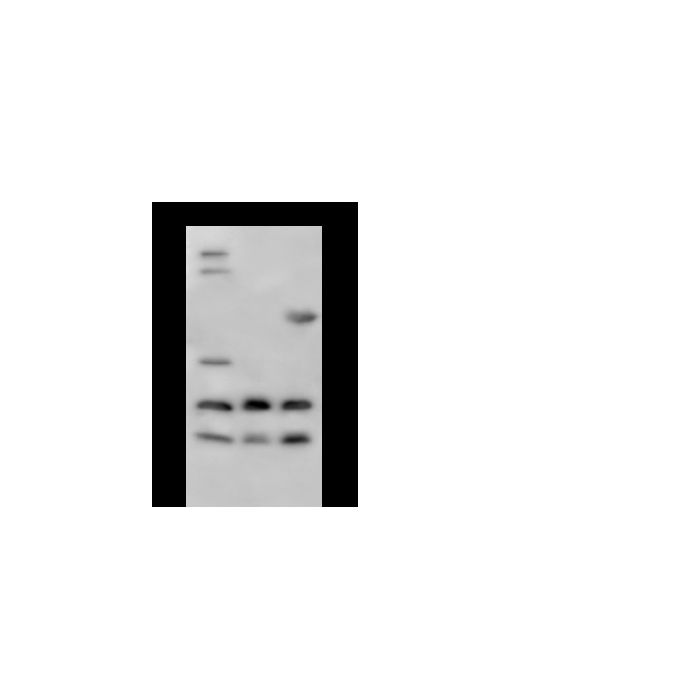
Anti-IL1F6 rabbit polyclonal antibody at 1:500 dilution Lane A: MDA-MB231 Whole Cell Lysate Lane B: HT1080 Whole Cell Lysate Lane C: MCF7 Whole Cell Lysate Lysates/proteins at 30 μg per lane. Secondary Goat Anti-Rabbit IgG (H+L)/HRP at 1/10000 dilution. Developed using the ECL technique. Performed under reducing conditions. Predicted band size:18 kDa Observed band size:24 kDa
Anti-IL1F6 rabbit polyclonal antibody at 1:500 dilution Lane A: MDA-MB231 Whole Cell Lysate Lane B: HT1080 Whole Cell Lysate Lane C: MCF7 Whole Cell Lysate Lysates/proteins at 30 μg per lane. Secondary Goat Anti-Rabbit IgG (H+L)/HRP at 1/10000 dilution. Developed using the ECL technique. Performed under reducing conditions. Predicted band size:18 kDa Observed band size:24 kDa
Interleukin-1 family member 6 (IL-1F6), also known as interleukin 36, alpha (IL36A), is a pro-inflammatory cytokine that plays an important role in innate and adaptive immunity. IL-1F6 activates MAPK and NF-kB pathways and is produced by many different cells. This cytokine is a family member of interleukin-1 (IL-1) and plays an important role in the pathophysiology of several diseases. It has been reported that IL-1F6 and IL-1F8, in addition to IL-1F9, activate the pathway leading to NF-kappaB in an IL-1Rrp2-dependent manner in Jurkat cells as well as in multiple other human and mouse cell lines. Activation of the pathway leading to NF-kappaB by IL-1F6 and IL-1F8 follows a similar time course to activation by IL-1beta, suggesting that signaling by the novel family members occurs through a direct mechanism. In a mammary epithelial cell line, NCI/ADR-RES, which naturally expresses IL-1Rrp2, all three cytokines signal without further receptor transfection. IL-1Rrp2 antibodies block activation of the pathway leading to NF-kappaB by IL-1F6, IL-1F8, and IL-1F9 in both Jurkat and NCI/ADR-RES cells. Thus IL-1F6, IL-1F8, and IL-1F9 signal through IL-1Rrp2 and IL-1RAcP.
Related Pathways
IL1 signaling pathway
References
Tripodi D, et al . (2012) IL-36 a new member of the IL-1 family cytokines. J Biol Regul Homeost Agents. 26(1):7-14.
Towne JE, et al . (2004) Interleukin (IL)-1F6, IL-1F8, and IL-1F9 signal through IL-1Rrp2 and IL-1RAcP to activate the pathway leading to NF-kappaB and MAPKs. J Biol Chem. 279(14): 13677-88.
Kumar S, et al . (2000) Identification and initial characterization of four novel members of the interleukin-1 family. J Biol Chem. 275(14): 10308-14.


-HD11JL2639-WB.png)
