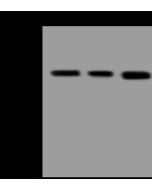
Recombinant Mouse ANGPTL4 / angiopoietin-like protein 4 Protein (Catalog#50356-M07H)
Preparation
Produced in rabbits immunized with purified, recombinant Mouse ANGPTL4 / angiopoietin-like protein 4 (rM ANGPTL4 / angiopoietin-like protein 4; Catalog#50356-M07H; Q9Z1P8; Lys167-Ser410). Total IgG was purified by Protein A affinity chromatography.
Source
Polyclonal Rabbit IgG
Purification
Protein A
Formulation
0.2 μm filtered solution in PBS
Conjugate
Unconjugated
Form
Liquid
Shipping
This antibody is shipped as liquid solution at ambient temperature. Upon receipt, store it immediately at the temperature recommended below.
Storage
This antibody can be stored at 2℃-8℃ for one month without detectable loss of activity. Antibody products are stable for twelve months from date of receipt when stored at -20℃ to -80℃. Preservative-Free. Avoid repeated freeze-thaw cycles.
ANGPTL4, also known as ANGPTL2, is a protein with hypoxia-induced expression in endothelial cells. It contains 1 fibrinogen C-terminal domain and is expressed at high levels in the placenta, heart, liver, muscle, pancreas and lung but expressed poorly in the brain and kidney. ANGPTL4 inhibits proliferation, migration, and tubule formation of endothelial cells and reduces vascular leakage. It may act as a regulator of angiogenesis and modulate tumorigenesis. It inhibits proliferation, migration, and tubule formation of endothelial cells and reduces vascular leakage. It may also exert a protective function on endothelial cells through an endocrine action. ANGPTL4 is directly involved in regulating glucose homeostasis, lipid metabolism, and insulin sensitivity. In response to hypoxia, the unprocessed form of the protein accumulates in the subendothelial extracellular matrix (ECM). The matrix-associated and immobilized unprocessed form limits the formation of actin stress fibers and focal contacts in the adhering endothelial cells and inhibits their adhesion. It also decreases motility of endothelial cells and inhibits the sprouting and tube formation.
References
Lichtenstein L, et al. (2010) Angptl4 Protects against Severe Proinflammatory Effects of Saturated Fat by Inhibiting Fatty Acid Uptake into Mesenteric Lymph Node Macrophages. Cell metabolism. 12(6): 580-92.
Terada S, et al. (2011) Escaping Anoikis through ROS: ANGPTL4 controls integrin signaling through Nox1. Cancer Cell. 19(3):297-9.
Zhu PC, et al. (2011) Angptl4 protein elevates the prosurvival intracellular O2(-):H2O2 ratio and confers anoikis resistance to tumors. Cancer Cell. 19(3):401-15.