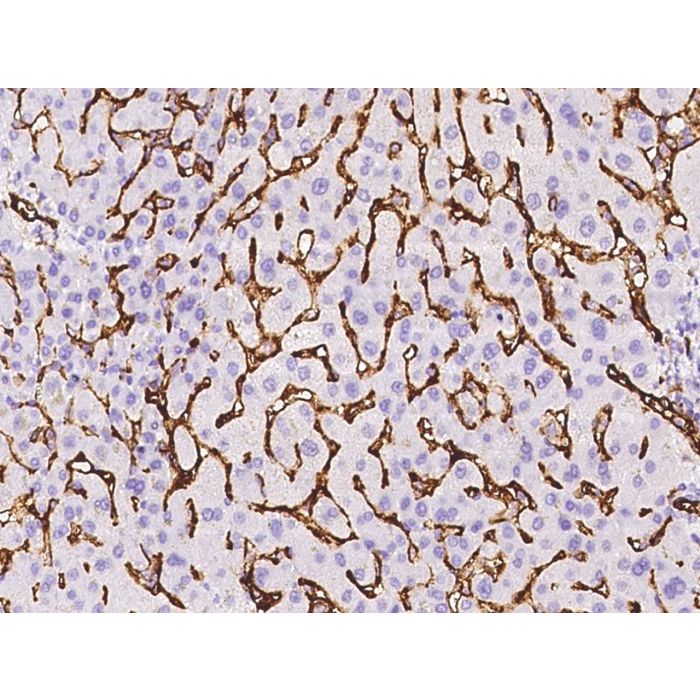
Recombinant Human CD36 Protein (Catalog#10752-H08H)
Preparation
This antibody was obtained from a rabbit immunized with purified, recombinant Human CD36 (rh CD36; Catalog#10752-H08H; NP_001001547.1; Gly30-Asn439).
Source
Monoclonal Rabbit IgG Clone #331
Purification
Protein A
Formulation
0.2 μm filtered solution in PBS
Conjugate
Unconjugated
Form
Liquid
Shipping
This antibody is shipped as liquid solution at ambient temperature. Upon receipt, store it immediately at the temperature recommended below.
Storage
This antibody can be stored at 2℃-8℃ for one month without detectable loss of activity. Antibody products are stable for twelve months from date of receipt when stored at -20℃ to -80℃. Preservative-Free. Avoid repeated freeze-thaw cycles.
The cluster of differentiation (CD) system is commonly used as cell markers in Immunophenotyping. Different kinds of cells in the immune system can be identified through the surface CD molecules associating with the immune function of the cell. There are more than 320 CD unique clusters and subclusters have been identified. Some of the CD molecules serve as receptors or ligands important to the cell through initiating a signal cascade which then alter the behavior of the cell. Some CD proteins do not take part in cell signal process but have other functions such as cell adhesion. Cluster of differentiation 36 (CD36), also known as FAT, SCARB3, GP88, glycoprotein IV (gpIV) and glycoprotein IIIb (gpIIIb), is a member of the CD system as well as the class B scavenger receptor family of cell surface proteins. CD36 can be found on the surface of many cell types in vertebrate animals and it consists of 472 amino acids and is extensively glycosylated. It is an integral membrane protein primarily serving as receptors for thrombospondin and collagen and by the erythrocytes infected with the human malaria parasite. The role of CD36 as a cell surface receptor has been extended to that of a signal transduction molecule.
Research Areas
Cancer Drug Targets
References
Zola H, et al. (2007) CD molecules 2006-human cell differentiation molecules. J Immunol Methods. 318 (1-2): 1-5.
Ho IC, et al. (2009) GATA3 and the T-cell lineage: essential functions before and after T-helper-2-cell differentiation. Nat Rev Immunol. 9 (2): 125-35.
Matesanz-Isabel J, et al. (2011) New B-cell CD molecules. Immunology Letters.134 (2): 104-12.
Greenwalt RH, et al. (1992) Membrane glycoprotein in CD36: a review of its roles in adherence, signal transduction, and transfusion medicine. The journal of the American society of hematology. 80 (5): 1105-15.