Recombinant Human UPB1 (C-6His)(Cat. No.:C210) novoprotein
$150.00
In stock
SKU
C210
10μg: $150
50μg: $440
500μg: $1540
1mg: $2200
Description
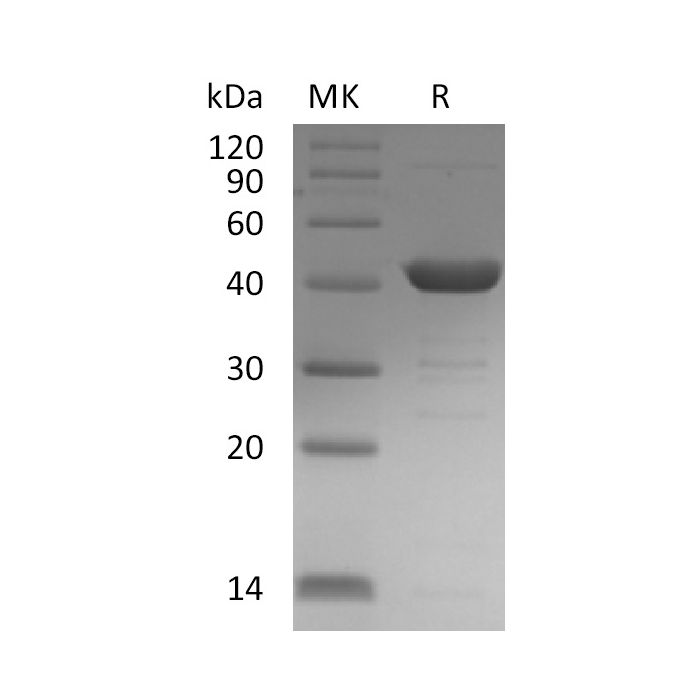
Recombinant Human Beta-Ureidopropionase is produced by our E.coli expression system and the target gene encoding Met1-Glu384 is expressed with a 6His tag at the C-terminus.
Product Details
| Item | Details |
| Known As | Beta-Ureidopropionase; BUP-1; Beta-Alanine Synthase; N-Carbamoyl-Beta-Alanine Amidohydrolase; UPB1; BUP1 |
| Mol Mass | 44.22 KDa |
| APMol Mass | 42 KDa, reducing conditions |
| Formulation Description | Supplied as a 0.2 μm filtered solution of PBS, pH 7.4. |
| Endotoxin | < 1 EU/µg as determined by LAL test. |
| Storage | Store at ≤-70°C, stable for 6 months after receipt. Store at ≤-70°C, stable for 3 months under sterile conditions after opening. Please minimize freeze-thaw cycles. |
| Shipping | The product is shipped on dry ice/polar packs. Upon receipt, store it immediately at the temperature listed below. |
Background
β-Ureidopropionase is a cytoplasmic protein which belongs to the CN hydrolase family of BUP subfamily. β-Ureidopropionase binds one zinc ion per subunit, catalyzes the last step in the pyrimidine degradation pathway. β-Ureidopropionase can convert N-carbamyl-beta-aminoisobutyric acid and N-carbamyl-beta-alanine to beta-aminoisobutyric acid and beta-alanine, ammonia and carbon dioxide, respectively. The pyrimidine bases uracil and thymine are degraded via the consecutive action of dihydropyrimidine dehydrogenase (DHPDH), dihydropyrimidinase (DHP) and beta-ureidopropionase (UP) to beta-alanine and beta aminoisobutyric acid, respectively. Defects in β-Ureidopropionase are the cause of β-Ureidopropionase deficiency that is characterized by muscular hypotonia, dystonic movements, scoliosis, microcephaly and severe developmental delay.
MDSD