Synaptotagmin-1 Polyclonal antibody 14511-1-AP proteintech

$149.00
In stock
SKU
14511-1-AP
Catalog No.SizePrice (USD)
14511-1-AP-20UL20 μL$149.00
14511-1-AP-150UL150 μL$449.00
Catalog Number14511-1-AP
SynonymsSynaptotagmin 1, SYT1, P65, SVP65, synaptotagmin I
HostRabbit
Reactivityhuman, mouse and More (1)
Reactivityhuman, mouse, rat
FormLiquid
FormulationPBS, Azide, Glycerol
ApplicationsWB, IHC, IF/ICC, IP, ELISA
Host / IsotypeRabbit / IgG
Tested Applications — Positive WB detected inmouse cerebellum tissue, HCT 116 cells, mouse testis tissue, human liver tissue, Y79 cells
Tested Applications — Positive IP detected inmouse cerebellum tissue, HCT 116 cells
Tested Applications — Positive IHC detected inrat small intestine tissue Note: suggested antigen retrieval with TE buffer pH 9.0; (*) Alternatively, antigen retrieval may be performed with citrate buffer pH 6.0
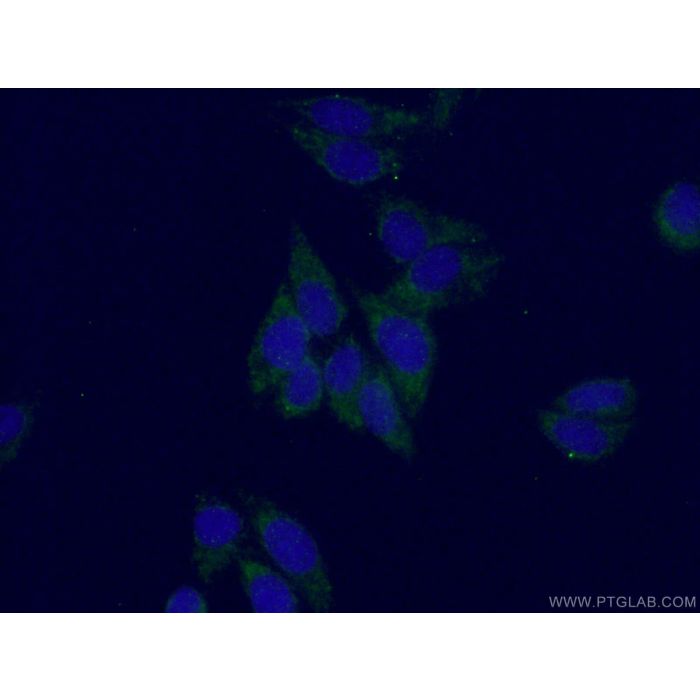
Tested Applications — Positive IF/ICC detected inHepG2 cells, HCT 116 cells
Recommended Dilutions — Western Blot (WB)WB : 1:4000-1:20000
Recommended Dilutions — Immunoprecipitation (IP)IP : 0.5-4.0 ug for 1.0-3.0 mg of total protein lysate
Recommended Dilutions — Immunohistochemistry (IHC)IHC : 1:500-1:2000
Recommended Dilutions — Immunofluorescence (IF)/ICCIF/ICC : 1:50-1:500
Positive WB detected inmouse cerebellum tissue, HCT 116 cells, mouse testis tissue, human liver tissue, Y79 cells
Positive IP detected inmouse cerebellum tissue, HCT 116 cells
Positive IHC detected inrat small intestine tissue Note: suggested antigen retrieval with TE buffer pH 9.0; (*) Alternatively, antigen retrieval may be performed with citrate buffer pH 6.0
Positive IF/ICC detected inHepG2 cells, HCT 116 cells
Western Blot (WB)WB : 1:4000-1:20000
Immunoprecipitation (IP)IP : 0.5-4.0 ug for 1.0-3.0 mg of total protein lysate
Immunohistochemistry (IHC)IHC : 1:500-1:2000
Immunofluorescence (IF)/ICCIF/ICC : 1:50-1:500
Tested Reactivityhuman, mouse
Cited Reactivityhuman, mouse, rat
ClassPolyclonal
TypeAntibody
ImmunogenCatNo: Ag5970 Product name: Recombinant human SYT1 protein Source: e coli. -derived, PGEX-4T Tag: GST Domain: 97-422 aa of BC058917 Sequence: GGKNAINMKDVKDLGKTMKDQALKDDDAETGLTDGEEKEEPKEEEKLGKLQYSLDYDFQNNQLLVGIIQAAELPALDMGGTSDPYVKVFLLPDKKKKFETKVHRKTLNPVFNEQFTFKVPYSELGGKTLVMAVYDFDRFSKHDIIGEFKVPMNTVDFGHVTEEWRDLQSAEKEEQEKLGDICFSLRYVPTAGKLTVVILEAKNLKKMDVGGLSDPYVKIHLMQNGKRLKKKKTTIKKNTLNPYYNESFSFEVPFEQIQKVQVVVTVLDYDKIGKNDAIGKVFVGYNSTGAELRHWSDMLANPRRPIAQWHTLQVEEEVDAMLAVKK Predict reactive species
Full Namesynaptotagmin I
Calculated Molecular Weight48 kDa
Observed Molecular Weight65 kDa, 47 kDa
GenBank Accession NumberBC058917
Gene SymbolSynaptotagmin-1
Gene ID (NCBI)6857
RRIDAB_2199166
ConjugateUnconjugated
Purification MethodAntigen affinity purification
UNIPROT IDP21579
Storage BufferPBS with 0.02% sodium azide and 50% glycerol, pH 7.3.
Storage ConditionsStore at -20°C. Stable for one year after shipment. Aliquoting is unnecessary for -20 o C storage. 20ul sizes contain 0.1% BSA.
IF protocol for Synaptotagmin-1 antibody 14511-1-APDownload protocol
IHC protocol for Synaptotagmin-1 antibody 14511-1-APDownload protocol
IP protocol for Synaptotagmin-1 antibody 14511-1-APDownload protocol
WB protocol for Synaptotagmin-1 antibody 14511-1-APDownload protocol
humanWB Theranostics ANKRD22, a novel tumor microenvironment-induced mitochondrial protein promotes metabolic reprogramming of colorectal cancer cells. Authors - Tianhui Pan View Article
mouseWB J Proteomics Quantitative proteomics reveals olfactory input-dependent alterations in the mouse olfactory bulb proteome. Authors - Hao-Long Zeng View Article
Citations34
DilutionsWB : 1:4000-1:20000 IP : 0.5-4.0 ug for IP and 0.5-4.0 ug for 1.0-3.0 mg of total protein lysate for WB IHC : 1:500-1:2000 IF/ICC : 1:50-1:500
IsotypeIgG
ClonalityPolyclonal
Clone Number-
ConjugationUnconjugated

The synaptotagmins are integral membrane proteins of synaptic vesicles thought to serve as Ca(2+) sensors in the process of vesicular trafficking and exocytosis (PMID: 8058779). SYT1 (synaptotagmin I) was firstly identified as a 65-kDa protein with a wide distribution in neuronal and neurosecretory tissue (PMID: 7298720). Calcium binding to SYT1 participates in triggering neurotransmitter release at the synapse (PMID: 11242035). In addition to regulating exocytosis, SYT1 has also been implicated in endocytosis and neurite outgrowth (PMID: 15492212; 11078930; 10336114). This antibody recognizes endogenous SYT1, which has an experimentally determined molecular mass of 65-68 kDa. An additional band of 47 kDa could also be detected, which is corresponding to the calculated molecular weight of SYT1. Protocols Product Specific Protocols IF protocol for Synaptotagmin-1 antibody 14511-1-AP Download protocol IHC protocol for Synaptotagmin-1 antibody 14511-1-AP Download protocol IP protocol for Synaptotagmin-1 antibody 14511-1-AP Download protocol WB protocol for Synaptotagmin-1 antibody 14511-1-AP Download protocol Standard Protocols Click here to view our Standard Protocols

Publications
  1. The complement inhibitor CD59 is required for GABAergic synaptic transmission in the dentate gyrus
    Journal: Cell Rep | Authors: Lang Wen | Species: human | Application: WB
  2. ANKRD22, a novel tumor microenvironment-induced mitochondrial protein promotes metabolic reprogramming of colorectal cancer cells.
    Journal: Theranostics | Authors: Tianhui Pan | Species: human | Application: WB
  3. A Stimulation Function of Synaptotagmin-1 in Ternary SNARE Complex Formation Dependent on Munc18 and Munc13.
    Journal: Front Mol Neurosci | Authors: Yun Li
  4. Early life stress enhances the susceptibility to depression and interferes with neuroplasticity in the hippocampus of adolescent mice via regulating miR-34c-5p/SYT1 axis
    Journal: J Psychiatr Res | Authors: Shuwen Yu | Species: mouse | Application: WB,IHC
  5. Hepatic Synaptotagmin 1 is involved in the remodelling of liver plasma- membrane lipid composition and gene expression in male Apoe-deficient mice consuming a Western diet.
    Journal: Biochim Biophys Acta Mol Cell Biol Lipids | Authors: Sara Sancho-Knapik | Species: mouse | Application: WB,IHC
  6. Quantitative proteomics reveals olfactory input-dependent alterations in the mouse olfactory bulb proteome.
    Journal: J Proteomics | Authors: Hao-Long Zeng | Species: mouse | Application: WB
  7. Gut-derived bacterial vesicles carrying lipopolysaccharide promote microglia-mediated synaptic pruning
    Journal: Alzheimers Dement | Authors: Xiaoduo Zhao | Application: IF
  8. PIAS1-mediated GSK3β SUMOylation exacerbates tauopathy and cognitive deficits in Alzheimer's disease models.
    Journal: Mol Psychiatry | Authors: Youlan Qiu | Species: mouse | Application: WB,IP,IHC,IF
  9. Analysis of microisolated frontal cortex excitatory layer III and V pyramidal neurons reveals a neurodegenerative phenotype in individuals with Down syndrome.
    Journal: Acta Neuropathol | Authors: Melissa J. Alldred | Species: human | Application: WB
  10. SP1 recruits TET1 to mediate Kif1a demethylation and synaptic remodeling in a mouse model of chronic migraine.
    Journal: J Headache Pain | Authors: Wei Jiang | Species: mouse | Application: WB,IF
  11. Hydrogen sulfide reduces oxidative stress in Huntington's disease via Nrf2
    Journal: Neural Regen Res | Authors: Zige Jiang | Application: WB
  12. The complement inhibitor CD59 is required for GABAergic synaptic transmission in the dentate gyrus
    Journal: Cell Rep | Authors: Lang Wen | Species: human | Application: WB
  13. Air pollution decreases postsynaptic PSD-95 and NMDA receptor subunits in synaptosomes from mouse cerebral cortex
    Journal: Environ Pollut | Authors: Jose A Godoy-Lugo | Species: mouse | Application: WB
  14. Buyang Huanwu Decoction improves synaptic plasticity of ischemic stroke by regulating the cAMP/PKA/CREB pathway
    Journal: J Ethnopharmacol | Authors: Jingyuan Mo | Species: rat | Application: WB,IF
  15. A Class I HDAC Inhibitor BG45 Alleviates Cognitive Impairment through the CaMKII/ITPKA/Ca2+ Signaling Pathway
    Journal: Pharmaceuticals (Basel) | Authors: Jingyun Liu | Species: mouse | Application: IHC,IF
  16. Opioids induce constipation by prompting alpha-Synuclein hyperphosphorylation in the colonic myenteric plexus
    Journal: Neurochem Int | Authors: Binghan Jia
  17. Synaptotagmin-1 antagonizes paraquat intracellular accumulation and nephrocyte toxicity by up-regulating SERBP1/GLUT2 expression
    Journal: Chem Biol Interact | Authors: Ran Yin | Species: human | Application: WB
  18. Tuina Inhibits Synaptic Plasticity Through the Astrocytic NDRG2/GLT-1 Pathway to Alleviate Neuropathic Pain.
    Journal: J Cell Mol Med | Authors: Huanzhen Zhang | Species: rat | Application: WB
  19. Evaluating the Efficacy of Levetiracetam on Non-Cognitive Symptoms and Pathology in a Tau Mouse Model
    Journal: Biomedicines | Authors: Jackson C Thompson | Species: mouse | Application: WB
  20. A Stimulation Function of Synaptotagmin-1 in Ternary SNARE Complex Formation Dependent on Munc18 and Munc13.
    Journal: Front Mol Neurosci | Authors: Yun Li
  21. Discrimination of the Activity of Low-Affinity Wild-Type and High-Affinity Mutant Recombinant BoNT/B by a SIMA Cell-Based Reporter Release Assay.
    Journal: Toxins (Basel) | Authors: Frank Neuschäfer-Rube | Species: human | Application: WB
  22. Hepatic Synaptotagmin 1 is involved in the remodelling of liver plasma- membrane lipid composition and gene expression in male Apoe-deficient mice consuming a Western diet.
    Journal: Biochim Biophys Acta Mol Cell Biol Lipids | Authors: Sara Sancho-Knapik | Species: mouse | Application: WB,IHC
  23. CBL proto-oncogene C-mediated synaptophysin 1 regulates prostate cancer progression in the TGF-beta signalling pathway.
    Journal: Mol Immunol | Authors: Jianyong Tong | Species: human | Application: WB
  24. Early life stress enhances the susceptibility to depression and interferes with neuroplasticity in the hippocampus of adolescent mice via regulating miR-34c-5p/SYT1 axis
    Journal: J Psychiatr Res | Authors: Shuwen Yu | Species: mouse | Application: WB,IHC
  25. Quantitative proteomics reveals olfactory input-dependent alterations in the mouse olfactory bulb proteome.
    Journal: J Proteomics | Authors: Hao-Long Zeng | Species: mouse | Application: WB
  26. The effects of hippocampal miR-34c-5p on the age-related discrepancies in susceptibility to traumatic stress in the post-traumatic stress disorder mice model.
    Journal: Mol Pharmacol | Authors: Shuwen Yu | Species: mouse | Application: WB
  27. Neuronal cell populations in circumoral nerve ring of sea cucumber Apostichopus japonicus: Ultrastructure and transcriptional profile
    Journal: Comp Biochem Physiol Part D Genomics Proteomics | Authors: Yingqiu Zheng | Application: IF
  28. Programmed cell death factor 4-mediated hippocampal synaptic plasticity is involved in early life stress and susceptibility to depression
    Journal: Behav Brain Res | Authors: Jiao Cheng | Species: mouse | Application: WB
  29. Identification of Protein Network Alterations upon Retinal Ischemia-Reperfusion Injury by Quantitative Proteomics Using a Rattus norvegicus Model.
    Journal: PLoS One | Authors: Han Tian | Species: rat | Application: WB,IF
  30. Cell type specific differences in transcriptome profiles of adipose derived stem cells and vaginal fibroblasts in patients with pelvic organ prolapse
    Journal: Gene | Authors: Yourka D Tchoukalova
  31. The expression profile of the SYT1 gene in laryngeal cancer and its influences on the biological behavior of laryngeal cancer cells.
    Journal: Biochem Biophys Res Commun | Authors: Hengtao Zhu | Species: human | Application: WB,IHC
  32. Quantitative proteomics study of host response to virulent and attenuated pseudorabies virus infection in mouse brain.
    Journal: Biochim Biophys Acta | Authors: Hao-Long Zeng | Species: mouse | Application: WB
  33. Long-read sequencing and profiling of RNA-binding proteins reveals the pathogenic mechanism of aberrant splicing of an SCN1A poison exon in epilepsy
    Journal: bioRxiv | Authors: Hannah C Happ | Species: human | Application: WB
  34. A guide to selecting high-performing antibodies for Synaptotagmin-1 (Uniprot ID P21579) for use in western blot, immunoprecipitation, immunofluorescence and flow cytometry
    Journal: F1000Res | Authors: Michael S Biddle | Species: human | Application: WB,IP,IF

Reviews

Write Your Own Review
You're reviewing:Synaptotagmin-1 Polyclonal antibody 14511-1-AP proteintech
Your Rating
Copyright © 2025 Biogege, Inc. All rights reserved.