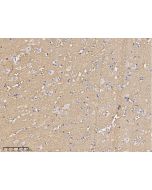
(Antibody's applications have not been validated with corresponding viruses. Optimal concentrations/dilutions should be determined by the end user.)
Specificity
Recognize the Spike of HCoV-OC43 in ELISA. Don't recognize the Spike of SARS-CoV-2, SARS-CoV, MERS-CoV, HCoV-NL63, HCoV-229E, HCoV-HKU1 (isolate N5). Has cross-reactivity in ELISA with HCoV-OC43 Spike S1+S2 ECD-His (Cat# 40607-V08B) No cross-reactivity in ELISA and WB with SARS-CoV-2 Spike S1-His (Cat# 40591-V08H) SARS-CoV-2 Spike S1 NTD-Fc & AVI (Cat# 40591-V41H) SARS-CoV-2 Spike S1 NTD-His & AVI (Cat# 40591-V49H) SARS-CoV-2 Spike RBD-His (Cat# 40592-V08B) SARS-CoV-2 Spike S1+S2 ECD-His (Cat# 40589-V08B1) SARS-CoV-2 Spike S2 ECD-His (Cat# 40590-V08B) SARS-CoV Spike S1+S2 ECD-His (Cat# 40634-V08B) MERS-CoV Spike S1+S2 ECD-His (Cat# 40069-V08B) HCoV-229E Spike S1+S2 ECD-His (Cat# 40605-V08B) HCoV-HKU1 (isolate N5) Spike S1+S2 ECD-His (Cat# 40606-V08B) HCoV-NL63 Spike S1+S2 ECD-His (Cat# 40604-V08B) No cross-reactivity in WB with HCoV-OC43 Spike S1+S2 ECD-His (Cat# 40607-V08B)
Preparation
This antibody was produced from a hybridoma resulting from the fusion of a mouse myeloma with B cells obtained from a mouse immunized with purified, recombinant CoV spike S1+S2 ECD protein. The IgG fraction of the cell culture supernatant was purified by Protein A affinity chromatography.
Source
Monoclonal Mouse IgG1 Clone #11
Purification
Protein A
Formulation
0.2 μm filtered solution in PBS
Conjugate
Unconjugated
Form
Liquid
Shipping
This antibody is shipped as liquid solution at ambient temperature. Upon receipt, store it immediately at the temperature recommended below.
Storage
This antibody can be stored at 2℃-8℃ for one month without detectable loss of activity. Antibody products are stable for twelve months from date of receipt when stored at -20℃ to -80℃. Preservative-Free. Avoid repeated freeze-thaw cycles.
Background Information
Description
The spike (S) glycoprotein of coronaviruses contains protrusions that will only bind to certain receptors on the host cell. Known receptors bind S1 are ACE2 (angiotensin-converting enzyme 2), DPP4 (dipeptidyl peptidase-4), APN (aminopeptidase N), CEACAM (carcinoembryonic antigen-related cell adhesion molecule), Sia (sialic acid), O-ac Sia (O-acetylated sialic acid). The spike is essential for both host specificity and viral infectivity. The term 'peplomer' is typically used to refer to a grouping of heterologous proteins on the virus surface that function together. The spike (S) glycoprotein of coronaviruses is known to be essential in the binding of the virus to the host cell at the advent of the infection process. It's been reported that SARS-CoV-2 (COVID-19 coronavirus, 2019-nCoV) can infect the human respiratory epithelial cells through interaction with the human ACE2 receptor. The spike protein is a large type I transmembrane protein containing two subunits, S1 and S2. S1 mainly contains a receptor binding domain (RBD), which is responsible for recognizing the cell surface receptor. S2 contains basic elements needed for the membrane fusion. The S protein plays key parts in the induction of neutralizing-antibody and T-cell responses, as well as protective immunity. The main functions for the Spike protein are summarized as: Mediate receptor binding and membrane fusion; Defines the range of the hosts and specificity of the virus; Main component to bind with the neutralizing antibody; Key target for vaccine design; Can be transmitted between different hosts through gene recombination or mutation of the receptor binding domain (RBD), leading to a higher mortality rate.
References
Shen S, et al . (2007) Expression, glycosylation, and modification of the spike (S) glycoprotein of SARS CoV. Methods Mol Biol. 379: 127-35.
Du L, et al . (2009) The spike protein of SARS-CoV--a target for vaccine and therapeutic development. Nat Rev Microbiol. 7 (3): 226-36.
Xiao X, et al . (2004) The SARS-CoV S glycoprotein. Cell Mol Life Sci. 61 (19-20): 2428-30.