Produced in rabbits immunized with E. coli-derived Human CR1 fragment, and purified by antigen affinity chromatography.
Source
Polyclonal Rabbit IgG
Purification
Protein A & Antigen Affinity
Formulation
PBS, pH7.0 with 0.03% Proclin300
Conjugate
Unconjugated
Form
Liquid
Shipping
This antibody is shipped as liquid solution at ambient temperature. Upon receipt, store it immediately at the temperature recommended below.
Storage
This antibody can be stored at 2℃-8℃ for one month without detectable loss of activity. Antibody products are stable for twelve months from date of receipt when stored at -20℃ to -80℃. Avoid repeated freeze-thaw cycles.
Complement receptor type 1 (CR1) is a multi-modular membrane receptor composed of 30 homologous complement control protein modules (CCP) organized in four different functional regions called long homologous repeats (LHR A, B, C, and D). CR1 is a receptor for complement-opsonins C3b and C4b and specifically interacts through pairs of CCP modules located in LHR A, B, and C. Human CR1 plays a role in the clearance of complement opsonized molecules and may facilitate the entry of pathogens into host cells. Lower CR1 expression has been associated with susceptibility to systemic lupus erythematosus (SLE). In contrast, subjects displaying lower CR1 expression are protected against severe manifestations of falciparum malaria. The CR1 gene was shown to be involved in Alzheimer's disease (AD).
References
Sandri TL, et al. (2018) Human complement receptor type 1 (cr1) protein levels and genetic variants in chronic chagas disease. Sci Rep 8 (1): 526.
Panda AK, et al. (2016) Cr1 exon variants are associated with lowered cr1 expression and increased susceptibility to sle in a plasmodium falciparum endemic population. Lupus Sci Med 3 (1): e000145.
Mahmoudi R, et al. (2018) Inherited and acquired decrease in complement receptor 1 (cr1) density on red blood cells associated with high levels of soluble cr1 in alzheimer's disease. Int J Mol Sci 19 (8): 2175.
Jacquet M, et al. (2018) C1q and mannose-binding lectin interact with cr1 in the same region on ccp24-25 modules. Front Immunol 9 453.

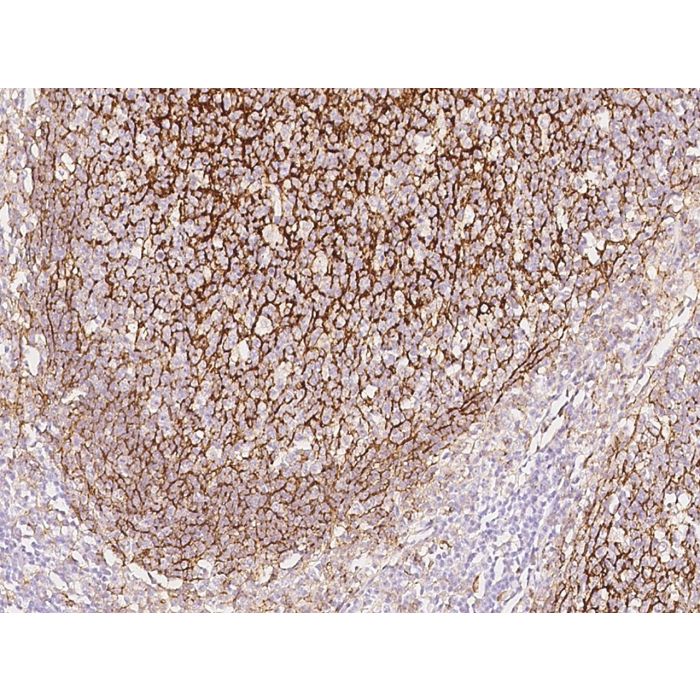
-HD12JL0215-100-human-tonsil-IHC-P.png)
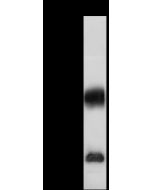
-HD12JL0215-100-human-spleen-IHC-P.png)