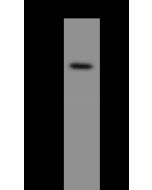
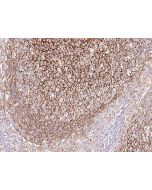
Recombinant Human BPI protein (Catalog#13907-H08H)
Preparation
Produced in rabbits immunized with purified, recombinant Human BPI (rh BPI; Catalog#13907-H08H; P17213; Met1-Lys487). Total IgG was purified by Protein A affinity chromatography.
Source
Polyclonal Rabbit IgG
Purification
Protein A
Formulation
0.2 μm filtered solution in PBS
Conjugate
Unconjugated
Form
Liquid
Shipping
This antibody is shipped as liquid solution at ambient temperature. Upon receipt, store it immediately at the temperature recommended below.
Storage
This antibody can be stored at 2℃-8℃ for one month without detectable loss of activity. Antibody products are stable for twelve months from date of receipt when stored at -20℃ to -80℃. Preservative-Free. Avoid repeated freeze-thaw cycles.
Bactericidal/permeability-increasing protein is a member of the BPI/LBP/Plunc superfamily and BPI/LBP family. It is a cationic protein which can be detected in the azurophilic granule and on the surface of polymorphonuclear leukocytes. Bactericidal/permeability-increasing protein also is a lipopolysaccharide binding protein. It is associated with human neutrophil granules and has bactericidal activity on gram-negative organisms. Bactericidal/permeability-increasing protein contains two domains that adopt the same structural fold, even though they have little sequence similarity. It binds to and neutralises lipopolysaccharides from the outer membrane of Gram-negative bacteria. The cytotoxic action of bactericidal/permeability-increasing protein is limited to many species of Gram-negative bacteria; this specificity may be explained by a strong affinity of the very basic N-terminal half for the negatively charged lipopolysaccharides that are unique to the Gram-negative bacterial outer envelope.
References
G Schlag, et al . (1999) Protective effect of bactericidal/permeability-increasing protein (rBPI21) in baboon sepsis is related to its antibacterial, not antiendotoxin, properties. Annals of Surgery. 229(2): 262-71.
Michael Levin, et al . (2000) Recombinant bactericidal/permeability-increasing protein (rBPI21) as adjunctive treatment for children with severe meningococcal sepsis: a randomised trial. Lancet. 356 (9234):961-7.
Geraldine Canny, et al . (2002) Lipid mediator-induced expression of bactericidal/ permeability-increasing protein (BPI) in human mucosal epithelia. PNAS. 99(6):3902-7.
Elsbach, et al . (1998) The bactericidal/permeability-increasing protein (BPI) in antibacterial host defense (pdf). Journal of Leukocyte biology. 64(1):14-8.