A synthetic peptide corresponding to the N-terminus of the Human DAZ1
Preparation
Produced in rabbits immunized with a synthetic peptide corresponding to the N-terminus of the Human DAZ1, and purified by antigen affinity chromatography.
Source
Polyclonal Rabbit IgG
Purification
Protein A & Antigen Affinity
Formulation
0.2 μm filtered solution in PBS
Conjugate
Unconjugated
Form
Liquid
Shipping
This antibody is shipped as liquid solution at ambient temperature. Upon receipt, store it immediately at the temperature recommended below.
Storage
This antibody can be stored at 2℃-8℃ for one month without detectable loss of activity. Antibody products are stable for twelve months from date of receipt when stored at -20℃ to -80℃. Preservative-Free. Avoid repeated freeze-thaw cycles.
Synonyms: Anti-DAZ Antibody; Anti-SPGY Antibody
Image / Experimental Information
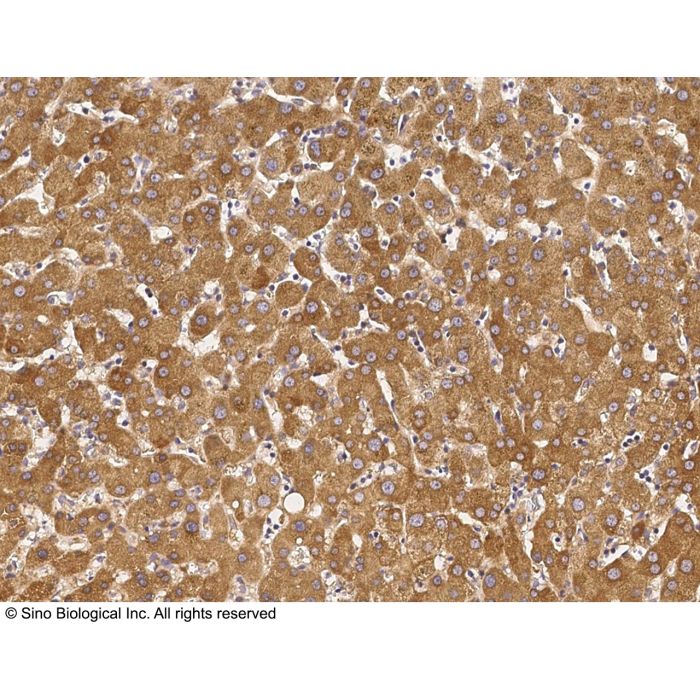
Image 1 Description
Immunochemical staining of human DAZ1 in human liver with rabbit polyclonal antibody (1:1000, formalin-fixed paraffin embedded sections).
Deleted in azoospermia 1 (DAZ1) is a member of the DAZ gene family and is located on Y-chromosome. The methylation status of the CpG island in the DAZ1 gene promoter region differed in leukocytes and sperm: it was methylated in leukocytes, but unmethylated in sperm. A differentially methylated region of the DAZ1 gene exists in spermatic and somatic cells, suggesting that methylation of this region may regulate DAZ1 gene expression in different tissues. Deletion of DAZ gene copies is related to spermatogenesis impairment. Complete DAZ deletion is a frequent genetic cause of severe oligozoospermia, and DAZ1/DAZ2 deletion is a high risk factor for the disease.
References
Yen PH (2004) Putative biological functions of the daz family. Int J Androl 27 (3): 125-129.
Li ZX, et al. (2006) A differentially methylated region of the daz1 gene in spermatic and somatic cells. Asian J Androl 8 (1): 61-67.
Ferrás C, et al. (2004) Azf and daz gene copy-specific deletion analysis in maturation arrest and sertoli cell-only syndrome. Mol Hum Reprod 10 (10): 755-761.


-HD10JA1936-1ug-liver-IHC-P.png)
-HD10JA1936-1ug-testis-IHC-P.png)
-HD10JA1936-1ug-HeLa-IF.png)