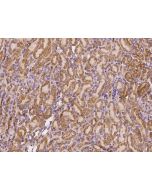
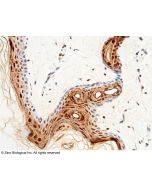
Recombinant Human aFGF protein (Catalog#10013-HNAE)
Preparation
This antibody was produced from a hybridoma resulting from the fusion of a mouse myeloma with B cells obtained from a mouse immunized with purified, recombinant Human fibroblast growth factor acidic (rhFGF-acidic; Catalog#10013-HNAE; Phe16-Asp155; AAA79245.1). The IgG fraction of the cell culture supernatant was purified by Protein A affinity chromatography.
Source
Monoclonal Mouse IgG1 Clone #1B7H3G2
Purification
Protein A
Formulation
0.2 μm filtered solution in PBS
Conjugate
Unconjugated
Form
Liquid
Shipping
This antibody is shipped as liquid solution at ambient temperature. Upon receipt, store it immediately at the temperature recommended below.
Storage
This antibody can be stored at 2℃-8℃ for one month without detectable loss of activity. Antibody products are stable for twelve months from date of receipt when stored at -20℃ to -80℃. Preservative-Free. Avoid repeated freeze-thaw cycles.
aFGF, also known as FGF1 and HBGF-1, is a member of the fibroblast growth factor family. The biological activity of aFGF protein is exerted through binding to four high affinity cell surface receptors (FGFR1–4), which results in receptor dimerization and transphosphorylation in the tyrosine kinase domain. aFGF protein shows a wide range of endocrine-like activities. As a multiple function growth factor, this protein is involved in embryo development and tissue repair. Additionally, this protein is considered to function in several important physiological and pathological processes, such as embryonic development, morphogenesis, angiogenesis, wound healing and atheromatosis, carcinogenesis, development, and invasion of cancer.
Related Pathways
Actin Dynamics Signaling Pathway
G Protein-coupled Receptors Signaling
MAPK-Erk Pathway
Autophagy Pathway
References
Jaye M., et al. ,(1986), Human endothelial cell growth factor: cloning, nucleotide sequence, and chromosome localization. Science 233:541-545.
Mergia A., et al. , (1989), Structural analysis of the gene for human acidic fibroblast growth factor.Biochem. Biophys. Res. Commun. 164:1121-1129.
Wang W.P., et al. ,(1989), Cloning of the gene coding for human class 1 heparin-binding growth factor and its expression in fetal tissues.Mol. Cell. Biol. 9:2387-2395.