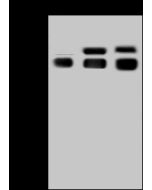
Recombinant Human G-CSF protein (Catalog#10007-HNCE)
Preparation
Produced in rabbits immunized with purified, recombinant Human GCSF (rh G-CSF; Catalog#10007-HNCE; NP_757373.1; Ala 30-Pro 204). Total IgG was purified by Protein A affinity chromatography.
Source
Polyclonal Rabbit IgG
Purification
Protein A
Formulation
0.2 μm filtered solution in PBS
Conjugate
Unconjugated
Form
Liquid
Shipping
This antibody is shipped as liquid solution at ambient temperature. Upon receipt, store it immediately at the temperature recommended below.
Storage
This antibody can be stored at 2℃-8℃ for one month without detectable loss of activity. Antibody products are stable for twelve months from date of receipt when stored at -20℃ to -80℃. Preservative-Free. Avoid repeated freeze-thaw cycles.
Granulocyte-colony stimulating factor (G-CSF) is a growth factor and an essential cytokine belonging to the CSF family of hormone-like glycoproteins. It is produced by numerous cell types including immune and endothelial cells. G-CSF binding to its receptor G-CSF-R which belongs to the cytokine receptor type I family depends on the interaction of alpha-helical motifs of the former and two fibronectin type III as well as an immunoglobulin-like domain of the latter. Recent animal studies have also revealed that G-CSF activates multiple signaling pathways, such as Akt and also the Janus family kinase-2 and signal transducer and activation of transcription-3 (Jak2-STAT3) pathway, thereby promoting survival, proliferation, differentiation and mobilisation of haematopoietic stem and progenitor cells. G-CSF is a cytokine that have been demonstrated to improve cardiac function and perfusion in myocardial infarction. And it was initially evaluated as a stem cell mobilizer and erythropoietin as a cytoprotective agent. G-CSF prevents left ventricular remodeling after myocardial infarction by decreasing cardiomyocyte death and by increasing the number of blood vessels, suggesting the importance of direct actions of G-CSF on the myocardium rather than through mobilization and differentiation of stem cells. Accordingly, recombinant human (rh)G-CSF has been extensively used in clinical haematology and oncology to enable bone marrow transplantation or to treat chemotherapy-associated neutropenia. In preclinical study, G-CSF improved cardiac function and perfusion by angiomyogenesis and protection of cardiomyocytes in myocardial infarction.
Related Pathways
IL17 signaling pathway
Tags
Cancer Immunotherapy
Immune Checkpoint
Immunotherapy
Targeted Therapy
References
Takano H, et al. (2007) G-CSF therapy for acute myocardial infarction. Trends Pharmacol Sci. 28(10): 512-7.
Klocke R, et al. (2008) Granulocyte colony-stimulating factor (G-CSF) for cardio- and cerebrovascular regenerative applications. Curr Med Chem. 15(10): 968-77.
Kang HJ, et al. (2008) G-CSF- and erythropoietin-based cell therapy: a promising strategy for angiomyogenesis in myocardial infarction. Expert Rev Cardiovasc Ther. 6(5): 703-13.
Beekman R, et al. (2010) G-CSF and its receptor in myeloid malignancy. Blood. 115(25): 5131-6.