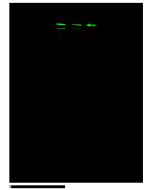
Produced in rabbits immunized with E. coli-derived Human ICOS ligand fragment, and purified by antigen affinity chromatography.
Source
Polyclonal Rabbit IgG
Purification
Protein A & Antigen Affinity
Formulation
PBS, pH7.0 with 0.03% Proclin300
Conjugate
Unconjugated
Form
Liquid
Shipping
This antibody is shipped as liquid solution at ambient temperature. Upon receipt, store it immediately at the temperature recommended below.
Storage
This antibody can be stored at 2℃-8℃ for one month without detectable loss of activity. Antibody products are stable for twelve months from date of receipt when stored at -20℃ to -80℃. Avoid repeated freeze-thaw cycles.
Immunochemical staining of human ICOS ligand in human liver with rabbit polyclonal antibody at 1:500 dilution, formalin-fixed paraffin embedded sections.
Inducible co-stimulator ligand (ICOSL), also known as B7-H2, is a member of the B7 family of co-stimulatory molecules related to B7-1 and B7-2. It is a transmembrane glycoprotein with extracellular IgV and IgC domains and binds to ICOS on activated T cells, thus delivers a positive costimulatory signal for optimal T cell function. The structural features of ICOSL are crucial for its costimulatory function. The present study shows that ICOSL displays a marked oligomerization potential, resembling more like B7-1 than B7-2. B7-H2-dependent signaling may play an active role in a proliferative response rather than in cytokine and chemokine production. The CD28/B7 and ICOS/B7-H2 pathways are both critical for costimulating T cell immune responses. Deficiency in either pathway results in defective T cell activation, cytokine production, and germinal center formation.
Kajiwara K, et al. (2009) Expression and function of the inducible costimulator ligand B7-H2 in human airway smooth muscle cells. Allergol Int. 58(4): 573-83.
Wong SC, et al. (2009) Functional hierarchy and relative contribution of the CD28/B7 and ICOS/B7-H2 costimulatory pathways to T cell-mediated delayed-type hypersensitivity. Cell Immunol. 256(1-2): 64-71.