WB (FAQ Protocol), IHC-P (FAQ Protocol), IP (FAQ Protocol)
Species reactivity
Reacts with: Human
Specificity
Human IMPA1
Immunogen
E. coli-derived Human IMPA1 fragment
Preparation
Produced in rabbits immunized with E. coli-derived Human IMPA1 fragment, and purified by antigen affinity chromatography.
Source
Polyclonal Rabbit IgG
Purification
Protein A & Antigen Affinity
Formulation
PBS, pH7.0 with 0.03% Proclin300
Conjugate
Unconjugated
Form
Liquid
Shipping
This antibody is shipped as liquid solution at ambient temperature. Upon receipt, store it immediately at the temperature recommended below.
Storage
This antibody can be stored at 2℃-8℃ for one month without detectable loss of activity. Antibody products are stable for twelve months from date of receipt when stored at -20℃ to -80℃. Avoid repeated freeze-thaw cycles.
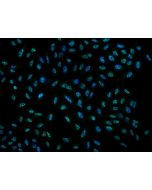
Anti-IMPA1 rabbit polyclonal antibody at 1:500 dilution Lane A: Jurkat Whole Cell Lysate Lane B: U-251 MG Whole Cell Lysate Lysates/proteins at 30 μg per lane. Secondary Goat Anti-Rabbit IgG (H+L)/HRP at 1/10000 dilution. Developed using the ECL technique. Performed under reducing conditions. Predicted band size:30 kDa Observed band size:30 kDa
Anti-IMPA1 rabbit polyclonal antibody at 1:500 dilution Lane A: Jurkat Whole Cell Lysate Lane B: U-251 MG Whole Cell Lysate Lysates/proteins at 30 μg per lane. Secondary Goat Anti-Rabbit IgG (H+L)/HRP at 1/10000 dilution. Developed using the ECL technique. Performed under reducing conditions. Predicted band size:30 kDa Observed band size:30 kDa
Anti-IMPA1 rabbit polyclonal antibody at 1:500 dilution Lane A: Jurkat Whole Cell Lysate Lane B: U-251 MG Whole Cell Lysate Lysates/proteins at 30 μg per lane. Secondary Goat Anti-Rabbit IgG (H+L)/HRP at 1/10000 dilution. Developed using the ECL technique. Performed under reducing conditions. Predicted band size:30 kDa Observed band size:30 kDa
IMPA1 (Inositol Monophosphatase 1) is a Protein Coding gene. This gene encodes an enzyme that dephosphorylates Myo-inositol monophosphate to generate free Myo-inositol, a precursor of phosphatidylinositol, and is, therefore, an important modulator of intracellular signal transduction via the production of the second messenger's myoinositol 1,4,5-trisphosphate and diacylglycerol. Despite its many physiological functions, no clinical phenotype has been assigned to this gene dysfunction to date. Additionally, IMPA1 is the main target of lithium, a drug that is at the forefront of treatment for bipolar disorder. IMPA1 is widely expressed in the testis, thyroid, and other tissues. Diseases associated with IMPA1 include Mental Retardation, Autosomal Recessive 59, and Bipolar Disorder.



-HD12SE2529-WB.png)
-HD12SE2529-300-human-stomach-IHC-P.png)
