Recombinant Mouse DPP4 / CD26 Protein (Catalog#50718-M08H)
Preparation
This antibody was obtained from a rabbit immunized with purified, recombinant Mouse DPP4 / CD26 (rM DPP4 / CD26; Catalog#50718-M08H; NP_034204.1; Ser29-His760) and conjugated with FITC under optimum conditions, the unreacted FITC was removed.
Source
Monoclonal Rabbit IgG Clone #007
Purification
Protein A
Formulation
PBS solution containing 0.5% BSA and 0.09% sodium azide
Concentration
5 μl/Test, 0.1 mg/ml
Conjugate
FITC
Form
Liquid
Shipping
This antibody is shipped as liquid solution at ambient temperature. Upon receipt, store it immediately at the temperature recommended below.
Storage
This antibody can be stored at 2℃-8℃ for twelve months without detectable loss of activity. Protected from prolonged exposure to light. Do not freeze ! Sodium azide is toxic to cells and should be disposed of properly. Flush with large volumes of water during disposal.
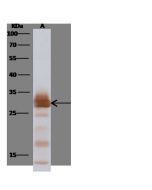
Flow cytometric analysis of Mouse DPP4(CD26) expression on BABL/c splenocytes. Cells were stained with FITC-conjugated anti-Mouse DPP4(CD26). The fluorescence histograms were derived from gated events with the forward and side light-scatter characteristics of intact cells.
Dipeptidyl peptidase-4 (DPP4) or adenosine deaminase complexing protein 2 (ADCP 2) or T-cell activation antigen CD26 is a serine exopeptidase belonging to the S9B protein family that cleaves X-proline dipeptides from the N-terminus of polypeptides, such as chemokines, neuropeptides, and peptide hormones. The enzyme is a type II transmembrane glycoprotein, expressed on the surface of many cell types. It is also present in serum and other body fluids in a truncated form (sCD26/DPPIV). The soluble CD26 (sCD26) as a tumour marker for the detection of colorectal cancer (CRC) and advanced adenomas. As both a regulatory enzyme and a signalling factor, DPP4 has been evaluated and described in many studies. DPP4 inhibition results in increased blood concentration of the incretin hormones glucagon-like peptide-1 (GLP-1) and gastric inhibitory polypeptide (GIP). This causes an increase in glucose-dependent stimulation, resulting in a lowering of blood glucose levels. Recent studies have shown that DPP4 inhibitors can induce a significant reduction in glycosylated haemoglobin (HbA(1c)) levels, either as monotherapy or as a combination with other antidiabetic agents. Research has also demonstrated that DPP4 inhibitors portray a very low risk of hypoglycaemia development, and are a new pharmacological class of drugs for treating Type 2 diabetes.
Research Areas
Serine Proteases and Regulators
References
Doupis J, et al. (2008) DPP4 inhibitors: a new approach in diabetes treatment. Adv Ther. 25(7): 627-43.
Havre PA, et al. (2008) The role of CD26/dipeptidyl peptidase IV in cancer. Front Biosci. 13: 1634-45.
De Chiara L, et al. (2009) Soluble CD26 levels and its association to epidemiologic parameters in a sample population. Dis Markers. 7(6): 311-6.
Matteucci E, et al. (2009) Dipeptidyl peptidase-4 (CD26): knowing the function before inhibiting the enzyme. Curr Med Chem. 16(23): 2943-51.



-R007-FITC-splenocyte.png)