Recombinant Human ALDH3A1 protein (Catalog#12523-H07B)
Preparation
Produced in rabbits immunized with purified, recombinant Human ALDH3A1 (rh ALDH3A1; Catalog#12523-H07B; AAH04370.1; Met1-His453). ALDH3A1 specific IgG was purified by Human ALDH3A1 affinity chromatography.
Source
Polyclonal Rabbit IgG
Purification
Protein A & Antigen Affinity
Formulation
0.2 μm filtered solution in PBS
Conjugate
Unconjugated
Form
Liquid
Shipping
This antibody is shipped as liquid solution at ambient temperature. Upon receipt, store it immediately at the temperature recommended below.
Storage
This antibody can be stored at 2℃-8℃ for one month without detectable loss of activity. Antibody products are stable for twelve months from date of receipt when stored at -20℃ to -80℃. Preservative-Free. Avoid repeated freeze-thaw cycles.
Aldehyde dehydrogenase 3A1 (ALDH3A1) is a metabolic enzyme that catalyzes the oxidation of various aldehydes. Certain types of epithelial tissues in mammals, especially those continually exposed to environmental stress (e.g., corneal epithelium), express ALDH3A1 at high levels and its abundance in such tissues is perceived to help to maintain cellular homeostasis under conditions of oxidative stress. Metabolic as well as non-metabolic roles for ALDH3A1 have been associated with its mediated resistance to cellular oxidative stress. Aldehyde dehydrogenase 1A1 (ALDH1A1) and ALDH3A1 are corneal crystallins. They protect inner ocular tissues from ultraviolet radiation (UVR)-induced oxidative damage through catalytic and non-catalytic mechanisms. Additionally, ALDH3A1 has been postulated to play a regulatory role in the corneal epithelium based on several studies that report an inverse association between ALDH3A1 expression and corneal cell proliferation. Aldehyde dehydrogenase 3A1 (ALDH3A1) plays an important role in many cellular oxidative processes, including cancer chemoresistance, by metabolizing activated forms of oxazaphosphorine drugs such as cyclophosphamide (CP) and its analogues, such as mafosfamide (MF), ifosfamide (IFM), and 4-hydroperoxycyclophosphamide (4-HPCP). Compounds that can selectively target ALDH3A1 could permit delineation of its roles in these processes and could restore chemosensitivity in cancer cells that express this isoenzyme. ALDH3A1 may act to protect corneal cells against cellular oxidative damage by metabolizing toxic lipid peroxidation products (e.g., 4-HNE), maintaining cellular GSH levels and redox balance, and operating as an antioxidant.
References
Pappa A, et al. (2003) Human aldehyde dehydrogenase 3A1 (ALDH3A1): biochemical characterization and immunohistochemical localization in the cornea. Biochem J. 376(3): 615-23.
Estey T, et al. (2007) ALDH3A1: a corneal crystallin with diverse functions. Experimental Eye Research. 84(1):3-12.
Pappa A, et al. (2003) Aldh3a1 protects human corneal epithelial cells from ultraviolet- and 4-hydroxy-2-nonenal-induced oxidative damage. Free Radical Biology and Medicine. 34(9):1178-89.



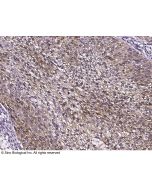
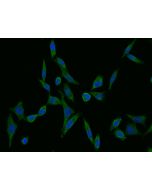
-HB08MA3001-0.05ug-stomach-IHC-P.png)
-HB08MA3001-0.05ug-lung-IHC-P.png)
-HB08MA3001-IP.png)
-HB08MA3001-WB.png)