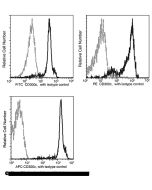
Recombinant Human DDR1 protein (Catalog#10730-H08H)
Preparation
Produced in rabbits immunized with purified, recombinant Human DDR1 / CD167a (rh DDR1; Catalog#10730-H08H; NP_001945.3; Met 1-Thr 416). Total IgG was purified by Protein A affinity chromatography.
Source
Polyclonal Rabbit IgG
Purification
Protein A
Formulation
0.2 μm filtered solution in PBS
Conjugate
Unconjugated
Form
Liquid
Shipping
This antibody is shipped as liquid solution at ambient temperature. Upon receipt, store it immediately at the temperature recommended below.
Storage
This antibody can be stored at 2℃-8℃ for one month without detectable loss of activity. Antibody products are stable for twelve months from date of receipt when stored at -20℃ to -80℃. Preservative-Free. Avoid repeated freeze-thaw cycles.
Discoidin domain receptor family, member 1 (DDR1), also known as or CD167a (cluster of differentiation 167a), and Mammary carcinoma kinase 10 (MCK10), belongs to a subfamily of tyrosine kinase receptors with an extracellular domain homologous to Dictyostellium discoideum protein discoidin 1. Receptor tyrosine kinases play a key role in the communication of cells with their microenvironment. These kinases are involved in the regulation of cell growth, differentiation and metabolism. Expression of DDR1/MCK10/CD167 is restricted to epithelial cells, particularly in the kidney, lung, gastrointestinal tract, and brain. In addition, it has been shown to be significantly overexpressed in several human tumors. DDR1/MCK10/CD167 plays an important role in regulating attachment to collagen, chemotaxis, proliferation, and MMP production in smooth muscle cells. DDR1 functions in a feedforward loop to increase p53 levels and at least some of its effectors. Inhibition of DDR1 function resulted in strikingly increased apoptosis of wild-type p53-containing cells in response to genotoxic stress through a caspase-dependent pathway.
Research Areas
Receptor Tyrosine Kinases (RTKs)
Related Pathways
p53 Pathway
References
Hou G, et al. (2001) The discoidin domain receptor tyrosine kinase DDR1 in arterial wound repair. J Clin Invest. 107(6): 727-35.
Ongusaha PP, et al. (2003) p53 induction and activation of DDR1 kinase counteract p53-mediated apoptosis and influence p53 regulation through a positive feedback loop. EMBO J. 22(6): 1289-301.
Jönsson M, et al. (2001) Repression of Wnt-5a impairs DDR1 phosphorylation and modifies adhesion and migration of mammary cells. J Cell Sci. 114(11): 2043-53.