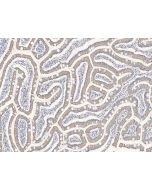
Recombinant Human ECM1 protein (Catalog#10362-H08H)
Preparation
This antibody was produced from a hybridoma resulting from the fusion of a mouse myeloma with B cells obtained from a mouse immunized with purified, recombinant Human ECM1 (rhECM1; Catalog#10362-H08H; Met 1-Glu 540; NP_004416.1). The IgG fraction of the cell culture supernatant was purified by Protein A affinity chromatography.
Source
Monoclonal Mouse IgG1 Clone #6C3C6
Purification
Protein A
Formulation
0.2 μm filtered solution in PBS
Conjugate
Unconjugated
Form
Liquid
Shipping
This antibody is shipped as liquid solution at ambient temperature. Upon receipt, store it immediately at the temperature recommended below.
Storage
This antibody can be stored at 2℃-8℃ for one month without detectable loss of activity. Antibody products are stable for twelve months from date of receipt when stored at -20℃ to -80℃. Preservative-Free. Avoid repeated freeze-thaw cycles.
Synonyms: Anti-URBWD Antibody
Background Information
Full Name
extracellular matrix protein 1
Description
Extracellular matrix protein 1 (ECM1) is a secreted glycoprotein and playing a pivotal role in endochondral bone formation, angiogenesis, and tumour biology. Three splice variants have been identified: ECM1a (540 aa) is most widely expressed, with highest expression in the placenta and heart; ECM1b (415 aa) is differentiation-dependent expressed and found only in tonsil and associated with suprabasal keratinocytes; ECM1c (559 aa) accounts for approximately 15% of skin ECM1. Although ECM1 is not tumor specific, is significantly elevated in many malignant epithelial tumors and is suggested as a possible trigger for angiogenesis, tumor progression and malignancies. It also has been shown to regulate endochondral bone formation, skeletal development and tissue remodeling.
References
Oyama N, et al. (2003) Autoantibodies to extracellular matrix protein 1 in lichen sclerosus. Lancet. 362(9378): 118-23.
Chan I, et al. (2004) Rapid diagnosis of lipoid proteinosis using an anti-extracellular matrix protein 1 (ECM1) antibody. J Dermatol Sci. 35(2): 151-3.
Lupo I, et al. (2005) A novel mutation of the extracellular matrix protein 1 gene (ECM1) in a patient with lipoid proteinosis (Urbach-Wiethe disease) from Sicily. Br J Dermatol. 153(5): 1019-22.
Sander CS, et al. (2006) Expression of extracellular matrix protein 1 (ECM1) in human skin is decreased by age and increased upon ultraviolet exposure. Br J Dermatol. 154(2): 218-24.