General Information
| Product name | Human TARC/CCL17 ELISA Kit |
| Specificity | This assay recognizes both recombinant and natural Human CCL17. |
| Conjugate | HRP |
| Shipping | This ELISA Kit is shipped at ambient temperature. |
| Storage | Unopened Kit: Store at 2 - 8℃ Opened/Reconstituted Reagents: Please refer to CoA |
| Assay type | Solid Phase Sandwich ELISA (quantitative) |
| Sample type | Serum |
| Sensitivity | 0.7 pg/mL |
| Assay range | 14.06-900 pg/mL |
| Materials provided | 1. 96 well microplate coated with Capture Antibody 2. Detection Antibody conjugated to HRP 3. Standards 4. Wash Buffer Concentrate 5. Dilution Buffer Concentrate 6. Color Reagent A 7. Color Reagent B 8. Stop Solution |
| Product overview | This Human TARC/CCL17 ELISA Kit is an enzyme-linked immunosorbent assay for the quantitative measurement of Human TARC/CCL17 protein in Serum . It contains recombinant Human TARC/CCL17, and antibodies raised against the recombinant protein. This ELISA kit is complete and ready-to-use. |
| Interference | Preparations of the factors listed below at 50 ng/mL in a mid-range recombinant human CCL17 control were assayed for interference. No significant interference was observed. |
Synonyms: A-152E5.3 ELISA Kit, Human; ABCD-2 ELISA Kit, Human; SCYA17 ELISA Kit, Human; TARC ELISA Kit, Human
Image / Experimental Information
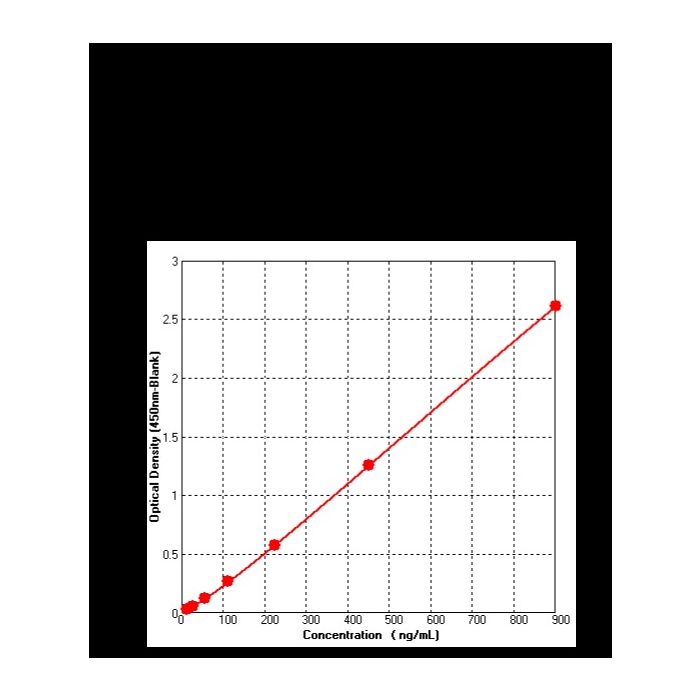
| Image 1 Description | This standard curve is only for demonstration purposes. A standard curve should be generated for each assay. |
| Image 1 Alt Text | Human CCL17/TARC ELISA Kit Standard Curve 17913 |
| Image 1 URL | Source image |
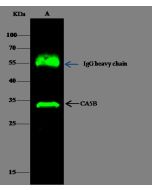
| Image 2 Description | This standard curve is only for demonstration purposes. A standard curve should be generated for each assay. |
| Image 2 Alt Text | Human CCL17/TARC ELISA Kit Specificity 17927 |
| Image 2 URL | Source image |
Background Information
| Full Name | chemokine (C-C motif) ligand 17 |
| Description | Chemokines are a family of small chemotactic cytokines, or proteins secreted by cells. Chemokines share the same structure similarities such as small size, and the presence of four cysteine residues in conserved locations in order to form their 3-dimensional shape. Some of the chemokines are considered pro-inflammatory which can be induced to recruit cells of the immune system to a site of infection during an immune response, while others are considered homeostatic and are implied in controlling the migration of cells during normal processes of tissue maintenance and development. There are four members of the chemokine family: C-C kemokines, C kemokines, CXC kemokines and CX3C kemokines. The C-C kemokines have two cysteines nearby the amino terminus. There have been at least 27 distinct members of this subgroup reported for mammals, called C-C chemokine ligands-1 to 28. Chemokin ligand 17 (CCL17), also known as thymus and activation regulated chemokine(TARC), is a small cytokine belonging to the C-C chemokine family. CCL17 is expressed maily in thymus and transiently in phytohemagglutinin-stimulated peripheral blood mononuclear cells. CCL17 can induce chemotaxis in T cells by binding with the chemokine receptor CCR4. |
| References | - Laing KJ, et al. (2004) Chemokines. Developmental and comparative immunology. 28(5): 443-60.
- Cocchi F, et al. (1995) Identification of RANTES, MIP-1a, and MIP-1b as the major HIV-suppressive factor produced by CD8 + T cells. Science. 270 (5243): 1811-5.
- Morita A, et al. (2002). Evaluation of human thymus and activation-regulated chemokine concentrations in blood using a new sandwich ELISA based on monoclonal antibodies. Clin Chim Acta. 322 (1-2): 67-75.
|