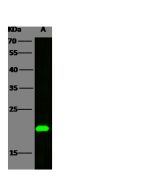
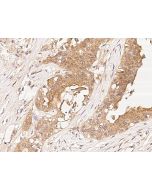
Human CD28 No cross-reactivity in ELISA with Mouse CD28 Human CTLA4 Mouse CTLA4 Human B7-1 Human B7-2 Mouse B7-2 Human β-NGF Human cell lysate (293 cell line)
Immunogen
Recombinant Human CD28 protein (Catalog#11524-H08H)
Preparation
This antibody was produced from a hybridoma resulting from the fusion of a mouse myeloma with B cells obtained from a mouse immunized with purified, recombinant Human CD28 (rh CD28; Catalog#11524-H08H; P10747-1; Met 1-Pro 152). The IgG fraction of the cell culture supernatant was purified by Protein A affinity chromatography.
Source
Monoclonal Mouse IgG1 Clone #9H6E2
Purification
Protein A
Formulation
0.2 μm filtered solution in PBS with 10% Trehalose, 0.02% Tween 80, pH7.0
Conjugate
Unconjugated
Form
Liquid
Shipping
This antibody is shipped as liquid solution at ambient temperature. Upon receipt, store it immediately at the temperature recommended below.
Storage
This antibody can be stored at 2℃-8℃ for one month without detectable loss of activity. Antibody products are stable for twelve months from date of receipt when stored at -20℃ to -80℃. Preservative-Free. Avoid repeated freeze-thaw cycles.
Synonyms: Anti-Tp44 Antibody
Background Information
Full Name
CD28 molecule
Description
CD28 (Cluster of Differentiation 28) is a disulphide-bonded glycoprotein belonging to the immunoglobulin (Ig) superfamily, and structurally consists of a single Ig V-like extracellular domain, a transmembrane domain and an intracellular domain. Mouse CD28 is constitutively expressed on the surface of all murine T cells and on developing thymocytes as disulfide-linked homodimers or as monomers. CD28 can binds the B7-1 and B7-2 ligand, and together perform important functions in the T and B cell response pathways. B7/CD28 family members, which can augment or antagonize T-cell receptor signaling, in the regulation of central and peripheral T-cell tolerance. CD28 is thus involved in T-cell activation, the induction of cell proliferation and cytokine production and promotion of T-cell survival.
Research Areas
ITIM/ITAM Immunoreceptors and Related Molecules
Cancer Drug Targets
Related Pathways
T Cell Receptor Signaling Pathway
Tags
Cancer Immunotherapy
Co-stimulatory Immune Checkpoint Targets
Immune Checkpoint
Immune Checkpoint Detection: Antibodies
Immune Checkpoint Detection: ELISA Antibodies
Immune Checkpoint Detection: FCM Antibodies
Immune Checkpoint Detection: IHC Antibodies
Immune Checkpoint Detection: WB Antibodies
Immune Checkpoint Targets
Immunotherapy
Targeted Therapy
References
Keir ME, et al. (2005) The B7/CD28 costimulatory family in autoimmunity. Immunol Rev. 204: 128-43.
Sansom DM, et al. (2006) The role of CD28 and cytotoxic T-lymphocyte antigen-4 (CTLA-4) in regulatory T-cell biology. Immunol Rev. 212: 131-48.
Bjrgo E, et al. (2010) Novel mechanism of signaling by CD28. Immunol Lett. 129(1): 1-6.